ค้นหางานศิลปกรรม
ฐานข้อมูลศิลปกรรมในเอเชียตะวันออกเฉียงใต้
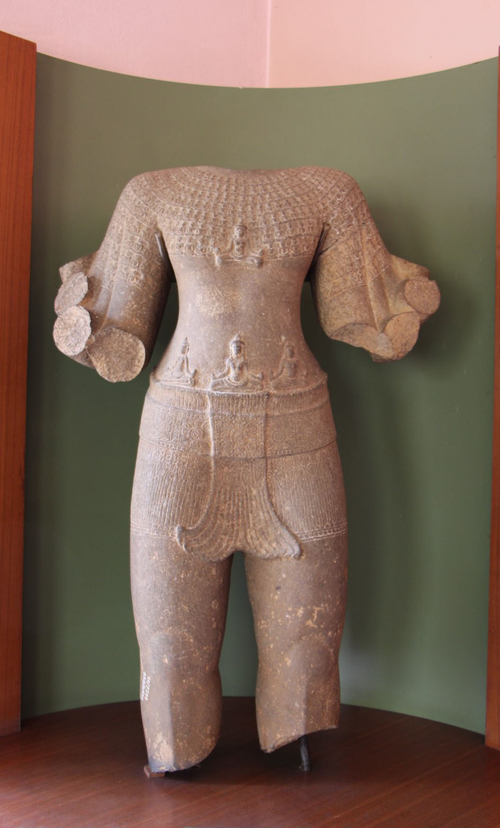

ประติมากรรมพระโพธิสัตว์อวโลกิเตศวรเปล่งรัศมี
พระโพธิสัตว์อวโลกิเตศวรเปล่งรัศมีอยู่ในอิริยาบถยืนตรง พระเศียร พระกร และระชงฆ์ตลอดจนพระบาทชำรุดหักหายไปหมดแล้ว บริเวณพระอุระตลอดจนพระอังสา (ไหล่) และพระพาหา (ต้นแขน) ประดับด้วยแถวพระพุทธรูปจำนวนมากมายราวกับเป็นเกราะ กึ่งกลางพระอุระและบั้นพระองค์ปรากฏรูปบุคคลขนาดใหญ่อาจหมายถึงนางปรัชญาปารมิตา สวมสมพตสั้นที่สลักลวดลายอย่างคร่าวๆ ช่วงล่างของพระองค์ตั้งแต่พระอูรุ (ต้นขา) ใหญ่ผิดสัดส่วนตามแบบประติมากรรมในศิลปะบายน
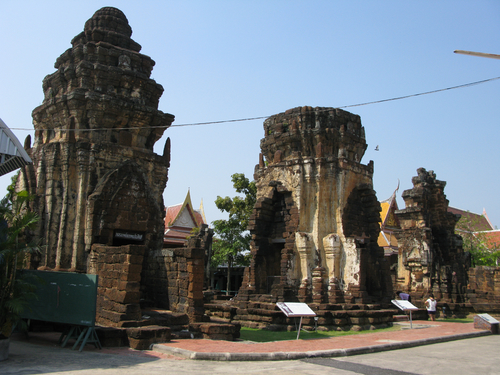
สถาปัตยกรรมปราสาทกำแพงแลง
ปราสาทกำแพงแลงมีผังพื้นล้อมรอบด้วยกำแพงศิลาแลงเป็นรูปสี่เหลี่ยมจัตุรัส หันหน้าไปทางทิศตะวันออก ภายในกำแพงศิลาแลงเป็นที่ตั้งของปราสาทศิลาแลงแบบศิลปะเขมรทั้งหมด 4 องค์ ปราสาท 3 องค์ทางด้านหน้าวางตัวเรียงกันในแนวเหนือ-ใต้ โดยปราสาทประธานมีขนาดสูงใหญ่กว่าอีก 2 องค์ คล้ายกับปรางค์สามยอด ลพบุรี ส่วนปราสาทองค์ที่ 4 ตั้งอยู่ด้านหลังของปราสาทประธานด้านทิศตะวันออก และยังปรากฏลวดลายปูนปั้นประดับปราสาท ด้านหน้ามีโคปุระหรือซุ้มประตูทางเข้า 1 หลัง ภายในกำแพงศิลาแลงยังพบสระน้ำอยู่ชิดขอบกำแพงทางทิศตะวันออกด้วยนอกจากนี้ยังพบโบราณวัตถุสำคัญ ได้แก่ พระโพธิสัตว์โลเกศวรเปล่งรัศมี, ส่วนพระวรกายของพระโพธิสัตว์โลเกศวรสี่กร, ส่วนพระวรกายของพระพุทธรูปนาคปรกทรงเครื่อง, เศียรนางปรัชญาปารมิตา จากการใช้ศิลาแลงเป็นวัสดุหลักในการสร้างปราสาท และลักษณะของการวางผังปราสาททิศเหนือ ปราสาทองค์กลาง และปราสาททิศใต้ เป็นไปในลักษณะการวางตามคติการนับถือรัตนตรัยมหายาน ปราสาททิศเหนือได้แก่พระนางปรัชญาปารมิตา ปราสาทองค์กลาง คือพระวัชรสัตว์นาคปรก และจากปราสาททิศใต้ได้แก่ พระโพธิสัตว์อวโลกิเตศวร ซึ่งคติการนับถือรูปเคารพทั้งสามรูปเรียงกันในแนวนี้ เป็นคติการนับถือรูปเคารพในพุทธศาสนามหายาน สมัยพระเจ้าชัยวรมันที่ 7 พุทธศตวรรษที่ 18 จึงสามารถกำหนดอายุเวลาในการสร้างปราสาทกำแพงแลงนี้ได้ว่าร่วมสมัยกับพระเจ้าชัยวรมันที่ 7 และจารึกที่ปราสาทพระขรรค์ ประเทศกัมพูชา กล่าวถึงเมือง “ศรีชัยวัชรปุระ” (เมืองเพชรบุรี) หนึ่งในหกเมืองโบราณในภาคกลางที่มีการกล่าวต่อไปอีกว่าได้มีการส่งพระชัยพุทธมหานาถ 1 ใน 23 องค์จากเมืองพระนครหลวง มาประดิษฐานที่เมืองเพชรบุรีนั่นก็คือปราสาทวัดกำแพงแลง และเมื่อเทียบกับโบราณสถานแล้ว ก็เป็นสิ่งที่ยืนยันได้ว่า ปราสาทกำแพงแลงแห่งนี้ ก็คือปราสาทที่กล่าวถึงในจารึกนั้น ซึ่งปราสาทพระขรรค์เป็นปราสาทที่ร่วมสมัยกับพระเจ้าชัยวรมันที่ 7 เช่นกัน
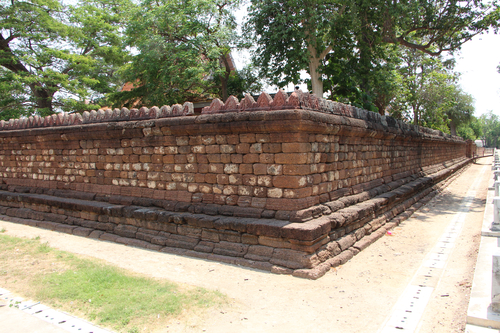
สถาปัตยกรรมกำแพงวัดมหาธาตุวรวิหาร
เนื่องจากวิหารหลวงวัดมหาธาตุในปัจจุบันถูกสร้างขึ้นในพื้นที่ทับซ้อนในบริเวณที่เคยเป็นที่ตั้งปราสาทขอมในพุทธศตวรรษที่ 18 มาก่อน จากการขุดค้นทางโบราณคดีทำให้ทราบแผนผังของปราสาทขอมที่ถูกซ้อนทับอยู่ดังนี้ลักษณะแผนผังเป็นรูปสี่เหลี่ยมจัตุรัส ปรากฏฐานปราสาทประธานหลังเดียวก่อด้วยศิลาแลงบริเวณกึ่งกลางของแผนผัง ล้อมรอบด้วยระเบียงคดซึ่งปรากฏร่องรอยโคปุระด้านทิศเหนือและทิศใต้เท่านั้น จึงสันนิษฐานว่าระเบียงคดน่าจะมีโคปุระของแต่ละด้านอยู่ทั้งสี่ทิศ และมีตำแหน่งที่ตรงกับโคปุระของกำแพงแก้วก่อด้วยศิลาแลงที่อยู่ถัดออกไป โดยเฉพาะด้านทิศตะวันออกจะปรากฏร่องรอยทางเดินเป็นแนวยาวจากโคปุระของระเบียงคดเชื่อมต่อกับโคปุระของกำแพงแก้ว บนกำแพงแก้วนั้นประดับทับหลังกำแพงทำจากหินทรายแดง สลักพระพุทธรูปปางสมาธิประทับในซุ้มเรือนแก้ว ทับหลังกำแพงแต่ละชิ้นมีขนาดต่างกัน บางชิ้นสลักพระพุทธรูปองค์เดียว บางชิ้นสลัก 2-4 องค์ มีปะปนกันตั้งแต่สมัยวัฒนธรรมขอมในพุทธศตวรรษที่ 18 สมัยอยุธยา และสมัยรัตนโกสินทร์รูปแบบของศิลปกรรมของทับหลังประดับกำแพงแก้วในสมัยบายนนี้มีลักษณะที่คล้ายคลึงกันเกือบทั้งหมด คือเป็นพระพุทธรูปขัดสมาธิราบปางสมาธิ พระเกศาเรียบไม่ตกแต่ง พระรัศมีเป็นทรงกรวย พระขนงต่อกันเป็นรูปปีกกา พระเนตรเหลือบมองต่ำ ครองจีวรแนบพระวรกายและไม่มีการสลักลายละเอียดหรือริ้วจีวร พระพุทธรูปประทับในซุ้มเรือนแก้วซึ่งเป็นซุ้มโค้งเข้าโค้งออก ประดับขอบซุ้มด้วยรวยระกา ที่ปลายขอบซุ้มด้านล่าง ตกแต่งด้วยกนกหรือตัวเหงาหันหน้าเข้าด้านใน การประดับทับหลังกำแพงสลักเป็นพระพุทธรูปในซุ้มเรือนแก้วนี้ปรากฏเพียงไม่กี่แห่งในสถาปัตยกรรมขอมในประเทศไทย เช่น โบราณสถานเนินโคกพระ อำเภอปักธงชัย จังหวัดนครราชสีมา
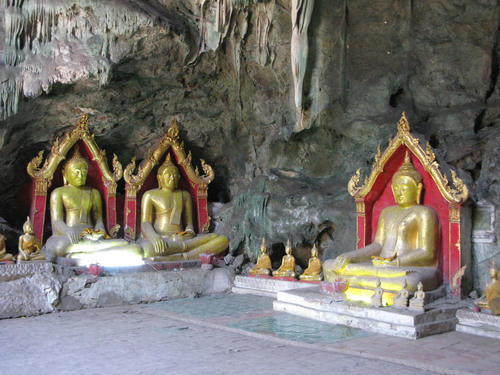
ประติมากรรมพระพุทธรูปทรงพระราชอุทิศของรัชกาลที่ 4 และพระราชโอรส
พระพุทธรูปปูนปั้นปิดทอง ซึ่งน่าจะเป็นการปฏิสังขรณ์ตามเค้าโครงของพระพุทธรูปเดิมที่อาจเป็นฝีมือช่างในท้องถิ่น พระวรกายอวบอ้วนขนาดใหญ่ พระพักตร์กลม พระเนตรเหลือบต่ำ แนวพระขนงโก่งต่อเนื่องกับพระนาสิกแหลม พระหนุและพระศอสั้น มีพระรัศมีเปลวค่อนข้างสั้น มีอุษณีษะ เม็ดพระศกเล็กคล้ายหนามขนุน พระกรรณยาวใหญ่ พระพุทธรูปแสดงปางมารวิชัยปลายนิ้วพระหัตถ์ทั้งสี่ยาวเสมอกัน ครองจีวรห่มเฉียง สังฆาฏิเป็นแถบใหญ่ยาวจรดพระนาภีปลายตัดตรง ประทับนั่งบนแท่นฐานปูน เบื้องหลังมีเสาที่ตกแต่งบัวหัวเสาด้วยลายใบผักกาดแบบตะวันตก รองรับซุ้มปูนปั้นปิดทองทำเป็นรูปลำตัวนาคหยักโค้ง ปลายซุ้มเป็นรูปนาคหันหัวเข้า ยอดกลางซุ้มเป็นลวดลายเทพนม มีช่อลายกระหนกประดับ ที่ผนังถ้ำด้านซ้ายของพระพุทธรูปปางมารวิชัยองค์ใหญ่มีจารึกประกาศพระบรมราชโองการ (สะกดตามรูปและอักขรวิธีเดิม) ว่า “พระพุทธปฏิมารูปพระองค์นี้ เปนของท่านผู้มีศรัทธาโบราณสร้างไว้มีอยู่ในที่นี้นานแล้ว กับด้วยพระพุทธปฏิมารูปอื่นอีกสองพระองค์เคียงกัน ซึ่งตั้งต่างเบื้องขวาพระองค์นี้นั้น ครั้งเมื่อ ณ วัน ๗ ขึ้น ๕ ค่ำ เดือน ๒ ปีมเมีย สัมฤทธิศก ศักราช ๑๒๒๐ พระบาทสมเด็จพระจอมเกล้าเจ้าอยู่หัวเป็นพระเจ้าแผ่นดินสยามพระองค์ที่ ๔ ในพระบรมราชวงษ์อันนี้ ได้เสด็จพระราชดำเนินมาประภาศเมืองเพชรบุรี ได้เสด็จประภาศถึงถ้ำนี้ ทอดพระเนตรเห็นพระพุทธรูปสามพระองค์นี้ ตั้งอยู่นอกกำแพงกั้นถ้ำไว้ชอบกลอยู่ จึงได้มีพระบรมราชโองการดำรัสสั่ง ให้พระยาหัตถการบันชา จางวางช่างสิบหมู่ จ้างช่างปั้นปฏิสังขรณ์พระพุทธปฏิมารูปพระองค์นี้ขึ้นแล้ว ให้ลงรักถวาย ทรงปิดทองเป็นส่วนหลวง แต่พระพุทธรูปสองพระองค์ตั้งอยู่เคียงกัน ฝ่ายขวาพระพุทธรูปพระองค์นี้นั้นได้พระราชทานให้พระเจ้าลูกยาเธอพระองค์ใหญ่สองพระองค์ คือพระองค์เจ้านภวงษเปนกรมหมื่นมเหศวรศิววิลาศ ได้ว่ากรมล้อมพระราชวังพระองค์หนึ่ง พระองค์เจ้าสุประดิฐเป็นกรมหมื่นวิษณุนาถนิภาธร ได้ว่ากรมพระคลังมหาสมบัติพระองค์หนึ่ง ปฏิสังขรณ์พระองค์ละพระองค์ เพื่อจะให้เปนพระเกียรติยศสืบไปภายน่า การปฏิสังขรณ์พระพุทธปฏิมารูป ๓ พระองค์นี้เปนอันสัมฤทธิบริบูรณแล้ว ทรงพระราชอุทิศส่วนพระราชกุศลแลอวยไชยอวยพรไว้แก่เทพยดา มนุศทั้งปวง บันดาที่ได้มายังถ้ำนี้ แลได้เห็นได้นมัสการพระปฏิมารูปทั้ง ๓ พระองค์นี้จงทุกคน แลทรงพระอธิฐานด้วยการพระราชกุศลนี้ว่า ในประจุบันภพนี้ขอให้พระองค์และพระเจ้าลูกยาเธอทั้งสองพระองค์ มีพระชนมายุยืนยาวถาวรปราศจากโรคาทิอุปัทวันตรายทั้งปวง เปนศุขสวัศดีไปสิ้นกาลนาน เพื่อจะได้สมัยกาลโอกาสเปนที่ทรงบำเพญพระราชกุศลต่างๆ เปนอันมาก ในเพลาเมื่อได้มาประสบพบบุญอรุโณภาศ คือ พระพุทธสาศนาแลพระราชศรัทธาแลศิริราชสมบัติ แลขอให้พระราชกุศลนี้จงเปนปัจจัยให้ได้เสดจถึงที่สิ้นสุด ดับแห่งสังสารวัฏทุกขทั้งปวง คือ พระอมฤตยนฤพานนั้นเทอญ มีพระบรมราชโองการให้จารึกคำนี้ไว้ วัน ๕ ขึ้น ๑๐ ค่ำ เดือน ๘ ปีวอกโทศก เปนปีที่ ๑๐ ในรัชกาลประจุบันนี้”
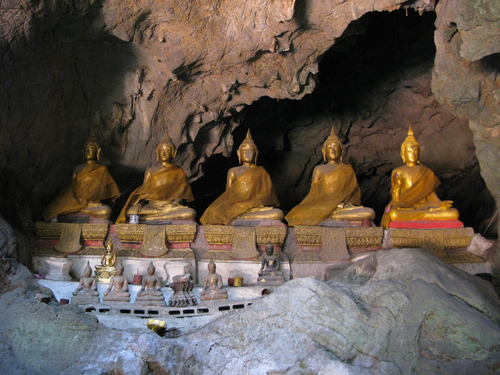
ประติมากรรมพระพุทธรูปประจำแผ่นดิน
พระพุทธรูปประทับนั่งเรียงกัน จำนวน 5 องค์ เป็นพระพุทธรูปในศิลปะรัตนโกสินทร์ในช่วงรัชกาลที่ 3-4 กล่าวคือ พระพักตร์สงบนิ่งคล้ายหุ่น มีอุษณีษะ และพระรัศมีเป็นเปลวสูง เม็ดพระศกเล็ก พระขนงโก่ง พระเนตรเหลือบต่ำเรียวเล็ก พระนาสิกโด่ง แย้มพระโอษฐ์ ปลายตวัดขึ้นเล็กน้อย พระกรรณยาว ครองจีวรห่มเฉียง ประทับนั่งบนฐานสิงห์ประดับกลีบบัว ที่ผ้าทิพย์ของพระพุทธรูปเหล่านี้ประดับตราพระบรมราชสัญลักษณ์ประจำพระองค์ในรัชกาลที่ 1-4 และมีข้อความจารึกบนแผ่นหินที่ฐาน โดยมีรายละเอียดที่แตกต่างกัน ดังนี้1.พระพุทธรูปปางมารวิชัยขัดสมาธิเพชร มีจารึกที่ฐานว่า “พระพุทธรูปเสดจ์นั่งขัดสมาธิเพชรพระหัถขวาห้อยพระเพลาพระองค์นี้ ตามอย่างพระประจำแผ่นดินพระบาทสมเดจ์พระพุทธยอดฟ้าจุฬาโลกย์ ซึ่งเปนพระเจ้าแผ่นดินสยามพระองค์ที่๑ ในพระบรมราชวงษซึ่งดำรง ณ กรุงเทพมหานครอมรรัตนโกสินทรมหินทรายุทธยาบรมราชธานี ณ ตำบลบางกอก” ที่ผ้าทิพย์ประดับตราอุณาโลม2.พระพุทธรูปปางมารวิชัยขัดสมาธิราบ มีจารึกที่ฐานว่า “พระพุทธรูปเสดจ์นั่งขัดสมาธิซ้อนพระหัถขวาพาดพระเพลาพระองค์นี้ ตามอย่างพระประจำแผ่นดินพระบาทสมเดจ์พระพุทธเลิศหล้านภาไลยซึ่งเปนพระเจ้าแผ่นดินสยามพระองค์ที่ ๒ ในพระบรมราชวงษซึ่งดำรง ณ กรุงเทพมหานครอมรรัตนโกสินทรมหินทรายุทธยาบรมราชธานี ณ ตำบลบางกอก” ที่ผ้าทิพย์ประดับตราครุฑยุดนาค3.พระพุทธรูปปางสมาธิขัดสมาธิราบ มีจารึกที่ฐานว่า “พระพุทธรูปเสดจ์นั่งขัดสมาธิซ้อนพระหัถซ้อนพระองค์นี้ ตามอย่างพระประจำแผ่นดินพระบาทสมเดจ์พระนั่งเกล้าเจ้าอยู่หัว ซึ่งเปนพระเจ้าแผ่นดินสยามพระองค์ที่ ๓ ในพระบรมราชวงษซึ่งดำรง ณ กรุงเทพมหานครอมรรัตนโกสินทรมหินทรายุทธยาบรมราชธานี ณ ตำบลบางกอก”ที่ผ้าทิพย์ประดับตราพระมหาปราสาท4.พระพุทธรูปปางสมาธิขัดสมาธิเพชร มีจารึกที่ฐานว่า “พระพุทธรูปเสดจ์นั่งขัดสมาธิเพชร พระหัถซ้อนพระองค์นี้ ตามอย่างพระประจำแผ่นดินพระบาทสมเด็จพระจอมเกล้าเจ้าอยู่หัว ซึ่งเปนพระเจ้าแผ่นดินสยามพระองค์ที่ ๔ ในพระบรมราชวงษซึ่งดำรง ณ กรุงเทพมหานครอมรรัตนโกสินทรมหินทรายุทธยาบรมราชธานี ณ ตำบลบางกอก” ที่ผ้าทิพย์ประดับตราพระมหามงกุฎ 5. เป็นพระพุทธรูปปางขอฝนประทับนั่งขัดสมาธิเพชร ครองจีวรห่มคลุม องค์พระและแท่นฐานทาสีใหม่ จึงไม่อาจทราบได้ว่ามีจารึกข้อความหรือไม่ รวมทั้งไม่ปรากฏรูปสัญลักษณ์ประจำพระองค์ที่ผ้าทิพย์ จากร่องรอยการก่อฐานและรูปแบบศิลปะขององค์พระพุทธรูปเชื่อว่าน่าจะสร้างขึ้นเพิ่มเติมในภายหลังจากการสร้างพระพุทธรูป 4 องค์แรก

ประติมากรรมพระพิมพ์
พระพิมพ์ทรงรี พระพุทธรูปนั่งห้อยพระบาทอยู่ตรงกลาง พระหัตถ์แสดงปางปฐมเทศนา พระองค์นั่งอยู่ภายในอาคารทรงศิขร แวดล้อมด้วยสถูปขนาดเล็ก สองข้างของดอกบัวที่รองรับพระบาทมีลวดลายที่อาจเป็นกวางหมอบ

ประติมากรรมภาพสลักพระพุทธรูป
พระพุทธรูปอยู่ในอิริยาบถนั่งขัดสมาธิแบบหลวม ไขว้ซ้อนกันเพียงข้อพระบาท พระหัตถ์ปางสมาธิ มีฉัตรกางกั้นเหนือพระเศียร เบื้องขวาของพระองค์มีธรรมจักรวางตั้งอยู่บนเสา ส่วนเบื้องซ้ายของพระองค์เป็นเจดีย์ทรงกลม
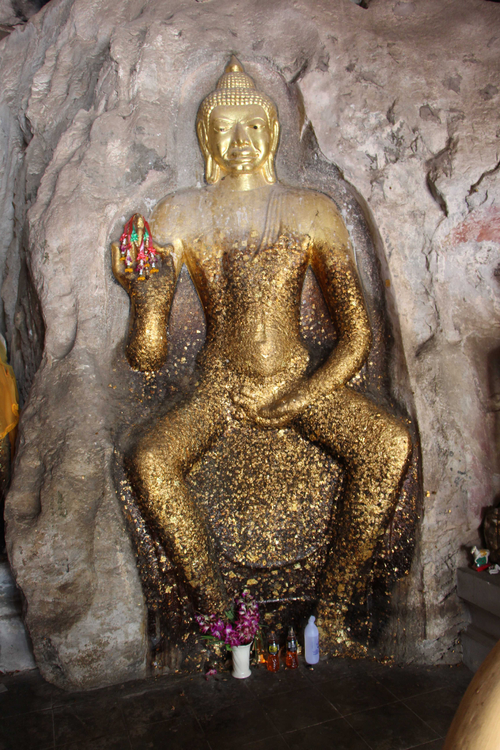
ประติมากรรมพระพุทธรูปนั่งห้อยพระบาท
พระพุทธรูปประทับนั่งห้อยพระบาทองค์นี้เป็นประติมากรรมนูนต่ำ สลักอยู่บนผนังถ้ำ ได้รับการปิดทองและทาทองโดยคนปัจจุบัน พระพักตร์แป้น พระขนงต่อเป็นปีกกา พระเนตรโปน พระนาสิกบาน พระโอษฐ์แบะ เหล่านี้เทียบได้กับพระพักตร์พระพุทธรูปศิลปะทวารวดีทั่วไป น่าสังเกตว่าเหนือพระอุษณีษะมีพระรัศมีรูปบัวตูม ครองจีวรห่มเฉียงบางแนบพระวรกาย มีชายจีวรอยู่เหนือพระอังสาซ้าย พระหัตถ์ขวาทำปางแสดงธรรม พระหัตถ์ซ้ายวางเหนือพระเพลา