ค้นหางานศิลปกรรม
ฐานข้อมูลศิลปกรรมในเอเชียตะวันออกเฉียงใต้
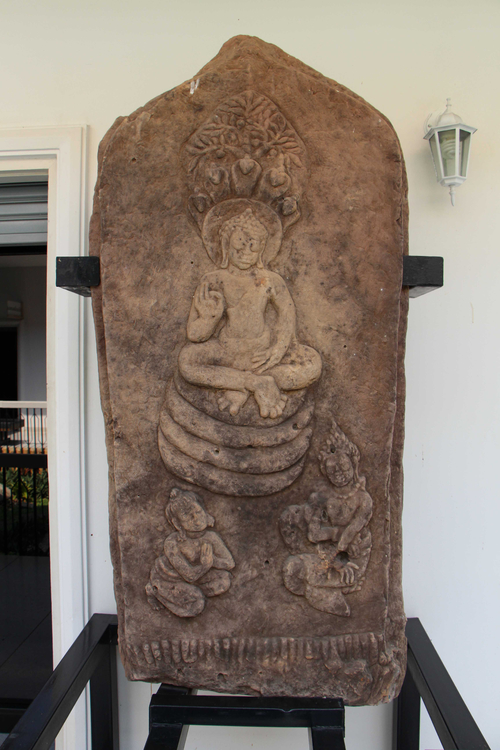

ประติมากรรมใบเสมา
ใบเสมาแผ่นแบน ยอดแหลม สลักลายกลีบบัวที่ด้านล่าง ด้านหน้าเล่าเรื่องพุทธประวัติตอนเสวยวิมุตติสุขสัปดาห์ที่ 6 หรือตอนาคปรก ส่วนบนสลักภาพพระพุทธเจ้านั่งขัดสมาธิแบบหลวมอยู่เหนือขนดนาคที่ซ้อนกัน 4 ชั้น พระหัตถ์ทำปางแสดงธรรม เหนือพระเศียรมีหัวนาค 5 หัวปรกอยู่ เบื้องหลังเป็นต้นไม้ซึ่งคงหมายถึงต้นมุจลินท์หรือต้นจิก เบื้องล่างทางด้านซ้ายของพระองค์ปรากฏภาพบุคคลสวมเครื่องทรงมากนั่งทำท่านอบน้อม อาจหมายถึงพระยานาคมุจลินท์ที่แปลงกายเป็นมนุษย์มาเฝ้าพระองค์ อีกบุคคลหนึ่งทางด้านขวาของพระองค์ทำท่าประนมกร คงหมายถึงผู้ติดตาม

ประติมากรรมใบเสมา
ใบเสมาแผ่นแบนมียอดแหลม เบื้องล่างสลักรูปกลีบบัว ด้านหน้าสลักภาพพุทธประวัติตอนเสด็จโปรดพระนางพิมพา หรือนิยมเรียกกันว่า ตอนพิมพาพิลาป เพราะพระนางพิมพายินดีระคนเศร้าเสียใจจนกรรแสงเมื่อได้พบพระพุทธองค์พระพุทธเจ้านั่งห้อยพระบาทอยู่ภายในอาคารซึ่งตามพุทธประวัติกล่าวว่าเป็นที่ประทับของพระนางพิมพา พระพุทธองค์ผินพระพักตร์ไปทางซ้าย เบื้องล่างทางด้านซ้ายของพระองค์ปรากฏภาพพระนางพิมพากำลังสยายผมเช็ดพระบาท เบื้องหลังพระนางเป็นพระราหุลแลผู้ติดตาม ปรากฏภาพฉัตรและแส้ใกล้ๆ พระราหุล เบื้องขวาของพระพุทธองค์มีบุรุษนั่งชันเข่าคงหมายถึงพระเจ้าสุทโธทนะ มีผู้ติดตามนั่งอยู่ด้านหลัง ใกล้กันนั้นมีภาพฉัตร แส้ 2 คัน และเครื่องสูงที่ลักษณะคล้ายบังสูรย์ เบื้องล่างเป็นแนวกำแพงเมืองหรือกำแพงวัง ซุ้มประตูซ้อนชั้น มีทหารยามรักษาการณ์ 4 คน

ประติมากรรมใบเสมา
ใบเสมาแผ่นแบนมียอดแหลม สลักภาพเล่าเรื่องอยู่ทางด้านหน้า เป็นภาพพระอินทร์พร้อมด้วยชายาและช้างเอราวัณ พระอินทร์นั่งในท่าลลิตาสนะอยู่ตรงกลาง ถือวัชระไว้ในพระหัตถ์ซ้าย ต้นไมทางเบื้องหลังสันนิษฐานว่าเป็นต้นปาริชาติ อันเป็นต้นไม้ประจำสวรรค์ชั้นดาวดึงส์ซึ่งเป็นสวรรค์ของพระอินทร์ เบื้องซ้ายของพระองค์มีภาพบุคคล 3 คน และนก 1 ตัว เป็นภาพชายาทั้ง 4 ของพระอินทร์ ได้แก่ สุธรรมา สุจิตรา สุนันทา และสุชาดาซึ่งกลับมาเกิดเป็นนกยาง เพราะไม่ได้สั่งสมบุญไว้เพียงพอ ด้านหลังของกลุ่มชายาเป็นลวดลายกนกแบบทวารวดีซึ่งคงสื่อถึงก้อนเมฆ ด้านขวาของพระอินทร์มีช้างเอราวัณ
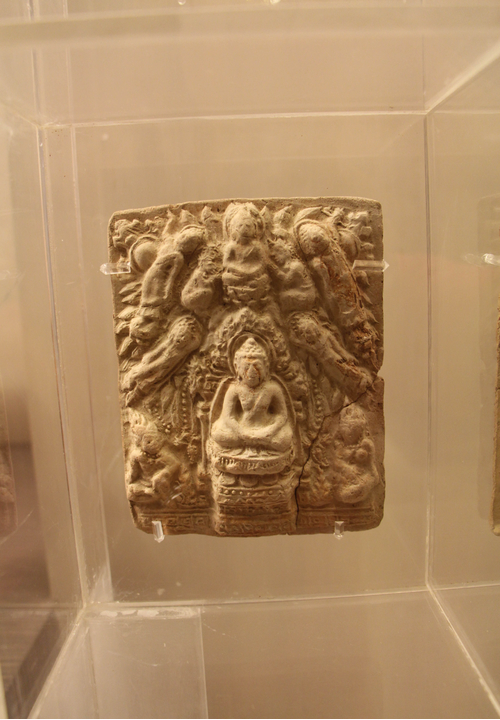
ประติมากรรมพระพิมพ์
พระพุทธเจ้านั่งทำปางสมาธิบนบัลลังก์ เบื้องขวาและเบื้องซ้ายมีภาพบุคคลด้านละ 1 คน โดยบุคคลทางขวาของพระพุทธองค์เป็นบุรุษในขณะที่ทางซ้ายน่าจะเป็นสตรี เบื้องบนเป็นพระพุทธนิรมิต 5 องค์ในอิริยาบถต่างๆ มีภาพบุคคลนั่งย่อเข่าและประนมมือไหว้พระพุทธนิรมิตองค์กลาง

ประติมากรรมพระพุทธรูปไสยาสน์
พระพุทธรูปสร้างโดยการนำเอาหินทรายขนาดใหญ่มาเรียงกันแล้วสลักเป็นพระพุทธรูป ประทับไสยาสน์แบบตะแคงขวาหรือสีหไสยาสน์ พระกรขวาวางราบกับพื้นรองรับพระเศียร พระวรกายเหยียวยาว พระกรซ้ายวางทับอยู่ด้านบน พระบาททั้ง 2 ข้างวางเสมอกัน พระพักตร์ทำจากหินทรายหลายก้อนมาเรียงซ้อนกัน มีรูปแบบทั่วไปตามศิลปะทวารวดี คือ พระพักตร์แลดูเหลี่ยม พระขนงเป็นสันและต่อเป็นปีกกา พระเนตรเหลือบต่ำและโปน พระนาสิกใหญ่ พระโอษฐ์แบะกว้าง
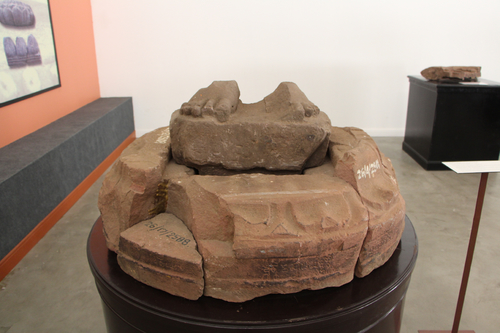
ประติมากรรมพระพุทธรูป
ชิ้นส่วนพระพุทธรูปหินทรายนี้เหลือเพียงพระบาทและฐานบัวเท่านั้น หินทรายส่วนพระบาทเป็นผังสี่เหลี่ยม สลักเชื่อมติดกับฐานหน้ากระดานและมีเดือยยาว ส่วนหินทรายส่วนฐานบัวเป็นผังกลม มีจารึกอยู่ที่ขอบล่าง กึ่งกลางฐานบัวสลักเป็นช่องสี่เหลี่ยมเพื่อรับพระบาท
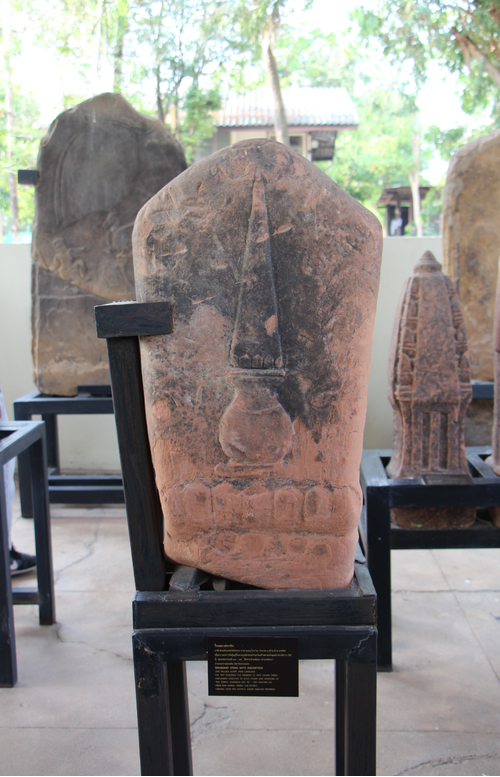
ประติมากรรมใบเสมา
ใบเสมาแผ่นแบน ทั้ง 2 ด้านมีภาพสลักปรากฏอยู่ ด้านแรกทำรูปหม้อต่อด้วยกรวยอยู่ตรงกลางและกลีบบัวประดับอยู่ตอนล่าง ด้านที่สองทำรูปแท่นสี่เหลี่ยมต่อด้วยทรงกรวยอยู่ตรงกลางและกลีบบัวประดับอยู่ตอนล่าง ใกล้ๆกับรูปทรงกรวยมีข้อความจารึก รูปที่สลักอยู่ตรงกลางของด้านทั้งสองมีความเห็นจากนักวิชาการเป็น 2 ทาง คือ บางท่านสันนิษฐานว่าเป็นรูปสถูป ขณะที่บางท่านสันนิษฐานว่าเป็นรูปเครื่องบวงสรวงทำนองบายศรี
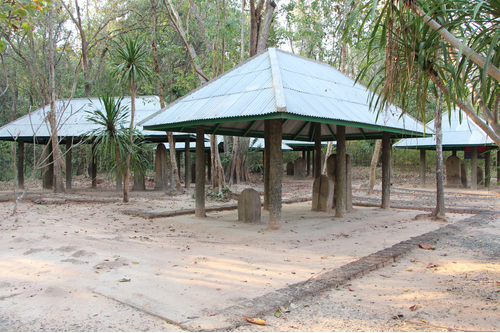
ประติมากรรมใบเสมา
ใบเสมากลุ่มนี้มีจำนวนทั้งสิ้น 24 ใบ ทุกใบอยู่ในทรงแผ่นแบน ปักตรงตามแนวทิศทั้งแปด ทิศละ 3 ชั้น ล้อมรอบพื้นที่สี่เหลี่ยม ความสูงของใบเสมาแต่ละชั้นไม่เท่ากัน ใบเสมาชั้นในสูงที่สุดจากนั้นค่อยๆ ไล่ลำดับความสูงลงมายังชั้นกลางและชั้นนอก ใบเสมาชั้นในกับชั้นนอกตั้งอยู่เคียงกันในขณะที่ชั้นนอกอยู่ห่างออกไปหลายเมตร ด้านในของใบเสมาชั้นในสลักภาพเล่าเรื่องที่บริเวณโคน สันนิษฐานว่าเป็นชาดก ในขณะที่ใบเสมาชั้นกลางและชั้นนอกสลักรูปกรวยเป็นส่วนใหญ่