Artwork Search
Arts in Southeast Asia Database
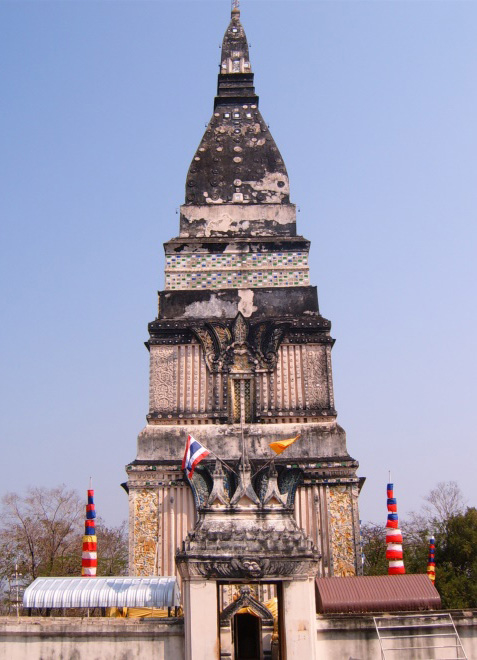

ArchitecturePhra Dhat Tha Utain
This Chedi is a Prasat Chedi with two-tier body. The lower one has several niches with fake doors on 4 sides. The arch is decorated in leave patterns and the columns are decorated with stuccos. The upper body is a replicated body and the square bell element is decorated with patterns. The top is an extended square lotus bud.
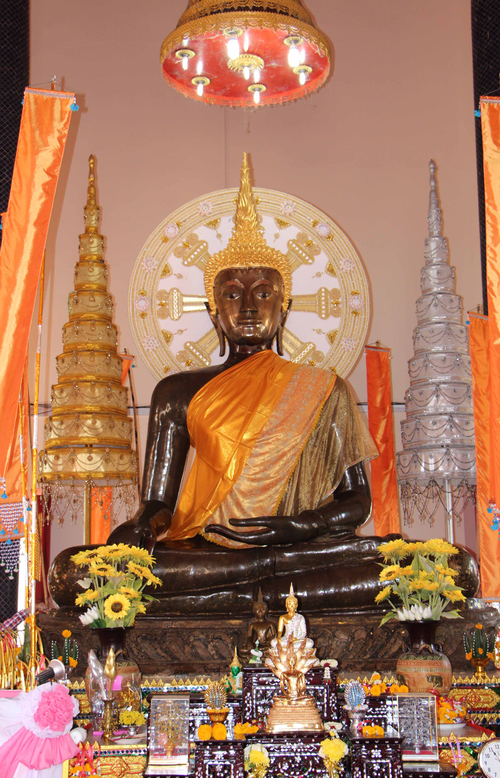
SculptureAong Teu Buddha Image
This Buddha image is seated in meditation posture with subduing Mara attitude. The face is long and of oval shape. The hair bud is small and the halo is flame-like. The facial expression is austere and the facial lines are not visible. The eyes and noses are small and the mouth is large. The monastic robe is sliding and the edge extends to the abdomen. All the fingers are of even length. The image is seated on a base decorated with lotus petals.
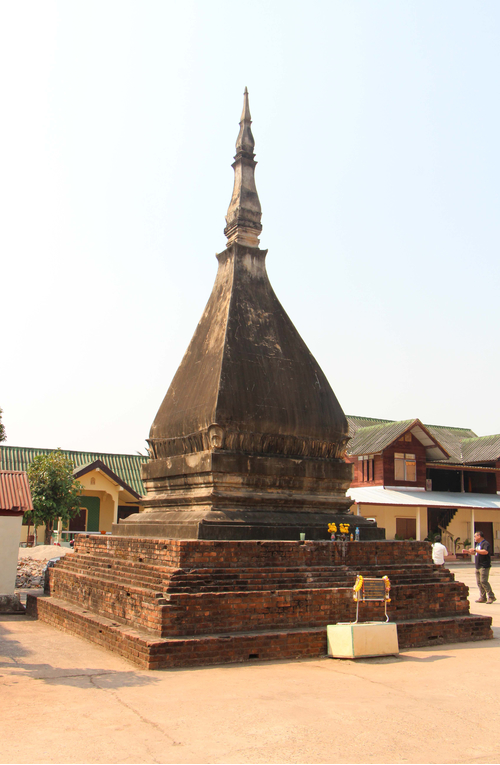
ArchitectureSquare Lotus Bud Chedi
This Chedi is of a square bell-shaped. The base consists of a set of plain bases topped with convex lotus. The bell-shaped element is decorated with lotus patterns. Above this is Hamika with inverted lotus, convex lotus and square spire.
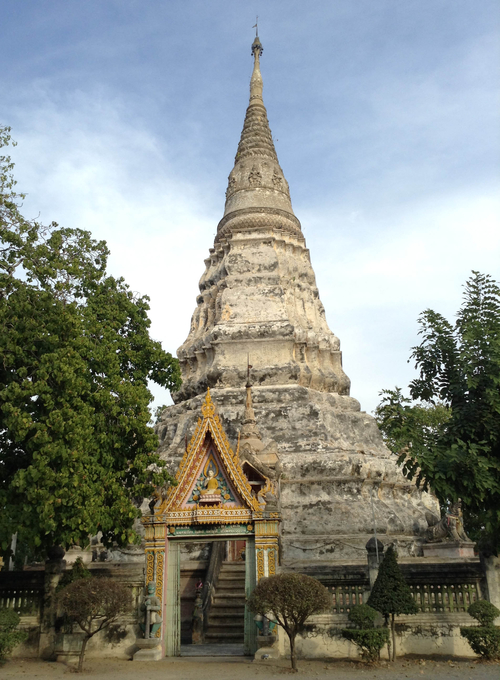
ArchitectureThe Principle Chedi Wat Chiang Nga Sangaram
This is a bell-shaped Chedi with indented sloping mouldings and a series of lotus bud. The bell element in a round plan is decorated with lotus pattern with a replica chedi at the top.
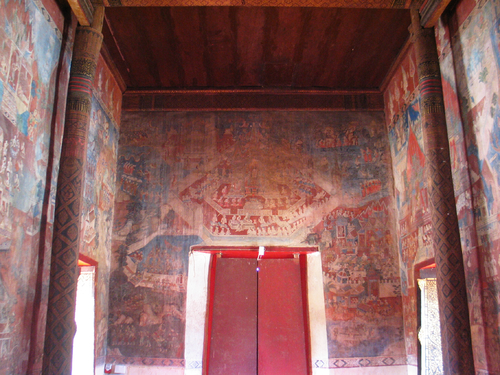
PaintingMural Painting Wat Thung Sri Meung
Mural paintings at this Phra Putthabhat hall were painted on the walls, the walls behind the doors and the columns. The paintings were painted in various stories including Vessanatara Jataka, Phra Malai and Buddha’s life. The walls behind the doors were painted with Pajittakumara Jataka, Julapata Jataka and Sin Chai. The columns were painted with Sin Chai stories, lotus bud and intertwined spray patterns. The painting techniques might have been influenced by the royal school of art in Bangkok. The techniques include patterns of the main characters, the palaces, and color status. However, there were also pictures of local folk life in the paintings.
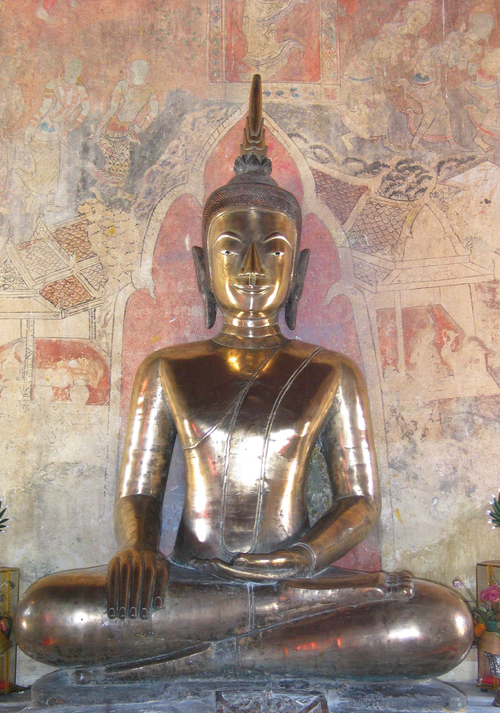
SculptureBuddha image Wat Thung Sri Meung
This Buddha image is seated in the subduing Mara attitude with conical face, small hair buds, large flame-like halo, prominent facial frame, straight-looking eyes, hook-shaped nose, curvy ears and large lips of Lanchang style. The cloth extends to the abdomen and all fingers are of the same length.
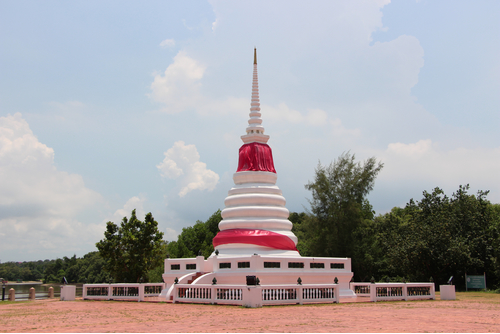
ArchitecturePhra Chedi Klang Nam (middle of the water) Rayong
The brick and cement Chedi is painted in white and has a square circumambulatory with a wall. The wall is decorated with enameled insulators. There is a short wall supporting a bell-shaped element in a round plan. There is a lotus base, a series of three convex moldings, a lotus base with pointed mouldings, all of which are highly extended. Above this is the bell-shaped element, hamika, pillars, spire and finial. The surrounding area is covered with clayed tiles.
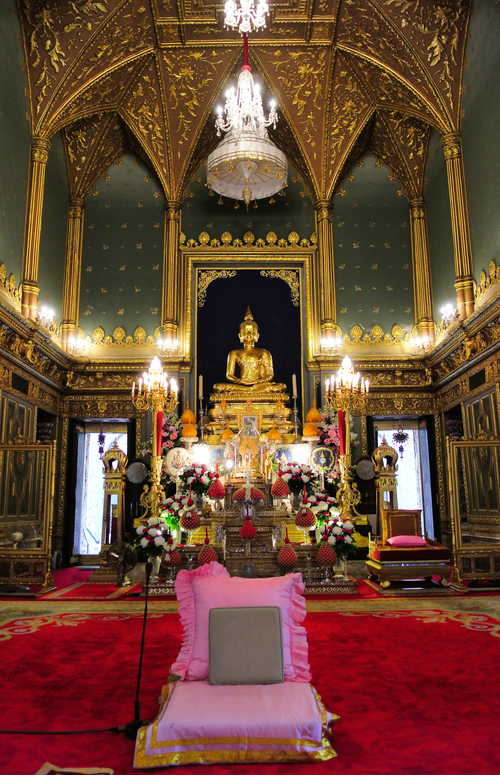
ArchitectureUbosot Wat Ratbophit Sathitmahasimaram
The interior of Ubosot represents the combination of Thai traditional art and western art. Walls and ceilings are decorated with golden floral-foliage motifs, as well as between each window which represents the Unalom sign and the alphabet จ. which is the first letter of the name of King Rama V.The interior central door pediment represents the Emblem of Thailand in the reign of King Rama V which comprises the Royal Regalia, the Emblem of the Royal House of Chakri, Erawan elephant, a white elephant, a Kris, Knight Grand Cordon (Special Class) of the Most Illustrious Order of Chula Chom Klao, seven-tiered umbrella flanked by a lion and a Gajasimha. The upper wall was painted in narrative scenes designed by Prince Prawit Chumsai, a significant artist and craftsman in the reign of King Rama V. In the middle of Ubosot, there is the main Buddha Image in meditation seated in cross-legged position on an Italian marble pedestal. The image is made of bronze and gold. The gold used was once the King Rama V’s ornament since his childhood. Over the Buddha Image, there is a Royal Nine-tiered white umbrella which was once used in the Royal funeral of King Rama V. Beneath the marble pedestal, relics of King Rama II, King Rama III, King Rama IV, King Rama V and King Rama VII were kept.