ค้นหางานศิลปกรรม
ฐานข้อมูลศิลปกรรมในเอเชียตะวันออกเฉียงใต้
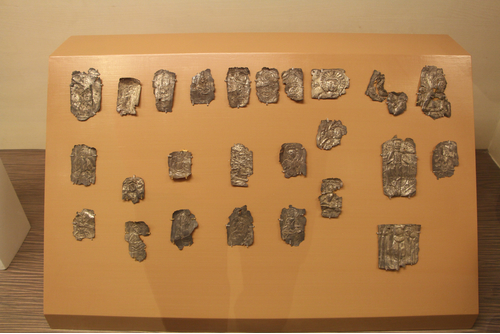

ประติมากรรมแผ่นเงินดุนนูน
แผ่นเงินจำนวนทั้งสิ้น 66 แผ่น ดุนนูนเป็นรูปต่างๆ ได้แก่ พระพุทธรูป สถูป เทวดา และธรรมจักร แต่ละแผ่นไม่ซ้ำแบบกัน
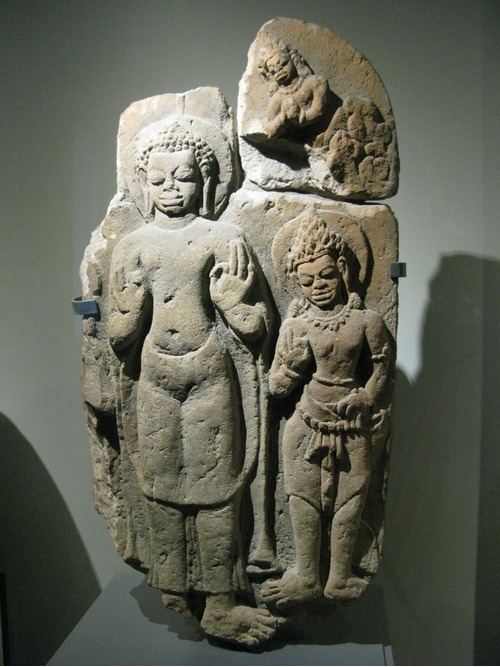
ประติมากรรมใบเสมา
ใบเสมาแบบแผ่นแบน ชำรุดเสียหายมาก แต่ยังเห็นภาพสลักเรื่องได้ชัดเจน พระพุทธองค์ยืน พระหัตถ์ทำปางแสดงธรรมทั้ง 2 ข้าง พระพักตร์เหลี่ยม พระเนตรเหลือบต่ำและโปนใหญ่ พระนาสิกใหญ่ พระโอษฐ์แบะกว้างพระพุทธองค์ครองจีวรห่มคลุม ชายจีวรด้านหน้าพาดผ่านพระชานุเป็นรูปโค้ง ขณะที่ชายจีวรด้านหลังตกลงมาเป็นกรอบสี่เหลี่ยมยาวจนถึงข้อพระบาท สบงยาวจรดข้อพระบาทเช่นกันเบื้องซ้ายของพระองค์มีภาพบุคคลขนาดเล็กสวมเครื่องทรงดังเทวดายืนเคียงข้าง ถัดขึ้นไปมีเทวดาประนมกรแทรกกายอยู่หลังเมฆ จากภาพถ่ายเก่าทำให้เห็นว่าภาพทางเบื้องขวาของพระองค์มีการจัดวางองค์ประกอบแบบนี้เช่นกัน แต่ปัจจุบันได้ชำรุดสูญหายแล้ว ไม่ทราบว่าเป็นพุทธประวัติตอนใด แต่นักวิชาการบางท่านสันนิษฐานว่าเล่าพุทธประวัติตอนเสด็จลงจากสวรรค์ชั้นดาวดึงส์ เพราะมีเทวดาขนาบอยู่ 2 ข้าง
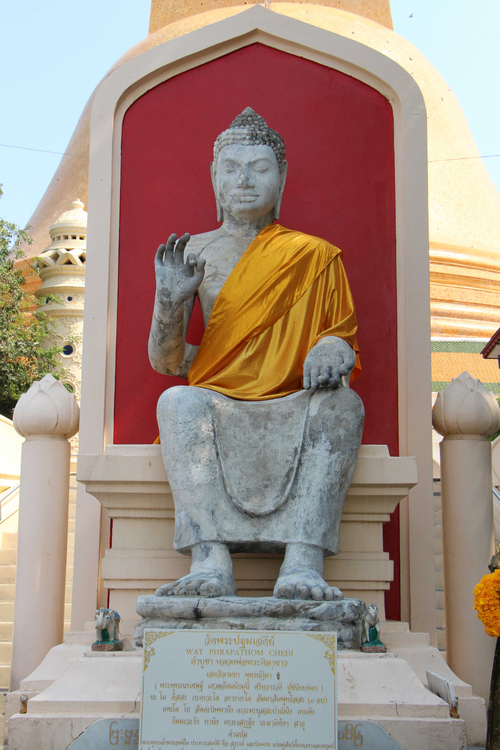
ประติมากรรมพระพุทธรูปนั่งห้อยพระบาท
พระพุทธรูปนั่งห้อยพระบาทองค์นี้ผ่านการบูรณะครั้งใหญ่มาแล้ว ครองจีวรห่มเฉียง บางแนบพระวรกาย ไม่มีริ้ว พระหัตถ์ขวาทำปางแสดงธรรม พระหัตถ์ซ้ายวางอยู่เหนือพรเพลา มีดอกบัวรองรับพระบาทไว้ พระพักตร์เหลี่ยม พระขนงนูนและต่อเป็นปีกกา พระเนตรเหลือบต่ำและโปน พระนาสิกใหญ่ พระโอษฐ์ใหญ่ ขมวดพระเกศาเวียนเป็นวงก้นหอย พระอุษณีษะสูง และมีพระรัศมีรูปลูกแก้ว
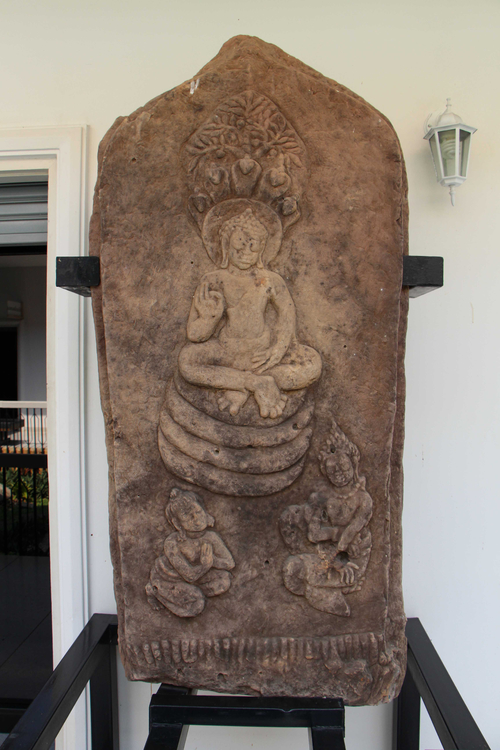
ประติมากรรมใบเสมา
ใบเสมาแผ่นแบน ยอดแหลม สลักลายกลีบบัวที่ด้านล่าง ด้านหน้าเล่าเรื่องพุทธประวัติตอนเสวยวิมุตติสุขสัปดาห์ที่ 6 หรือตอนาคปรก ส่วนบนสลักภาพพระพุทธเจ้านั่งขัดสมาธิแบบหลวมอยู่เหนือขนดนาคที่ซ้อนกัน 4 ชั้น พระหัตถ์ทำปางแสดงธรรม เหนือพระเศียรมีหัวนาค 5 หัวปรกอยู่ เบื้องหลังเป็นต้นไม้ซึ่งคงหมายถึงต้นมุจลินท์หรือต้นจิก เบื้องล่างทางด้านซ้ายของพระองค์ปรากฏภาพบุคคลสวมเครื่องทรงมากนั่งทำท่านอบน้อม อาจหมายถึงพระยานาคมุจลินท์ที่แปลงกายเป็นมนุษย์มาเฝ้าพระองค์ อีกบุคคลหนึ่งทางด้านขวาของพระองค์ทำท่าประนมกร คงหมายถึงผู้ติดตาม

ประติมากรรมใบเสมา
ใบเสมาแผ่นแบนมียอดแหลม เบื้องล่างสลักรูปกลีบบัว ด้านหน้าสลักภาพพุทธประวัติตอนเสด็จโปรดพระนางพิมพา หรือนิยมเรียกกันว่า ตอนพิมพาพิลาป เพราะพระนางพิมพายินดีระคนเศร้าเสียใจจนกรรแสงเมื่อได้พบพระพุทธองค์พระพุทธเจ้านั่งห้อยพระบาทอยู่ภายในอาคารซึ่งตามพุทธประวัติกล่าวว่าเป็นที่ประทับของพระนางพิมพา พระพุทธองค์ผินพระพักตร์ไปทางซ้าย เบื้องล่างทางด้านซ้ายของพระองค์ปรากฏภาพพระนางพิมพากำลังสยายผมเช็ดพระบาท เบื้องหลังพระนางเป็นพระราหุลแลผู้ติดตาม ปรากฏภาพฉัตรและแส้ใกล้ๆ พระราหุล เบื้องขวาของพระพุทธองค์มีบุรุษนั่งชันเข่าคงหมายถึงพระเจ้าสุทโธทนะ มีผู้ติดตามนั่งอยู่ด้านหลัง ใกล้กันนั้นมีภาพฉัตร แส้ 2 คัน และเครื่องสูงที่ลักษณะคล้ายบังสูรย์ เบื้องล่างเป็นแนวกำแพงเมืองหรือกำแพงวัง ซุ้มประตูซ้อนชั้น มีทหารยามรักษาการณ์ 4 คน

ประติมากรรมใบเสมา
ใบเสมาแผ่นแบนมียอดแหลม สลักภาพเล่าเรื่องอยู่ทางด้านหน้า เป็นภาพพระอินทร์พร้อมด้วยชายาและช้างเอราวัณ พระอินทร์นั่งในท่าลลิตาสนะอยู่ตรงกลาง ถือวัชระไว้ในพระหัตถ์ซ้าย ต้นไมทางเบื้องหลังสันนิษฐานว่าเป็นต้นปาริชาติ อันเป็นต้นไม้ประจำสวรรค์ชั้นดาวดึงส์ซึ่งเป็นสวรรค์ของพระอินทร์ เบื้องซ้ายของพระองค์มีภาพบุคคล 3 คน และนก 1 ตัว เป็นภาพชายาทั้ง 4 ของพระอินทร์ ได้แก่ สุธรรมา สุจิตรา สุนันทา และสุชาดาซึ่งกลับมาเกิดเป็นนกยาง เพราะไม่ได้สั่งสมบุญไว้เพียงพอ ด้านหลังของกลุ่มชายาเป็นลวดลายกนกแบบทวารวดีซึ่งคงสื่อถึงก้อนเมฆ ด้านขวาของพระอินทร์มีช้างเอราวัณ

ประติมากรรมพระพุทธบาท
พระพุทธบาทคู่สลักลงบนพื้นศิลาแลงธรรมชาติ มีอาคารสร้างครอบทับไว้ พระพุทธบาทแต่ละข้างมีส่วนเว้าส่วนโค้งของเส้นรอบนอก นิ้วพระบาททั้งห้ายาวไม่เท่ากัน เหมือนรอยเท้าตามธรรมชาติ กึ่งกลางฝ่าพระบาทแต่ละข้างปรากฏลายรูปจักร อันเป็นสัญลักษณ์แสดงถึงความยิ่งใหญ่เหนือโลกและจักรวาลของพระพุทธองค์ ตรงกลางระหว่างฝ่าพระบาททั้ง 2 ข้าง มีร่องและหลุมลึก หลุมนั้นบางท่านเชื่อว่าเป็นหลุมสำหรับปักฉัตร ส่วนร่องคล้ายกากบาทนั้นยังไม่ทราบแน่ชัดว่าเป็นสัญลักษณ์ใดหรือทำขึ้นเพื่อวัตถุประสงค์ใด แต่มีบางท่านเสนอว่าเป็นร่องสำหรับเสียบเครื่องยึดฉัตรให้มั่นคง ทว่าบางท่านเห็นว่ารูปแบบคล้ายเครื่องหมายสวัสดิกะไขว้กัน หรือดูคล้ายธวัชหรือธงชัยที่มีปลายเป็น 2 แฉก
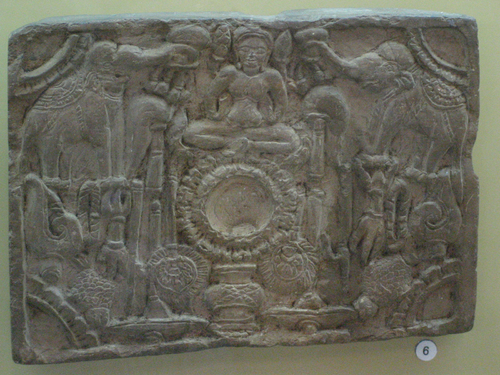
ประติมากรรมแผ่นหินสลักภาพมงคล
แผ่นหินรูปสี่เหลี่ยมผืนผ้า ตรงกลางและมุมทั้งสี่มีหลุมตื้นๆ ที่ล้อมรอบด้วยกลีบบัว อาจใช้สำหรับใส่พวกเครื่องหอมที่ใช้ในพิธีกรรม ตอนบนของแผ่นหินมีช้าง 2 เชือกทำท่าสรงน้ำให้สตรีซึ่งนั่งอยู่ตรงกลาง นักวิชาการเรียกภาพนี้ว่า “คชลักษมี” หรือ “อภิเษกศรี” ด้านล่างปรากฏสัญลักษณ์มงคลต่างๆ และมีส่วนหนึ่งเป็นเครื่องสูงประกอบอยู่ด้วย ทั้งหมดสลักเป็นคู่ๆ ได้แก่ จามร (แส้) วัชระ (สัญลักษณ์ของสายฟ้า) อังกุศะ (ขอสับช้าง) พัด ฉัตร บ่วง ส่วนภาพ ปลา สังข์ และปูรณกลศ (หม้อ) 1 ใบ