ค้นหางานศิลปกรรม
ฐานข้อมูลศิลปกรรมในเอเชียตะวันออกเฉียงใต้
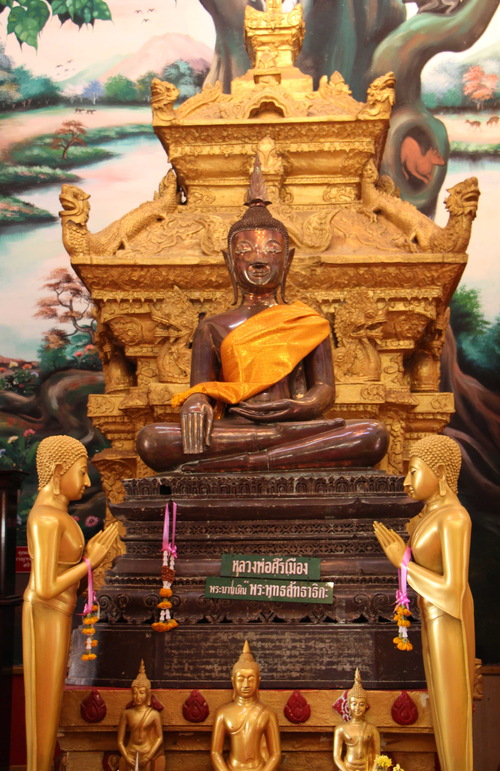

ประติมากรรมหลวงพ่อศรีเมือง
พระพุทธรูปองค์นี้ประทับนั่งขัดสมาธิราบปางมารวิชัย ขมวดพระเกศาเล็ก รัศมีเป็นเปลวไฟ พระพักตร์ค่อนข้างใหญ่ พระเนตรใหญ่หรี่ลงต่ำ พระนาสิกใหญ่มากส่วนยอดพระนาสิกตัด พระโอษฐ์กว้างยิ้มแบบล้านช้าง ชายสังฆาฏิยาวจรดพระนาภีปลายแตกเป็นเขี้ยวตะขาบพระหัตถ์ค่อนข้างใหญ่เทอะทะ นิ้วพระหัตถ์ค่อนข้างใหญ่ยาวเท่ากัน ประทับนั่งบนฐานบัวคว่ำบัวหงายที่ปลายกลีบบัวงอนขึ้น มีการทำฐานสิงห์ฉลุลายและมีจารึกอยู่บริเวณฐานแปดเหลี่ยมด้านล่าง
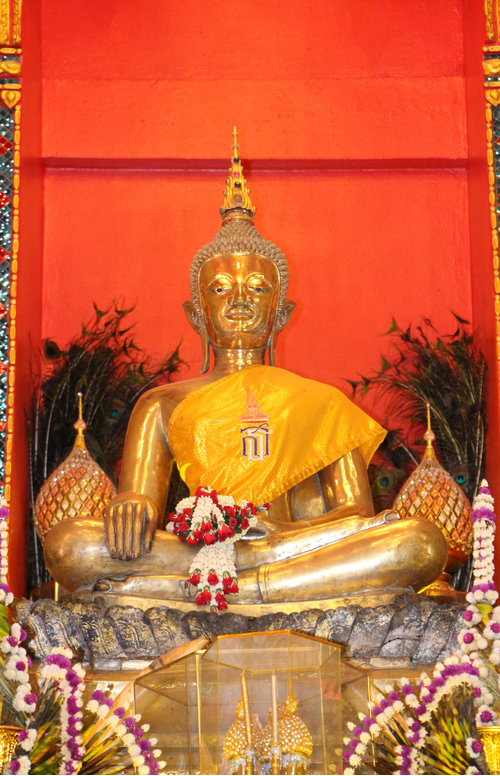
ประติมากรรมพระใส
พระพุทธรูปองค์นี้ประทับนั่งขัดสมาธิราบปางมารวิชัยบนฐานกลีบบัวหงาย เม็ดพระศกขนาดเล็ก รัศมีเป็นเปลวไฟขนาดใหญ่มาก พระพักตร์กลมป้อม พระหนุเสี้ยม มีขอบไรพระศก พระขนงเป็นเส้นนูนขึ้น พระเนตรมองตรง พระโอษฐ์ยิ้มแบบล้านช้าง ขอบพระโอษฐ์หนา สังฆาฏิเป็นแผ่นใหญ่ยาวถึงพระนาภีปลายตัดตรง นิ้วพระหัตถ์ใหญ่และยาวเท่ากัน
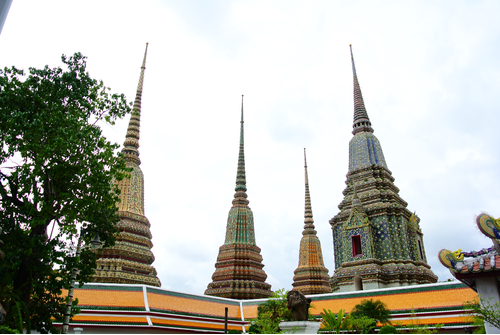
สถาปัตยกรรมพระมหาเจดีย์สี่รัชกาล
พระมหาเจดีย์ศรีสรรเพชดาญาณ พระมหาเจดีย์ดิลกธรรมกรกนิทาน และพระมหาเจดีย์มุนีบัตบริขาร ล้วนเป็นเจดีย์ทรงเครื่องซึ่งเป็นที่นิยมในสมัยรัชกาลที่ 3 โดยเป็นรูปแบบที่สืบเนื่องมาจากศิลปะอยุธยาตอนปลาย มีองค์ประกอบที่สำคัญจากส่วนฐานได้แก่ ชุดฐานสิงห์ บัวทรงคลุ่ม องค์ระฆังเพิ่มมุม บัวทรงคลุ่มเถา ปลี ลูกแก้ว และปลียอด ประดับกระเบื้องเคลือบและกระเบื้องเครื่องถ้วยลวดลายต่างๆ โดยพระมหาเจดีย์ศรีสรรเพชดาญาณประดับกระเบื้องเคลือบสีเขียว พระมหาเจดีย์ดิลกธรรมกรกนิทานประดับด้วยกระเบื้องเคลือบสีขาว พระมหาเจดีย์มุนีบัตบริขารประดับด้วยกระเบื้องเคลือบสีเหลือง ส่วนพระมหาเจดีย์ที่รัชกาลที่ 4 ทรงสร้าง มีรูปแบบเป็นเจดีย์เพิ่มมุม ประดับกระเบื้องเคลือบสีขาบหรือสีน้ำเงิน ซึ่งเจดีย์เพิ่มมุมเป็นรูปแบบที่นิยมในสมัยอยุธยาตอนกลางเป็นต้นมา
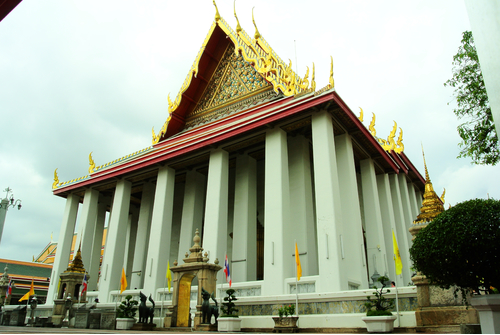
สถาปัตยกรรมพระอุโบสถ วัดพระเชตุพนวิมลมังลาราม
พระอุโบสถเป็นอาคารก่ออิฐถือปูน เครื่องหลังคาแบบไทยประเพณี หน้าบันประดับเครื่องลำยอง ได้แก่ ช่อฟ้า ใบระกา นาคสะดุ้ง หางหงส์ ปิดทองประดับกระจก รอบอุโบสถมีเสาพาไลทรงสี่เหลี่ยมขนาดใหญ่ ไม่ประดับบัวหัวเสา พนักระเบียงรอบพระอุโบสถมีช่องสี่เหลี่ยมประดับประติมากรรมหินอ่อนแกะสลักนูนต่ำเรื่องรามเกียรติ์ บานประตูพระอุโบสถด้านนอกประดับมุกเป็นลวดลายภาพตัวละครจากเรื่องรามเกียรติ์ ด้านในเขียนลายรดน้ำรูปพัดยศพระราชาคณะ พระครูสัญญาบัตร ฐานานุกรมเปรียญทั้งฝ่ายคามวาสีและอรัญวาสีในกรุงและหัวเมือง จิตรกรรมฝาผนังภายในพระอุโบสถเหนือช่องหน้าต่างเขียนเรื่องมโหสถบัณฑิต ผนังระหว่างช่องประตูหน้าต่างเขียนเรื่องพระสาวกเอตทัคคะ บานหน้าต่างด้านในเขียนลายรดน้ำเป็นรูปตราประจำตำแหน่งเจ้าคณะสงฆ์ในกรุงและหัวเมืองสมัยรัชกาลที่ 3 ด้านนอกแกะสลักเป็นลายแก้วชิงดวง
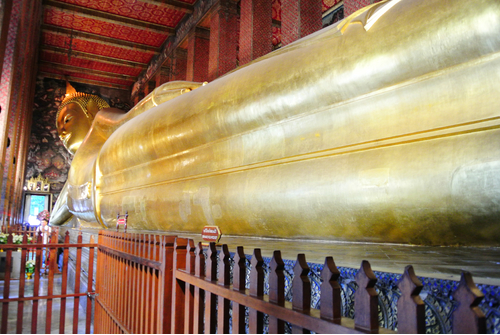
ประติมากรรมพระพุทธไสยาส, พระพุทธไสยาสน์
พระพุทธรูปประทับนอนตะแคงขวาหรือสีหไสยาสน์ พระหัตถ์ขวาตั้งขึ้นรองรับพระเศียร โดยมีพระเขนยทรงสี่เหลี่ยมประดับลวดลายดอกไม้อิทธิพลศิลปะจีนรองรับอีกทีหนึ่ง พระพุทธรูปมีรูปแบบเป็นศิลปะรัตนโกสินทร์ กล่าวคือ พระพักตร์สงบนิ่ง พระเนตรเหลือบต่ำ พระขนงโก่ง พระโอษฐ์บางเรียว พระกรรณยาว ขมวดพระเกศาขนาดเล็ก มีอุษณีษะ และพระรัศมีเป็นเปลวเพลิง ครองจีวรห่มเฉียงเรียบ ไม่มีริ้ว จีวรบางแนบพระวรกาย มีชายสังฆาฏิเป็นแถบสี่เหลี่ยม ปลายเป็นเขี้ยวตะขาบ พาดจากพระอังสาซ้ายมาที่กลางพระอุระ ยาวจรดกึ่งกลางพระนาภี สบงมีแถบสี่เหลี่ยมยาวที่ด้านหน้าจรดข้อพระบาท และมีขอบรัดประคดฝ่าพระบาททั้ง 2 ข้าง ประดับมุกลวดลายมงคล 108 ประการ แบ่งประเภทต่างๆ ได้ดังนี้1. สัญลักษณ์แห่งโชคลาภและความอุดมสมบูรณ์ เช่น หม้อน้ำ ปลาคู่ สวัสดิกะ พวงมณี ดอกบัว เป็นต้น2. เครื่องประกอบพระบารมีของกษัตริย์และพระเจ้าจักรพรรดิ เช่น รัตนะ 7 ประการ เครื่องราชกกุธภัณฑ์ บัลลังก์ เครื่องสูง เครื่องยศ เครื่องต้นต่างๆ และราชพาหนะ เป็นต้น 3. ภาพสัญลักษณ์ภูมิในจักรวาลตามความเชื่อของพระพุทธศาสนา เช่น เขาจักรวาล มหาสมุทร ทวีปทั้ง 4 เขาพระสุเมรุ เขาสัตตบริภัณฑ์ ป่าหิมพานต์ เป็นต้น
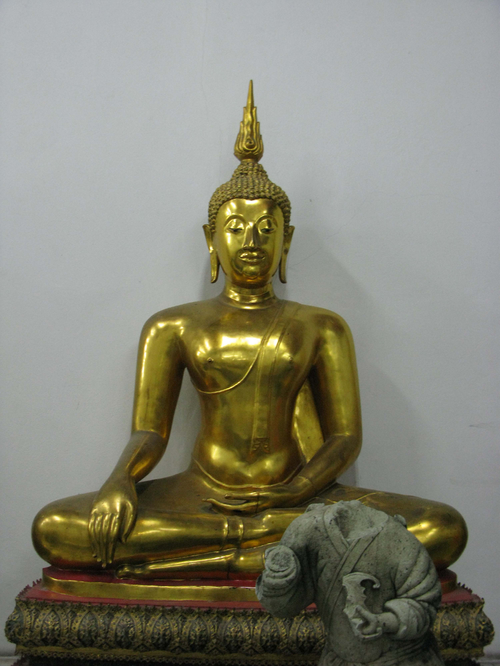
ประติมากรรมพระพุทธรูปปางมารวิชัย
พระพุทธรูปองค์นี้แสดงปางมารวิชัยประทับนั่งขัดสมาธิราบบนฐานหน้ากระดานเกลี้ยง พระพักตร์รูปไข่ ขมวดพระเกศาปานกลาง พระรัศมีเป็นเปลวไม่สูงมาก พระขนงโก่ง พระเนตรเหลือบต่ำหรี่เรียวยาวปลายตวัดขึ้น พระนาสิกโด่งงุ้ม พระโอษฐ์หยักโค้งเป็นคลื่น พระวรกายสมส่วน สังฆาฏิยาวจรดพระนาภีปลายแยกเป็นเขี้ยวตะขาบ นิ้วพระหัตถ์ยาวไม่เท่ากันและพระดัชนีกระดกขึ้นเล็กน้อยพระพุทธรูปองค์นี้มีจารึกอักษรไทยสมัยรัตนโกสินทร์กำกับว่า “สังคโลก” เขียนขึ้นสมัยรัชกาลที่ 1 แสดงว่าพระพุทธ์รูปองค์นี้ถูกอัญเชิญลงมาจากสวรรคโลกหรือศรีสัชนาลัยในคราวที่มีการอัญเชิญพระพุทธรูปมาจากสุโขทัย
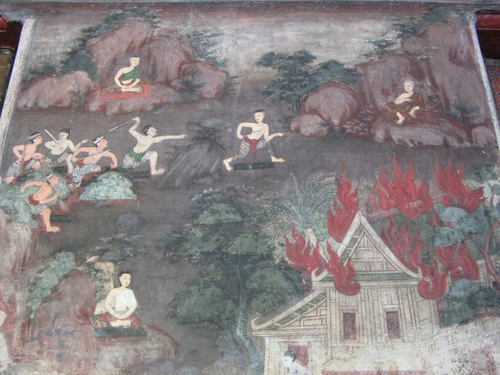
จิตรกรรมจิตรกรรมเรื่องวิปัสสนาญาณ
จิตรกรรมเรื่องวิปัสสนาญาณเขียนอยู่ที่ผนังระหว่างช่องหน้าต่าง ด้านซ้ายของพระพุทธรูปประธาน ฉากหลังเป็นภาพแนวป่าไม้โขดหินสีโทนน้ำตาล ซึ่งมีภาพบุคคล ได้แก่ ภิกษุ ชาวบ้าน อยู่ในอิริยาบถต่างๆ แต่งกายตามสมัยนิยม โดยผู้ชายนุ่งผ้าโจง มีผ้าคาดเอว ผู้หญิงนุ่งผ้า ห่มสไบ สีผิวออกขาวนวลโดยไล่สีอ่อนแก่แตกต่างกันในแต่ละบุคคล การเขียนภาพแม้จะเริ่มมีการแรเงาบ้างแล้ว แต่ยังขาดมิติตามหลักทัศนียวิทยา เช่นเดียวกับงานจิตรกรรมไทยประเพณีในสมัยก่อนมีข้อความที่เขียนอธิบายสั้นๆ ใต้ภาพบุคคลบางแห่ง มีทั้งชื่อญาณและกิเลสประเภทต่างๆ