ค้นหางานศิลปกรรม
ฐานข้อมูลศิลปกรรมในเอเชียตะวันออกเฉียงใต้
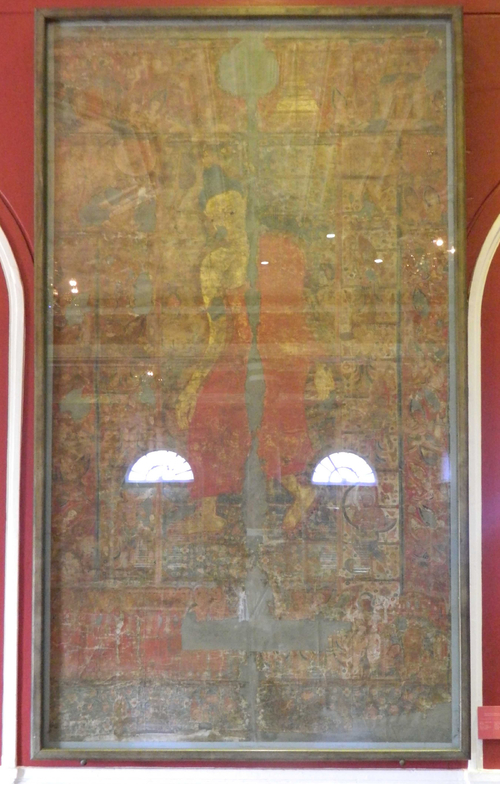

จิตรกรรมพระบฏวัดดอกเงิน
พระบฏผืนนี้เขียนเรื่องพระพุทธเจ้าเสด็จลงจากสวรรค์ชั้นดาวดึงส์สู่เมืองสังกัสสะ สีที่ใช้มีหลายสี เช่น สีเขียว สีน้ำเงิน สีแดง สีขาว สีดินเหลืองและสีดำ ปิดทองเฉพาะองค์พระพุทธเจ้า ภาพแบ่งออกเป็น 4 ช่วง ช่วงบนสุดเป็นภาพสวรรค์ชั้นดาวดึงส์ แสดงภาพเทวดาประคองอัญชลี มีต้นปาริชาติ เจดีย์จุฬามณี และวิมาน 2 หลังคือเวชยันต์ปราสาทและสุธรรมเทวสภา ชั้นที่สองเป็นภาพพระพุทธเจ้าขนาดใหญ่อิริยาบถลีลาลงจากบันไดแก้ว มีพระอาทิตย์และพระจันทร์ขนาบสองข้างพระเศียร ด้านซ้ายแสดงภาพเทวดาจากสวรรค์ชั้นดาวดึงส์เสด็จลงบันไดเงิน ด้านขวาแสดงภาพพรหมเสด็จลงบันไดทอง ขอบทั้งสองด้านแสดงภาพเทวดาชั้นรองถือเครื่องสักการะเหาะตามมา ชั้นที่สามแสดงภาพเมืองสังกัสสะ ฝั่งขวาคือแถวพระสงฆ์ ฝั่งซ้ายคือกลุ่มกษัตริย์ยืนรอรับเสด็จ และยังมีภาพบุคคลอื่นๆ เช่น พราหมณ์ ขุนนางประคองอัญชลีและมีภาพปราสาท ด้านล่างสุดเป็นภาพน้ำ มีมนุษยนาคประคองอัญชลี ฉากหลังเป็นดอกมณฑารพ มีจารึกอักษรฝักขามตามตำแหน่งต่างๆ
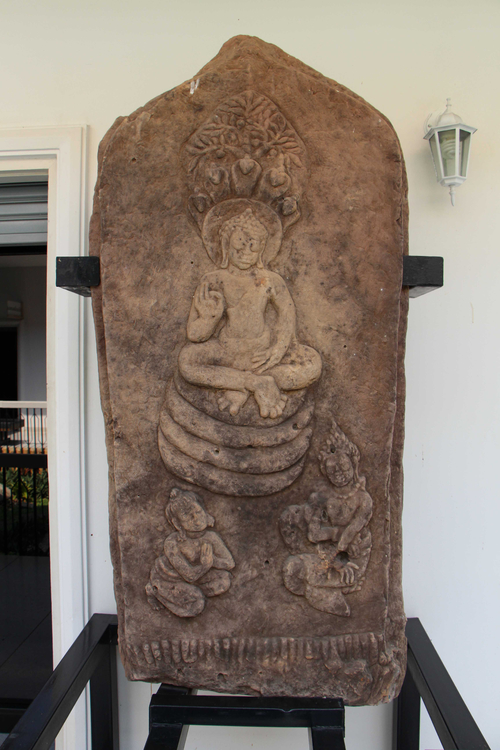
ประติมากรรมใบเสมา
ใบเสมาแผ่นแบน ยอดแหลม สลักลายกลีบบัวที่ด้านล่าง ด้านหน้าเล่าเรื่องพุทธประวัติตอนเสวยวิมุตติสุขสัปดาห์ที่ 6 หรือตอนาคปรก ส่วนบนสลักภาพพระพุทธเจ้านั่งขัดสมาธิแบบหลวมอยู่เหนือขนดนาคที่ซ้อนกัน 4 ชั้น พระหัตถ์ทำปางแสดงธรรม เหนือพระเศียรมีหัวนาค 5 หัวปรกอยู่ เบื้องหลังเป็นต้นไม้ซึ่งคงหมายถึงต้นมุจลินท์หรือต้นจิก เบื้องล่างทางด้านซ้ายของพระองค์ปรากฏภาพบุคคลสวมเครื่องทรงมากนั่งทำท่านอบน้อม อาจหมายถึงพระยานาคมุจลินท์ที่แปลงกายเป็นมนุษย์มาเฝ้าพระองค์ อีกบุคคลหนึ่งทางด้านขวาของพระองค์ทำท่าประนมกร คงหมายถึงผู้ติดตาม


จิตรกรรมพุทธประวัติ จิตรกรรมในเจดีย์ปาโททัมยา
จิตรกรรมใช้สีโทนร้อน เช่น สีแดง สีเหลือง สีดำ ตามอย่างศิลปะปาละ เครื่องแต่งกายของบุคคลในจิตรกรรมเองก็เกี่ยวข้องกับศิลปะปาละอย่างมาก เช่น การทรงเทริดขนนกของกษัตริย์ อย่างไรก็ตาม ลักษณะพื้นเมืองพุกามได้ปรากฏปะปนด้วย เช่น การทรงผ้าคลุมที่มีลวดลายเต็มของกษัตริย์ รวมถึงรูปแบบอาคารที่ดูเหมือนปยาทาด เป็นต้น
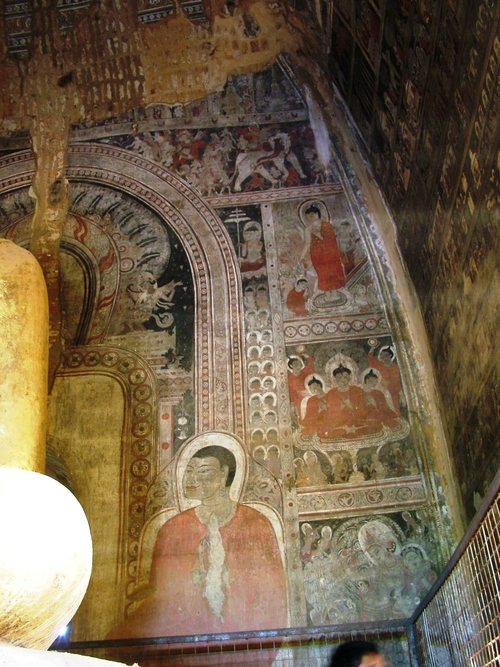
จิตรกรรมส่วนหนึ่งจากพุทธประวัติ 8 ตอน จิตรกรรมในเจดีย์โลกาเทียกพัน
ภาพเล่าเรื่องดังกล่าวแสดงรูปแบบตามแบบปาละอย่างมาก เช่น การใช้สีโทนร้อนเป็นหลัก ฯลฯ ทั้งหมดนี้คล้ายคลึงกับภาพวาดในคัมภีร์ใบลานซึ่งพบทั้งในอินเดียตะวันออกและในพม่าด้วย
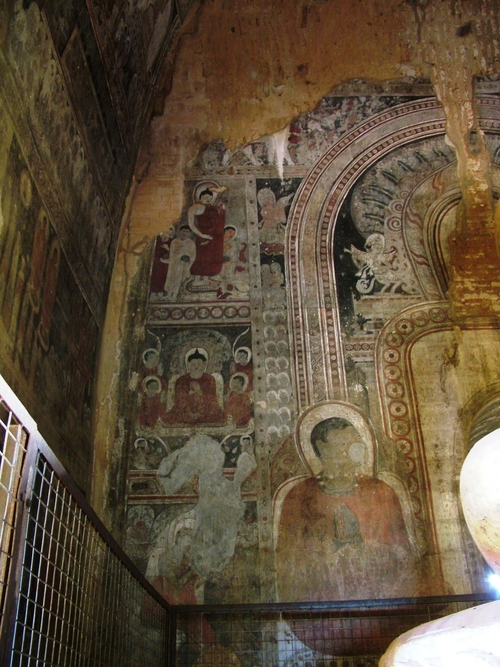
จิตรกรรมส่วนหนึ่งจากพุทธประวัติ 8 ตอน จิตรกรรมในเจดีย์โลกาเทียกพัน
ภาพเล่าเรื่องดังกล่าวแสดงรูปแบบตามแบบปาละอย่างมาก เช่น การใช้สีโทนร้อนเป็นหลัก ฯลฯ ทั้งหมดนี้คล้ายคลึงกับภาพวาดในคัมภีร์ใบลานซึ่งพบทั้งในอินเดียตะวันออกและในพม่าด้วย
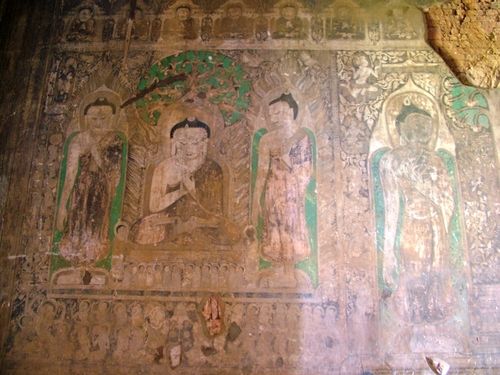
จิตรกรรมพุทธประวัติ จิตรกรรมในเจดีย์ตโยกปเย
จิตรกรรมในเจดีย์ตโยกปยี เป็นตัวอย่างของจิตรกรรมในศิลปะพุกามตอนปลายที่มักเขียนภาพบุคคลขนาดใหญ่ พระพักตร์แสดงการ “ก้มลง” อย่างชัดเจน พื้นที่ว่างถูกถมไปด้วย “ลวดลายกนก” จำนวนมาก ทั้งหมดนี้แตกต่างไปจากศิลปะพุกามตอนต้น อย่างไรก็ตาม ขนบหลายประการ เช่นการเน้นสีโทนร้อน การเขียนต้นไม้แบบประดิษฐ์นั้นก็ยังคงดำเนินตามขนบปาละอยู่

จิตรกรรมลิงถวายบาตรน้ำผึ้ง จิตรกรรมในเจดีย์ปยาตองสู
จิตรกรรมแสดงการใช้โทนสีร้อนแบบปาละ คือ เน้นสีแดง เหลือง ดำ ขาว ส่วนรูปแบบของพระพุทธรูปล้วนแต่เกี่ยวข้องกับจิตรกรรมในใบลานของศิลปะปาละซึ่งคงถูกนำมาที่พุกามและกลายเป็นต้นแบบสำหรับจิตรกรพุกามด้วย อย่างไรก็ตาม การถมลวดลายลงไปในพื้นที่ว่างเปล่านั้นเป็นลักษณะที่นิยมในศิลปะพุกามตอนปลาย

จิตรกรรมเทวดาและพระสาวกเข้าเฝ้าพระพุทธเจ้าตอนปรินิพพาน
จิตรกรรมในสมัยนยองยาน มีลักษณะเด่นคือ ใช้สีโทนร้อนแต่มีสีเขียวที่แทรกเข้าไปในภาพ ไม่มีทัศนียวิทยา ภาพวาดมีการตัดเส้นอย่างง่ายๆ รูปทรงง่ายๆเหมือนการวาดการ์ตูนในปัจจุบัน แต่ละภาพมักคั่นไปด้วยเส้นสินเทาที่เป็นวงโค้งต่อเนื่องกัน ภาพรังเกียจพื้นที่ว่างเปล่าทำให้ต้องถมลายพันธุ์พฤกษาเข้าไปในพื้นที่ว่าง บางครั้งมักวาดภาพะเป็นแถบยาวๆคล้ายภาพบนใบลาน