ค้นหางานศิลปกรรม
ฐานข้อมูลศิลปกรรมในเอเชียตะวันออกเฉียงใต้
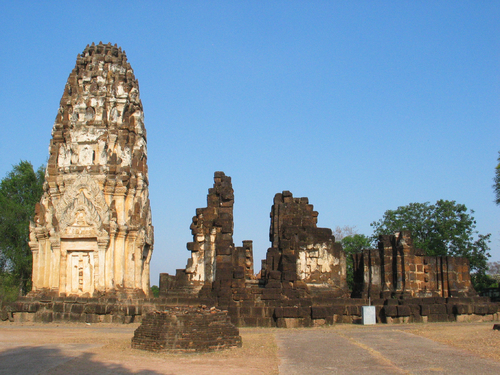

สถาปัตยกรรมปราสาทวัดพระพายหลวง
ปราสาทวัดพระพายหลวงตั้งเป็นประธานของวัดพระพายหลวง ซึ่งเป็นวัดที่มีสิ่งก่อสร้างต่างๆ จำนวนมาก โดยสิ่งก่อสร้างเหล่านี้สร้างเสริมต่อเนื่องกันมาหลายยุค นับแต่ครั้งก่อนสุโขทัย สุโขทัยตอนต้น และสุโขทัยตอนปลาย ตัววัดล้อมรอบด้วยคู้น้ำ เรียกว่า ห้วยแม่โจนตัวปราสาทวัดพระพายหลวงเป็นปราสาท 3 หลัง ก่อด้วยศิลาแลง ฉาบปูนและประดับปูนปั้น ทั้งหมดตั้งอยู่บนฐานไพทีเดียวกัน เรียงตัวตามแนวเหนือใต้ หันหน้าไปทางทิศตะวันออก ทั้ง 3 หลังอยู่ในผังเพิ่มมุมปราสาทหลังกลางและใต้พังทลายลงเหลือเพียงฐานและเรือนธาตุ ปราสาทหลังเหนือยังสมบูรณ์จนถึงส่วนยอดที่เป็นชั้นซ่อนจำลองเรือนธาตุจำนวน 4 ชั้น ยอดสุดเป็นกลศ จากสภาพปัจจุบันยังคงสังเกตเห็นได้ว่าปราสาทหลังกลางมีความสูงใหญ่กว่าอีก 2 หลัง ซึ่งเป็นระเบียบโดยทั่วไปของศาสนสถานในวัฒนธรรมเขมร งานปูนปั้นประดับดั้งเดิมยังคงเห็นชัดเจนได้ที่ปราสาทหลังเหนือ (ลายปูนปั้นหลายส่วนปั้นใหม่โดยกรมศิลปากร) ที่น่าสนใจคือภาพพุทธประวัติที่หน้าบัน ทิศใต้เป็นตอนปลงพระเกศา ทิศเหนือเป็นตอนกองทัพพญามารกำลังผจญพระพุทธเจ้า และทิศตะวันตกน่าจะเป็นตอนชนะมารและตรัสรู้

สถาปัตยกรรมดอนขุมเงิน
จากสภาพปัจจุบันซึ่งพังทลายและถูกรื้อทำลายอย่างมาก ทำให้เห็นว่าศาสนสถานแห่งนี้มีหลายอย่างที่ผิดแปลกไปจากปราสาทในวัฒนธรรมเขมรอื่นๆ ทั่วไป เช่น หินทรายที่นำมาใช้ก่อสร้างมิได้มีความหนาเฉกเช่นหินทรายตามปราสาทหินทั่วไป หินทรายบางจุดนำมาก่อในลักษณะของแนวคันเขื่อนมากกว่านำมาเรียงก่อเป็นตัวสถาปัตยกรรมแบบปราสาทหิน แผนผังของศาสนสถานหลังนี้ประกอบด้วยอาคารประธานหินทราย สภาพพังทลายและถูกรื้อทำลายจนเหลือแต่ฐาน สันนิษฐานรูปแบบดั้งเดิมได้ยาก ด้านหน้าหรือด้านตะวันออกของอาคารประธานมีบ่อน้ำสี่เหลี่ยมที่กรุผนังบ่อด้วยหินทราย มีขั้นบันไดลงสู่บ่อด้วย ถัดออกไปทางทิศตะวันออกเฉียงเหนือมีอาคารสี่เหลี่ยมผืนผ้าที่ใช้หินทรายก่อเป็นแนวคันเขื่อน ภายในค้นพบฐานประดิษฐานโคที่มีจารึกของพระเจ้ามเหนทรวรมัน พื้นที่โดยรอบยังเห็นหินทรายที่ก่อเป็นแนวกำแพงเป็นระยะๆ นอกจากนี้ยังค้นพบแนวท่อโสมสูตรอยู่ทางทิศตะวันตกด้วย เข้าใจว่าเป็นแนวที่ทอดยาวมาจากห้องครรภคฤหะหรือสระน้ำ
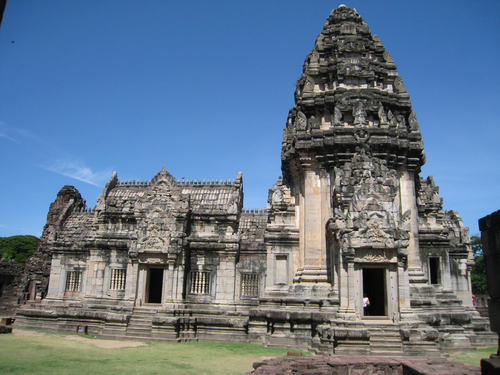
สถาปัตยกรรมปราสาทประธานพิมาย
ปราสาทประธานหรือปรางค์ประธานสร้างจากหินทรายสีเทา หันหน้าไปทางทิศใต้ องค์ประกอบสำคัญได้แก่ เรือนธาตุอยู่ในผังเพิ่มมุม ด้านเหนือ ตะวันออก และตะวันตกของเรือนธาตุเป็นมุขทางเข้าสู่ครรภคฤหะที่อยู่ภายใน ส่วนด้านใต้เป็นอันตราละเชื่อมต่อกับมณฑปสี่เหลี่ยมผืนผ้า มีประตูทางเข้าสู่มณฑปทางด้านใต้ (ในอดีตทางด้านนี้น่าจะมีรูปเคารพ จึงไม่อาจเข้าไปภายในได้จริง) ตะวันออก และตะวันตก ประดับบราลีที่สันหลังคามุข อันตราละ และมณฑปหลังคาของเรือนธาตุเป็นชั้นซ้อนลดหลั่นกัน แต่ละชั้นจำลองย่อส่วนจากเรือนธาตุ ประดับด้วยบรรพแถลงและนาคปัก (กลีบขนุน) ยอดสุดเป็นกลศ นภศูลที่เคยมีอยู่พักหายไปแล้ว ห้องครรภคฤหะที่อยู่ในเรือนธาตุประดิษฐานพระพุทธรูปนาคปรกแบบายน จึงไม่ใช่องค์ดั้งเดิมที่ประดิษฐานพร้อมการสร้างปราสาทประธาน มีรางน้ำมนต์หรือท่อโสมสูตรไหลออกทางมุมทิศตะวันออกเฉียงเหนือ
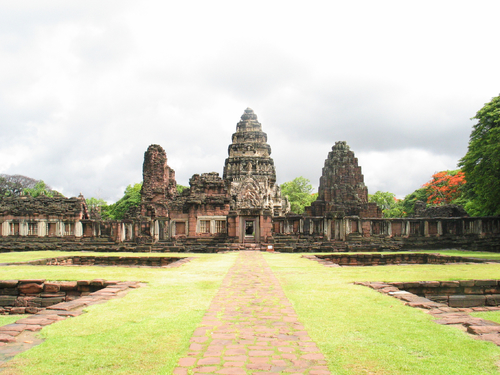
สถาปัตยกรรมปราสาทพิมาย
ปราสาทพิมายตั้งอยู่ศูนย์กลางเมืองพิมาย หันหน้าไปทางทิศใต้ สิ่งก่อสร้างสำคัญลำดับจากด้านหน้าไปยังปราสาทประธานมีดังนี้1. ชาลานาคราชในแผงผังกากบาท ด้านตะวันตกเฉียงใต้ของชาลานาคราชมีอาคารสี่เหลี่ยม 1 หลัง เรียกกันในปัจจุบันว่า พลับพลาเปลื้องเครื่อง 2. ถัดจากชาลานาคราชเป็นโคปุระและกำแพงล้อมรอบศาสนสถาน โคปุระอยู่ในผังกากบาท ประจำอยู่กึ่งกลางด้านทั้งสี่3. ถัดจากโคปุระทิศใต้ไปเป็นชาลาทางเดินยกพื้น ชาลานี้เชื่อมต่อโคปุระทิศใต้ของกำแพงล้อมรอบศาสนสถานกับโคปุระทิศใต้ของระเบียงคด เดิมทีมีหลังคาเครื่องไม้มุงกระเบื้องคลุมอยู่4. พื้นที่ระหว่างกำแพงล้อมรอบศาสนสถานกับระเบียงคดมีบรรณาลัย 2 หลัง อยู่ทางพื้นที่ด้านตะวันตก นอกจากนี้ยังมีสระน้ำ 4 สระอยู่ที่มุมทั้งสี่ของกำแพงล้อมรอบศาสนสถานด้วย5. ระเบียงคดล้อมรอบพื้นที่ศูนย์กลางอันเป็นที่ตั้งปราสาทประธาน มีโคปุระแผนผังกากบาทอยู่ที่ด้านทั้งสี่ 6. ปราสาทประธานตั้งอยู่กลางศาสนสถาน ก่อด้วยหินทรายสีเทาเป็นวัสดุหลัก หันหน้าไปทางใต้ รอบๆ ปราสาทประธานมีอาคารดังนี้ ด้านตะวันออกเฉียงใต้มีปรางค์พรหมทัต ด้านตะวันตกเฉียงใต้มีหอพราหมณ์และปรางค์หินแดง ด้านตะวันออกมีส่วนฐานของอาคาร 1 หลัง น่าจะเป็นพลับพลาโถง
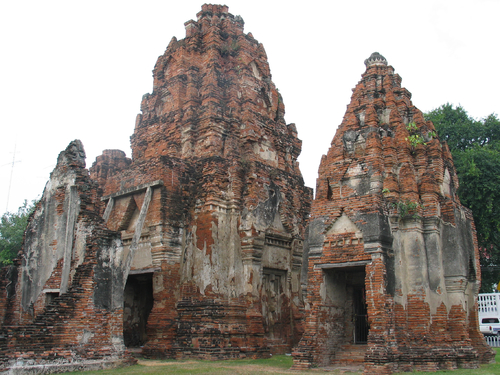
สถาปัตยกรรมปรางค์แขก
ปรางค์แขกเป็นปราสาทอิฐ 3 หลังวางเรียงกันตามแนวเหนือใต้ หันหน้าไปทางทิศตะวันออก หลังกลางมีความสูงและใหญ่กว่าอีก 2 หลัง จากการขุดตรวจโดย ผู้ช่วยศาสตราจารย์ ดร.สฤษดิ์พงศ์ ขุนทรง ได้พบว่าปราสาททั้งสามหลังตั้งอยู่บนฐานไพทีเดียวกันปราสาททั้ง 3 หลังมีรูปแบบทำนองเดียวกัน คือ แผนผังเพิ่มมุม ทางด้านตะวันออกเป็นประตูสู่ครรภคฤหะ ผนังด้านเหนือ ใต้ และตะวันตก เป็นประตูหลอก เหนือเรือนธาตุเป็นหลังคาชั้นซ้อนลดหลั่นกัน ปูนฉาบหลุดล่วงออกไปแล้วเป็นส่วนใหญ่ ทางด้านหน้าหรือทิศตะวันออกของปราสาทหลังกลางมีวิหารก่ออิฐผังสี่เหลี่ยมผืนผ้า ทำซุ้มประตูทรงโค้งแหลมหรือ Pointed Arch ทางด้านใต้ของวิหารมีอาคารที่เชื่อว่าเป็นถังเก็บน้ำตั้งอยู่
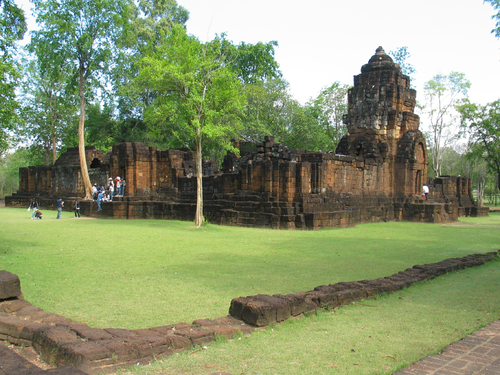
สถาปัตยกรรมปราสาทเมืองสิงห์
ปราสาทเมืองสิงห์ได้รับการบูรณปฏิสังขรณ์แล้ว ศิลาแลงเป็นวัสดุหลักในการก่อสร้าง ฉาบปูนและประดับด้วยปูนปั้นซึ่งปัจจุบันหลุดล่วงไปเกือบหมดแล้ว หันหน้าไปทางทิศตะวันออกรูปแบบปราสาทมีลักษณะเป็นกลุ่มอาคารตั้งอยู่บนฐานยกพื้นสูง ปราสาทประธานตั้งอยู่กึ่งกลางของฐานยกพื้น ยอดปรักหักพังหมดแล้ว ด้านหน้าปราสาทประธานทางทิศตะวันออกเฉียงเหนือมีบรรณาลัยตั้งอยู่ ทั้งหมดล้อมรอบด้วยระเบียงคด กลางด้านทั้งสี่ของระเบียงคดเป็นโคปุระที่ทำยอดเป็นทรงปราสาท ด้านหน้าทางทิศตะวันออกของฐานยกพื้นมีลานศิลาแลง เดิมทีคงเคยมีหลังคาเครื่องไม้มุงด้วยกระเบื้องคลุมอยู่ แต่ปัจจุบันได้ปรักหักพังหมดแล้ว ถัดออกไปทางทิศตะวันออกมีร่องรอยของโคปุระ ทางด้านเหนือและใต้ของโคปุระเชื่อมต่อกับแนวกำแพงล้อมรอบศาสนสถาน เบื้องหน้าของโคปุระมีชาลารูปกากบาท
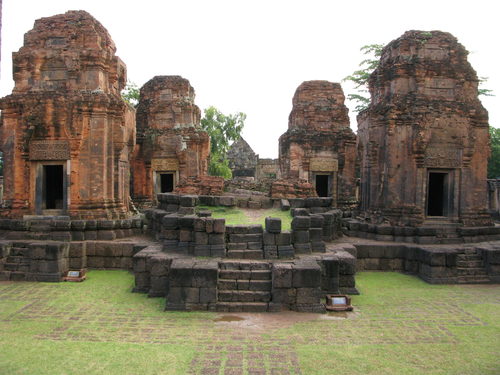
สถาปัตยกรรมกลุ่มปราสาทประธานปราสาทเมืองต่ำ
กลุ่มปราสาทประธานของปราสาทเมืองต่ำประกอบด้วยปรางค์ 5 หลัง จัดวางเป็น 2 แถว แถวหน้า 3 หลัง แถวหลัง 2 หลังในตำแหน่งสับหว่างกับแถวหน้า ปรางค์ทั้ง 5 หลังหันหน้าไปทางทิศตะวันออก ตั้งอยู่บนฐานไพทีศิลาแลงเดียวกัน ปรางค์หลังกลางของแถวหน้าเป็นประธานของกลุ่ม สภาพพังทลายลงแล้ว แต่จากส่วนฐานที่เหลืออยู่เห็นได้ว่ามีขนาดใหญ่กว่าอีก 4 หลังอย่างชัดเจน ปรางค์อีก 4 หลังขนาดเท่าๆกัน ฐานเป็นศิลาแลง เรือนธาตุและยอดซ้อนชั้นก่ออิฐฉาบปูน ทุกหลังมีประตูทางเข้าสู่ครรภคฤหะเพียงด้านตะวันออกด้านเดียว ภายในครรภคฤหะเหลือแต่เพียงฐานประดิษฐานรูปเคารพ จึงไม่อาจทราบได้ว่าแต่ละหลังเคยประดิษฐานเทพเจ้าองค์ใด
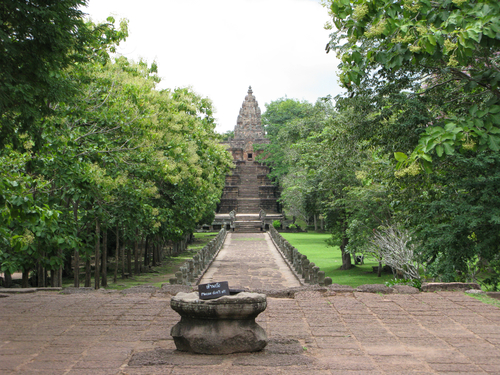
สถาปัตยกรรมปราสาทพนมรุ้ง
ปราสาทพนมรุ้งเป็นศาสนสถานขนาดใหญ่ ตั้งอยู่บนยอดเขาพนมรุ้ง หันหน้าไปทางทิศตะวันออก สิ่งก่อสร้างสำคัญลำดับจากด้านหน้าสุดหรือด้านตะวันออกไปยังปราสาทประธานมีดังนี้1. โคปุระแผนผังกากบาท เดิมทีคงเป็นเครื่องไม้จึงสูญสลายไปหมดแล้ว เหลือแต่เพียงฐานศิลาแลง 2. พลับพลาหรือศาลาเปลื้องเครื่อง ตั้งอยู่ทางทิศเหนือของโคปุระ 3. ถัดจากโคปุระเป็นทางดำเนิน สองข้างเรียงรายด้วยเสานางเรียง ปลายสุดของทางดำเนินเป็นชาลานาคราชแผนผังกากบาท 4. ถัดจากชาลานาคราชเป็นชุดขั้นบันได 5 ชุด มุ่งสู่ยอดพนมรุ้งอันเป็นที่ตั้งของปราสาทประธานและสิ่งก่อสร้างสำคัญอื่นๆ 5. พื้นที่ด้านตะวันออกนอกแนวระเบียงคดมีฐานของอาคารหลังคาคลุม เข้าใจว่าเป็นอาคารโถง ใช้ไม้เป็นวัสดุหลักจึงสูญสลายไปตามกาลเวลา พบเศษกระเบื้องตกอยู่จำนวนมากจึงสันนิษฐานว่าอาคารนี้มุงด้วยกระเบื้อง รูปแบบของอาคารเป็นลักษณะระเบียงทางเดินที่ตัดไขว้กัน ทำให้เกิดหลุม 4 หลุม ทางเดินนี้เชื่อมต่อเข้ากับระเบียงโถงที่เคยล้อมรอบระเบียงหินทราย ปัจจุบันระเบียงโถงเหลือแต่ฐานเช่นกัน 6. ระเบียงคดหินทรายและศิลาแลงล้อมรอบปราสาทประธานและสิ่งก่อสร้างอื่นๆ มีโคปุระหรือซุ้มประตูที่กลางด้านทั้งสี่ 7. ปราสาทประธานหินทรายตั้งอยู่กลางพื้นที่ที่ล้อมรอบด้วยระเบียงคด หันหน้าไปทางทิศตะวันออก รอบๆปราสาทประธานมีสิ่งก่อสร้างต่างๆ คือ ทางด้านเหนือมีปราสาทอิฐ 2 หลัง ทางด้านตะวันตกเฉียงใต้มีปรางค์น้อย ทางด้านตะวันออกเฉียงเหนือและตะวันออกเฉียงใต้มีอาคารสี่เหลี่ยมผืนผ้าหรือบรรณาลัย