Artwork Search
Arts in Southeast Asia Database
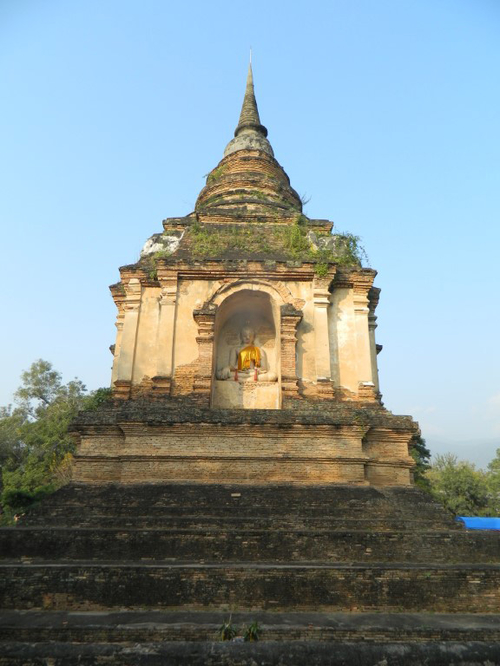

ArchitectureStupa of King Tilokarat
This chedi is a single pointed top castle shaped chedi with two type of base, flat bases and upturned lotus base supporting the ruenthat. It has arches on all four sides, pillas with decorative pattern, roof set, another flat bases and upturned lotus base supporting the bell, throne, cylinders, spire and the top.
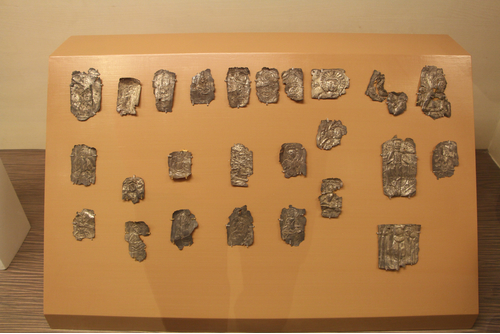
SculptureEmbossed Silver Plates
There are 66 silver plates embossed in different pictures including Buddha image, stupa and the wheel of law, each with distinctive pictures.
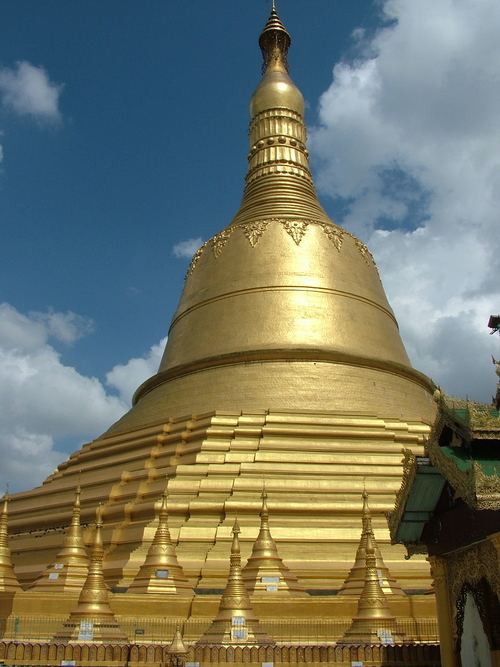

ArchitectureShwe Mawdaw
Stylistically, Mon Stupa is strongly different from that in Burmese art. The base is in multi-angular octagonal plan . The bases are sloping and the staircases as well as the upper circumambulatory path are absent. Miniatures stupas are normally cloistered at the ground level. The banana-liked bud at the top is more elongate than that of the Burmese one. This Stupa was rebuilt following the collapse of the Stupa due to the powerful earthquake in the early 20th century. The newly constructed Stupa is unfortunately not as beautiful as the former one.
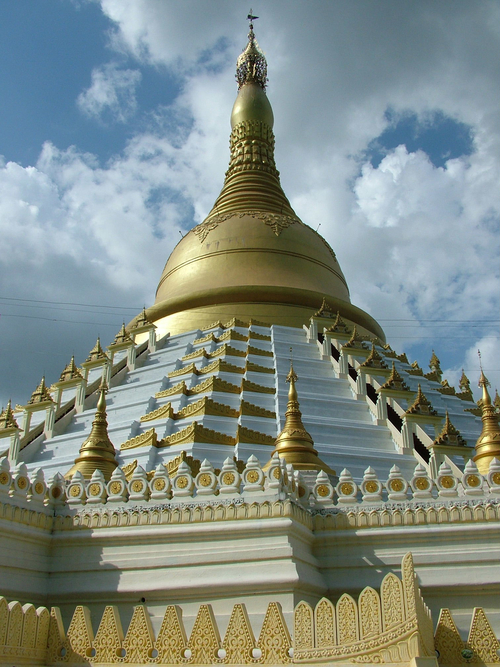
ArchitectureMahazedi
Mahazedi is the stupa in octagonal plan. Whereas the moulding of the bases is designed in sloping Mon-affiliated fashion, the staircases of the Burmese affiliation punctuate the moulding in every direction. The bell-shaped element and the spire are newly-added. The combination between Mon and Burmese affiliations corresponds to the historical event. During that time, the capital of the Burmese Taung U kingdom was shifted to Hamsavati. This shift encourages the intermingling between two schools of art.

ArchitectureModel of Min Gun Stupa
Because the stupa was left unfinished, we have to study the conjectural complete form of Mingun Stupa from the model adjacent to the main stupa. This model suggests us that the complete form of the stupa would be superimposed by the Śikhara and stupa spire.
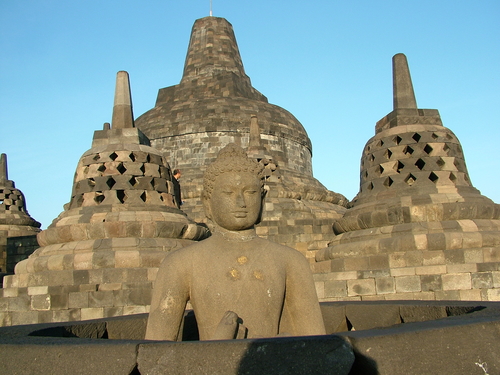

ArchitectureCircular base with Stupas at Borobudur
The circular upper plain bases, devoid of any narrative, indicate the realm of formless, Arupabhumi. On these bases there exist the perforated Stupas inside which the statues of Vairochana in Dhamacakra gesture are enshrined. The perforated Stupas indicate the transition between the form and formlessness. The topmost solid Stupa represents the supreme Adi Buddha, the first Buddha of the cosmos, the immortal one, the timeless and the formless one, the original source of the whole Buddha in the universe as well as the world.
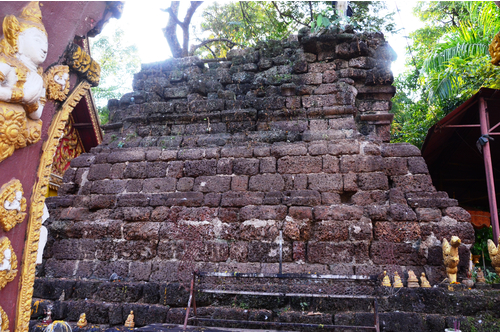

ArchitectureStupa: Wat Si Meuang
Stupa at Wat Si Meuang is made of laterite, which is different from stupas in other arts that are normally made of bricks. The remains include the inverted lotus base with the plain middle element decorated with a pointed moulding. This stupa is often mistaken as a Khmer architecture. However, the laterite is smaller than that of Khmer and the use of pointed mouldings consolidates that this is definitely not a Khmer architecture.
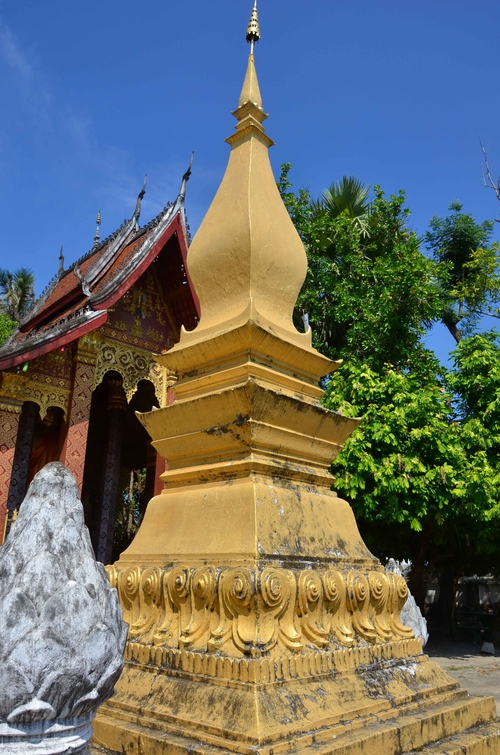
ArchitectureWat Saen Stupa
This stupa is of genuine Lan Chang style. It consists of Bua Khao prom base that has continuously curving lion’ feets. This was inherited from Lion base (Singha base) in the middle Ayutthaya. The middle element is removed and the inverted and the overturned lotus bases meet each other. These lotus bases also flicking up to sooth witg the outer line of the base. The middle part is the angled lotus with a soothing outer line. This angled lotus is a distinctive feature of stupa in Lan Chang art appearing both in Luang Phra Bang and Vientiane schools of art.