ค้นหางานศิลปกรรม
ฐานข้อมูลศิลปกรรมในเอเชียตะวันออกเฉียงใต้
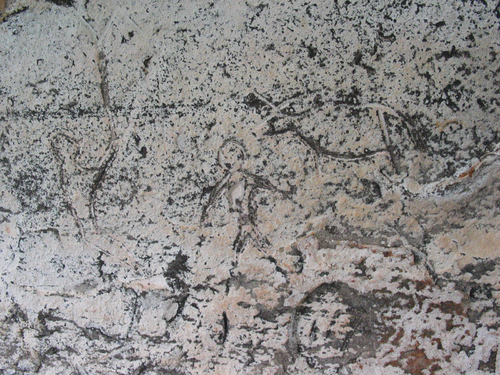

จิตรกรรมถ้ำผาลายภูผายนต์
ภาพสลักต่างๆ นั้นสามารถแยกประเภทได้ดังนี้1. ภาพคน มีทั้งหมด 21 ภาพ มีทั้งภาพคนที่เหมือนจริงและภาพกึ่งเหมือนจริง ภาพเหมือนจริงคือภาพที่บ่งบอกลักษณะว่าเหมือน เช่น ภาพเหมือนคนซึ่งเน้นแสดงโครงภายนอก ไม่มีรายละเอียดของอวัยวะ เช่น หู ตา ปาก จมูก นิ้วมือ นิ้วเท้า มีจำนวน 9 ภาพ เป็นภาพเด็ก 2 ภาพ ผู้ใหญ่ 7 ภาพ ส่วนภาพกึ่งเหมือนจริงคือภาพที่บ่งบอกลักษณะว่าเป็นคนโดยสัดส่วน แต่จะคลาดเคลื่อนจากความเป็นจริง เช่น หัวคนเป็นรูปสี่เหลี่ยมหรือแขน ขา ไม่เน้นให้เห็นกล้ามเนื้อ แต่มีอวัยวะที่สำคัญครบส่วน เช่น หู ตา ปาก จมูก ไม่มีนิ้วมือ นิ้วเท้า ภาพประเภทนี้ มี 12 ภาพ2. ภาพมือ มีเพียงภาพเดียว เป็นภาพมือขวาหงายมือแสดงอุ้งมือ มีนิ้ว 6 นิ้ว3. ภาพสัตว์ มีทั้งหมด 21 ภาพ ภาพปลา 8 ภาพ ภาพนก 4 ภาพ ภาพสุนัข 2 ภาพ กระรอกหรือกระแต 1 ภาพ ภาพควาย 1 ภาพ วัวหรือควาย 4 ภาพ กบหรือเขียด 1 ภาพ4. ภาพลวดลายเรขาคณิต เป็นเส้นตรง เส้นโค้ง หรือทำเป็นลวดลายต่างๆ มีรูปสี่เหลี่ยม สามเหลี่ยม กากบาท หัวลูกศร สามเหลี่ยมขนมเปียกปูน ลายเส้นเดียว ลายเส้นเรียงแถวกัน ลายเส้นตัดกันไปตัดกันมาจนหารูปทรงที่แน่นอนไม่ได้ซึ่งพบเป็นจำนวนมาก5. ภาพสิ่งของเครื่องใช้ เช่น ภาพที่คล้ายไถ เครื่องมือทำนาแสดงเฉพาะส่วนหัวที่เรียกว่า "หัวหมู" หรือ "ผาล" อยู่ตอนปลาย นอกจากนี้ยังมีรูปจอบมีด้ามและรูปพัดสำหรับพัดให้กระแสลมพัดข้าวเมล็ดลีบออก 6.ภาพอาคาร มีลักษณะคล้ายบ้าน 2 ภาพ เป็นทรงบ้านหลังคาสามเหลี่ยมหน้าจั่ว ภาพหนึ่งมีสุนัขอยู่ข้างในบ้าน อีกภาพหนึ่งเป็นบ้านที่มียอดหลังคาไขว้คล้ายเรือนกาแล หรือเถียงนาในภาคอีสาน และมีภาพคล้ายคนอยู่ในบ้าน

ประติมากรรมภาพสลักพระพุทธรูป
ภาพสลักนูนต่ำกลุ่มนี้สลักภาพพระพุทธเจ้าเป็นประธาน โดยอยู่ทางซ้ายสุดของกลุ่ม พระพุทธองค์ประทับนั่งห้อยพระบาทอยู่บนบัลลังก์ พระหัตถ์ทำปางแสดงธรรม ถัดมาทางขวาเป็นภาพบุคคลเศียรเดียว สองกร ประทับในท่านั่งแบบลลิตาสนะ เชื่อว่าเป็นพระศิวะเพราะพระหัตถ์ซ้ายทรงอักษมาลา (ลูกประคำ) ถัดมาเป็นรูปพระวิษณุยืน โดยสังเกตได้จากการมีสี่กร พระกรปกติไขว้กันที่พระอุระ เป็นกิริยาแสดงความนบนอบต่อพระพุทธเจ้า พระหัตถ์อีก 2 ข้างทรงจักรและสังข์ ถัดไปทางขวามีรูปเทวดาเหาะ 2 องค์ และฤาษี 1 ตน
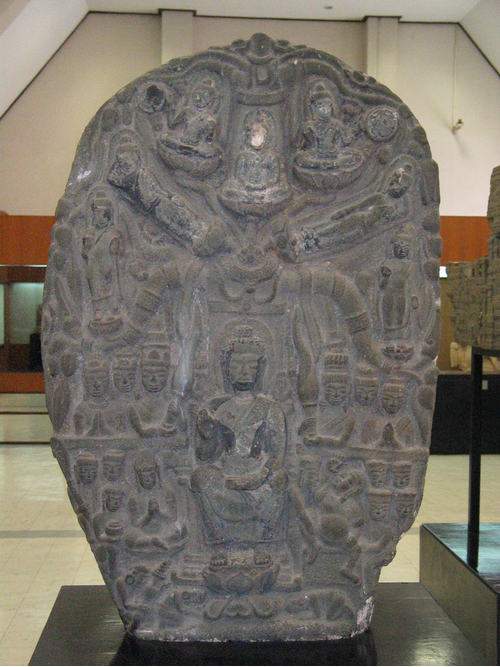
ประติมากรรมภาพสลักเล่าเรื่องยมกปาฏิหาริย์
แผ่นหินนี้สลักภาพเล่าเรื่องพุทธประวัติตอนแสดงยมกปาฏิหาริย์ที่เมืองสาวัตถีเพื่อปราบเหล่าเดียรถีย์ พระพุทธเจ้านั่งห้อยพระบาทบนบัลลังก์ซึ่งวางอยู่ใต้ต้นมะม่วง พระหัตถ์ขวาแสดงปางประทานธรรมทั้งสองข้างแวดล้อมด้วยภาพบุคคลจำนวนมาก แต่ละข้างมีเส้นตรงตามแนวนอนแบ่งกลุ่มบุคคลออกเป็น 2 กลุ่ม น่าจะสื่อว่าใต้เส้นตรงเป็นโลกมนุษย์ เหนือเส้นตรงเป็นสวรรค์ ดังนั้นกลุ่มบุคคลใต้แนวเส้นตรงที่อยู่ทางขวาของพระพุทธองค์น่าจะหมายถึงพระเจ้าปเสนทิโกศลพร้อมด้วยผู้ติดตาม ในขณะที่อีกข้างหนึ่งใต้แนวเส้นตรงเป็นเหล่าเดียรถีย์ที่พ่ายแพ้ สำหรับบุคคลที่อยู่เหนือแนวเส้นตรงเป็นทิพยบุคคลบนสวรรค์ โดยด้านขวาของพระพุทธองค์เป็นบุคคลสวมเครื่องทรงจำนวนมากน่าจะเป็นเทวดาที่นำโดยพระอินทร์ ส่วนด้านซ้ายเป็นบุคคลที่ครองเพศนักบวชน่าจะเป็นพระพรหม ถัดขึ้นไปด้านบนตามกิ่งก้านของต้นมะม่วงปรากฏภาพพระพุทธนิรมิตในอิริยาบถต่างๆ 7 องค์


สถาปัตยกรรมทางประทักษิณภายในอานันทเจดีย์
ภายในอานันทเจดีย์ ปรากฏทางประทักษิณภายในซ้อนกันถึง 2 ชั้น ทางประทักษิณเหล่านี้วนล้อมรอบแกนกลางและครรภคฤหะ ที่ผนังของทางประทักษิณประดับภาพสลักพุทธประวัติจำนวนมาก เพื่อให้ผู้เดินประทักษิณได้เรียนรู้พุทธประวัติไปในตัว ด้านบนปรากฏหลังคาครึ่งวงโค้ง ซึ่งได้แก่หลังคาลาดเมื่อมองจากภายนอกนั่นเอง ทางประทักษิณภายในปรากฏมาก่อนแล้วตั้งแต่ศิลปะปาละ เช่นปหรรปุระและวิกรมศิลา
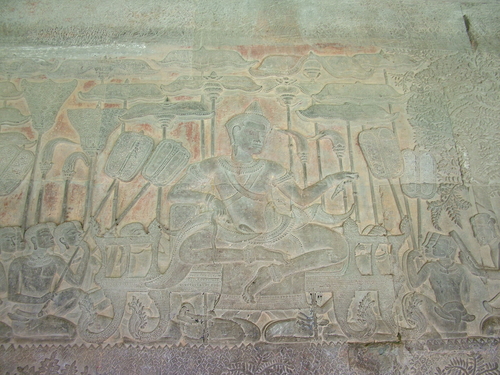

ประติมากรรมภาพสลักพระเจ้าสูริยวรมันที่ 2
ภาพสลักที่ผนังระเบียงคดชั้นที่ 2 ที่ปราสาทนครวัด จะมีการสลักภาพนูนต่ำเล่าเรื่องต่างๆ ไล่เรียงกันไป ที่ผนังทุกด้าน โดยทางทิศใต้สลักเป็นภาพเล่าเรื่องเกี่ยวกับพระเจ้าสูริยวรมันที่ 2ลักษณะของเครื่องแต่งกายบุคคลที่ปรากฏในภาพสลัก ดูจากบุคคลขนาดใหญ่ที่อยู่กลางภาพ นั่งอยู่บนบัลลังก์ยกสูงในท่านั่งมหาราชลี ด้านหลังมีฉัตร และเครื่องสูงเต็มฉากหลัง ทรงกระบังหน้ายอดทรงกรวย ทรงกรองศอประดับพู่ห้อย พาหุรัด สังวาลไขว้กันเป็นรูปกากบาท ทรงผ้านุ่งสั้น มีชายผ้าสามเหลี่ยมชักออกมาด้านข้าง ซึ่งจากลักษณะดังกล่าวเป็นรูปแบบที่นิยมในศิลปะนครวัด
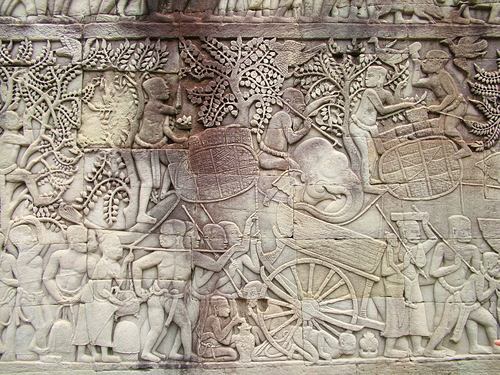
ประติมากรรมภาพสลัก เล่าเรื่องกองทัพพระเจ้าชัยวรมันที่ 7
ภาพสลักเป็นภาพสลักนูนต่ำ มีสลักภาพเต็มพื้นที่ของผนัง ประติมากรรมบุคคลมีพระพักตร์ตามแบบศิลปะบายน คือ หลับพระเนตรและยิ้มที่มุมพระโอษฐ์เล็กน้อย ไม่สวมเสื้อ มีแต่ผ้านุ่งซึ่งเป็นลักษณะของขบวนของคนทั่วไปไม่ใช่ทหาร สันนิษฐานว่าน่าจะเป็นกองเสบียง