Artwork Search
Arts in Southeast Asia Database
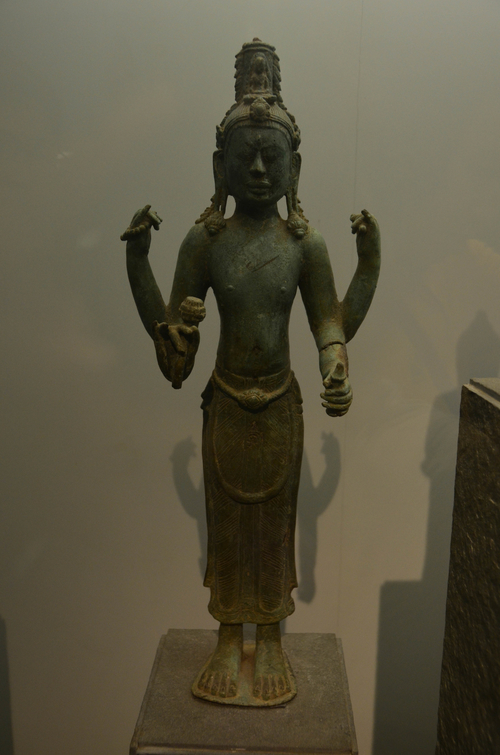

SculptureFour-armed Avalokitesvara
The head of this Bhodhisavara wears the crown like monk with a trianglular cornice according the Pala-Chava arts. He wears the long Roti cloth according to the southern India-central Chava art. This sculpture has thick mouth and protuding eyes, which are the local characteristics. In addition, yajñopavita robe is also missing. This makes it different from Chava art.


SculptureBronze Avalokiteshvara
Large Bronze Sculptures in central Javanese arts are probably created for worship. They are different from the small bronze sculptures that may have been a monk's personal sculptures. Many of large bronze sculptures have been found in Javanese art. They have also been found in the art of Srivijaya. The costume of this sculpture is similar to the art of Pala; for example, Sam-tap crown, a double necklace with pearls and diamonds, a belt with hanging garland in the front and the tip is in the shape of Bo leaf.
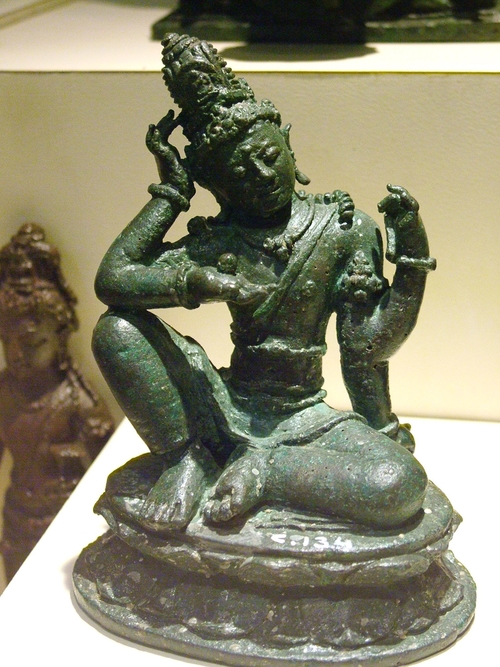
SculptureBronze Karunika
Small bronze sculptures in central Javanese arts may have been a monk's personal sculptures. The style of the costumes, Iconography, and the style of back and the throne is a lot similar to Pala arts.

SculptureBronze Standing Avalokiteshvara
Small bronze sculpture in Central Java might have been personal belongings of monks. The style is very similar to Pala art in terms of costumes, iconography and the back of the throne. The back of the throne of this bronze sculpture is very simialr to that of Pala art especially the round back, the occasional decoration of flame and the umbrealla. However, what is different from Pala art is the tassel covering the shoulder and a bow tie. These features are more related to Southern India Art.

SculptureBronze Tara
Small bronze sculpture in Central Java might have been personal belongings of monks. The style is very similar to Pala art in terms of costumes, iconography and the back of the throne. The back of the throne of this bronze sculpture is very simialr to that of Pala art especially the round back, the occasional decoration of flame and the umbrealla.
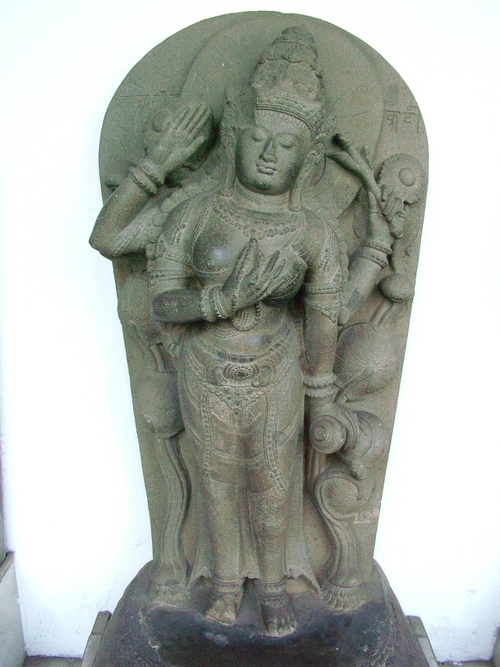
SculptureBrikuti
In the early period of Eastern Java art, sculpture is still similar to Central Java. However, the back started to feature “Bua leaf” which is a unique feature of this period. The sculpture is also decorated with more ornamental chains and pearl nosegay.
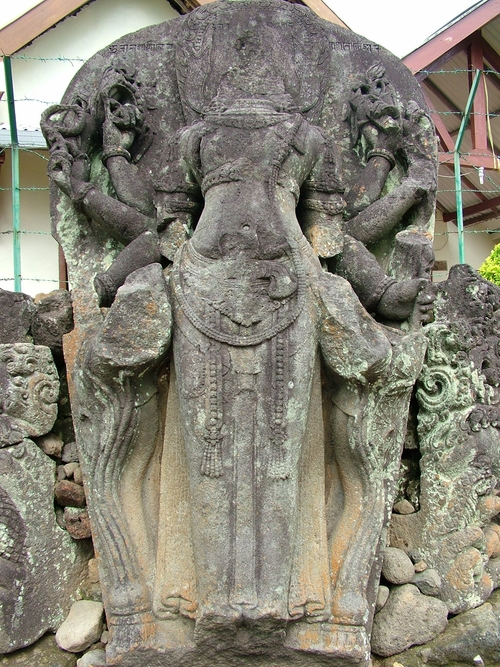
SculptureAmoghapasha
This piece of sculpture follows general pattern of Eastern Java art that is the back decorated with pearl necklaces and tufts. There also appears a lot of lotus and lotus leaves, which is a unique characterisitc of this period.
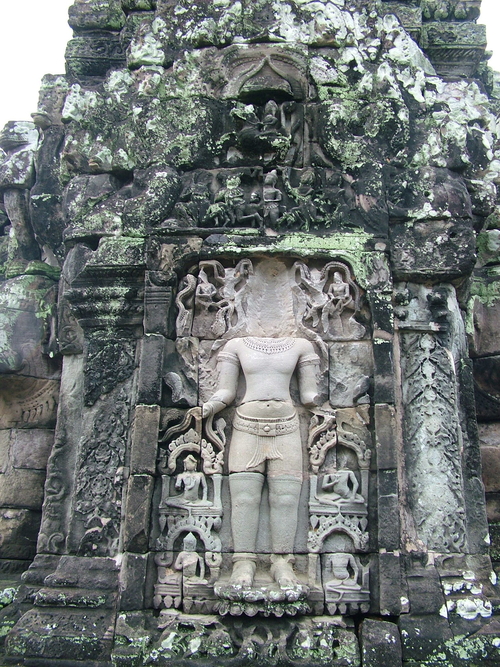

SculptureAvalokitesvara
The sculpture of Avalokitesavara has no head and is topless. It has thick body and wear ornament. including a necklect with Uba tufts. The cloth is short and the fish tail falls down in the middle. This is the characteristic of Bayon art. It is surrounded by gods and Bhothisavara.