ค้นหางานศิลปกรรม
ฐานข้อมูลศิลปกรรมในเอเชียตะวันออกเฉียงใต้
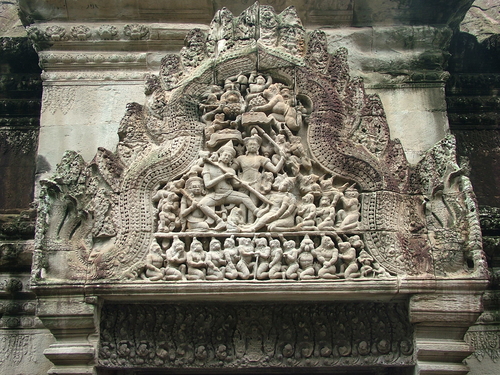

ประติมากรรมหน้าบันสลักภาพเล่าเรื่องรามเกียรติ์ ตอน โมกขศักดิ์
หน้าบันมีลักษณะยืดสูงเป็นทรงสามเหลี่ยม มีกรอบซุ้มเป็นซุ้มคดโค้ง กล่าวคือมีการทำกรอบโค้งเข้าโค้งออกอย่างสวยงาม ปลายกรอบซุ้มเป็นรูปนาคหลายเศียรตามแบบหน้าบันในสมัยพระนครตอนปลาย ตรงกลางหน้าบันปรากฏภาพสลักเล่าเรื่องรามเกียรติ์ ตอน โมกขศักดิ์
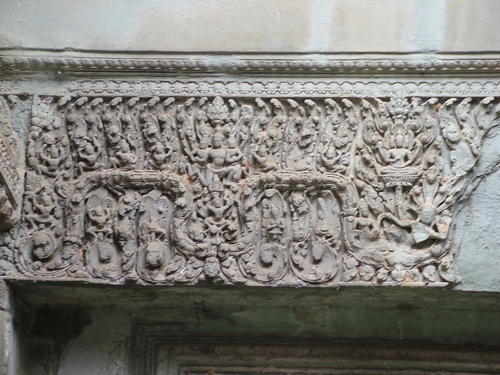
ประติมากรรมทับหลังสลักภาพเล่าเรื่องนารายณ์บรรทมสินธุ์
ทับหลังในศิลปะนครวัด สืบรูปแบบมาจากศิลปะแบบบาปวน คือ ท่อนพวงมาลัยบริเวณกลางทับหลังจะอ่อนโค้งมาด้านล่าง รวมถึงมีการแบ่งเสี้ยวที่ท่อนพวงมาลัย แต่ที่แตกต่างออกไปคือการแทรกภาพเล่าเรื่องลงไปในทับหลัง
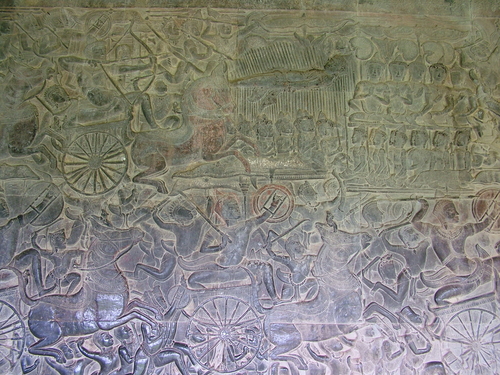
ประติมากรรมภาพสลักเล่าเรื่องมหาภารตะ ฉาก ภีษมะถูกศรอรชุน
ภาพสลักที่ผนังระเบียงคดชั้นที่ 2 ที่ปราสาทนครวัด จะมีการสลักภาพนูนต่ำเล่าเรื่องต่างๆ ไล่เรียงกันไป ที่ผนังทุกด้าน โดยทางทิศตะวันตกสลักเป็นภาพเล่าเรื่องมหาภารตะลักษณะของเครื่องแต่งกายบุคคลที่ปรากฏในภาพสลัก ดูจากบุคคลขนาดใหญ่ที่อยู่กลางภาพ นอนอยู่บนเตียงลูกศร ทรงกระบังหน้ายอดทรงกรวย ทรงกรองศอประดับพู่ห้อย พาหุรัด สังวาลไขว้กันเป็นรูปกากบาท ทรงผ้านุ่งสั้น มีชายผ้าสามเหลี่ยมชักออกมาด้านข้าง ซึ่งจากลักษณะดังกล่าวเป็นรูปแบบที่นิยมในศิลปะนครวัด
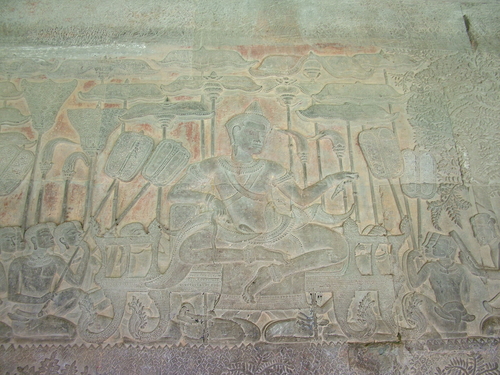
ประติมากรรมภาพสลักพระเจ้าสูริยวรมันที่ 2
ภาพสลักที่ผนังระเบียงคดชั้นที่ 2 ที่ปราสาทนครวัด จะมีการสลักภาพนูนต่ำเล่าเรื่องต่างๆ ไล่เรียงกันไป ที่ผนังทุกด้าน โดยทางทิศใต้สลักเป็นภาพเล่าเรื่องเกี่ยวกับพระเจ้าสูริยวรมันที่ 2ลักษณะของเครื่องแต่งกายบุคคลที่ปรากฏในภาพสลัก ดูจากบุคคลขนาดใหญ่ที่อยู่กลางภาพ นั่งอยู่บนบัลลังก์ยกสูงในท่านั่งมหาราชลี ด้านหลังมีฉัตร และเครื่องสูงเต็มฉากหลัง ทรงกระบังหน้ายอดทรงกรวย ทรงกรองศอประดับพู่ห้อย พาหุรัด สังวาลไขว้กันเป็นรูปกากบาท ทรงผ้านุ่งสั้น มีชายผ้าสามเหลี่ยมชักออกมาด้านข้าง ซึ่งจากลักษณะดังกล่าวเป็นรูปแบบที่นิยมในศิลปะนครวัด

ประติมากรรมทับหลัง สลักภาพเล่าเรื่องตอนกูรมาวตาร
ประติมากรรมชิ้นดังกล่าว น่าจะเป็นชิ้นส่วนของทับหลัง องค์ประกอบของภาพเป็นตอนอวตารของพระวิษณุแปลงเป็นเต่า เพื่อใช้รองรับภูเขาในการกวนเกษียรสมุทร ปรากฏรูปบุคคลสองฝั่งคือ อสูรและเทวดา ยืนเรียงแถวใช้มือจับลำตัวนาค เหนือขึ้นเป็นแถวหงส์ และเทวดานั่งชันเข่าพนมมืออยู่ ตรงกลางปรากฏภูเขาที่มีเต่ารองรับ ที่ตัวเสาปรากฏประติมากรรมพระวิษณุกอดภูเขา ด้านบนปรากฏพระพรหม ลักษณะของเครื่องแต่งกายบุคคลที่ปรากฏในภาพสลัก บุคคลต่างๆ สวมกระบังหน้ายอดทรงกรวย ทรงกรองศอประดับพู่ห้อย พาหุรัด ทรงผ้านุ่งสมพตสั้น มีชายผ้ารูปหางปลาซ้อนกันสองชั้นที่ด้านหน้าผ้านุ่ง ซึ่งจากลักษณะดังกล่าวเป็นรูปแบบที่นิยมในศิลปะนครวัด
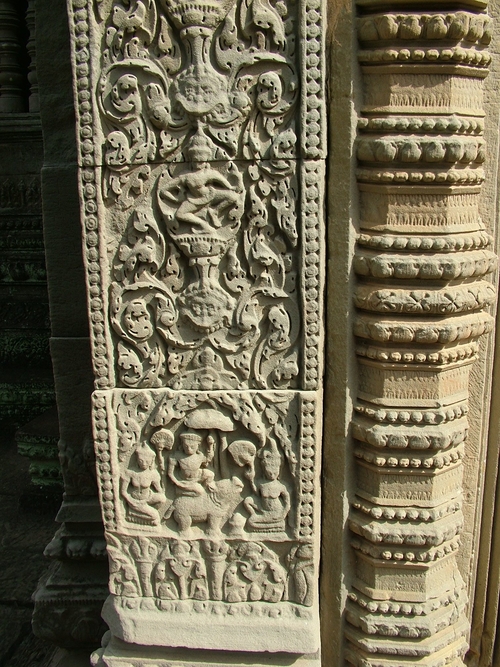
ประติมากรรมเสาติดผนังและเสาประดับกรอบประตู
เสาประดับกรอบประตูเป็นเสาแปดเหลี่ยมสืบมาจากสมัยพระนครตอนต้น มีการทำลวดลายใบไม้สามเหลี่ยมที่มีขนาดเล็กเรียงต่อกันเหมือนฟันปลา จึงทำให้ด้านแต่ละด้านของเสามีมากกว่า1ใบ ส่วนเสาติดผนัง ปรากฏการทำลายก้านขด และก้านต่อดอก เต็มพื้นที่ลายกลางเสา อีกทั้งยังปรากฏการแทรกภาพเล่าเรื่องลงไปในตัวเสาอีกด้วย เช่น ภาพพระศิวะ
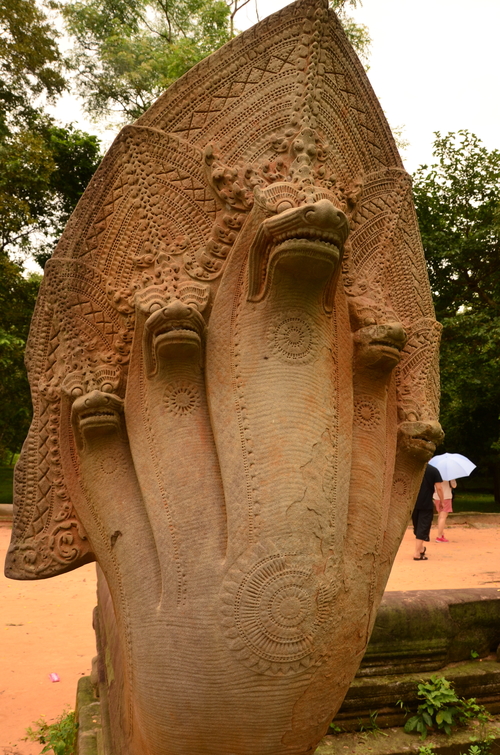
ประติมากรรมเศียรพญานาค
นาค มักพบอยู่โดยทั่วไปในงานศิลปกรรมเขมร โดยมักเป็นองค์ประกอบของทางเดินหรือราวบันไดเสมอ โดยนาคมีเศียร 5 เศียร เศียรทั้งหมดหันหน้าตรงมีการสวมกระบังหน้าและรัศมีเป็นแผ่นเดียวกัน เป็นลักษณะตามแบบศิลปะนครวัด
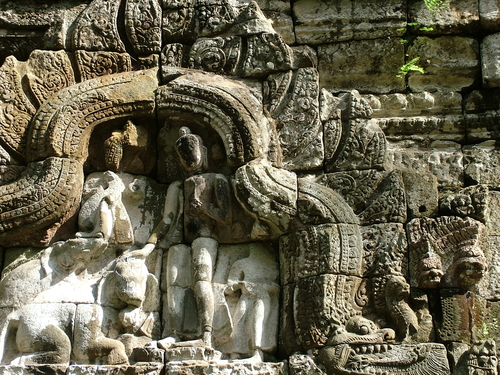
ประติมากรรมหน้าบัน สลักภาพพุทธประวัติตอนทรมานช้างนาราคีรี
หน้าบันมีลักษณะยืดสูงเป็นทรงสามเหลี่ยม มีกรอบซุ้มเป็นซุ้มคดโค้ง กล่าวคือมีการทำกรอบโค้งเข้าโค้งออกอย่างสวยงาม ปลายกรอบซุ้มเป็นรูปนาคหลายเศียรตามแบบหน้าบันในสมัยพระนครตอนปลาย ตรงกลางหน้าบันปรากฏภาพสลักเล่าเรื่องพุทธประวัติตอนทรมานช้างนาราคีรี