Artwork Search
Arts in Southeast Asia Database
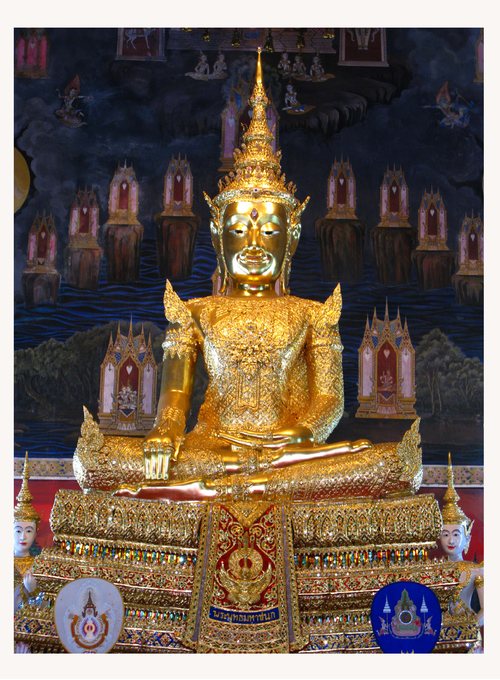

SculpturePhra Mahajanaka Buddha
The Buddha Image is placed on top of the plaster base in the Subduing Mara gesture. The body is covered by the the flowered yellow robe with other decorations such as the multi-tiered conical diadem crown similar to Phra Maha Phichai Mongkut featuring 3-tier of diadem, each tier is decorated with moving flowers, the ear gears, necklace, rings, armlaces, pahurats, and sandals. The face is in the calm emotion, eyes down, curvy eyebrows, little smile at the mouth. Overall, the statue reflected the art traits of Rattanakosin arts.
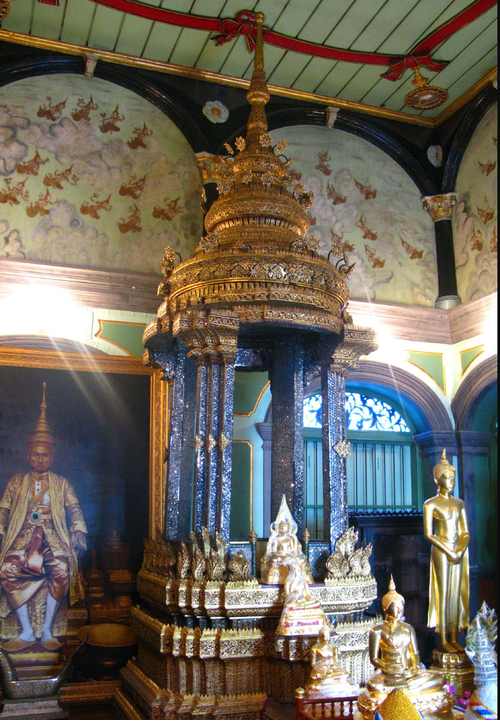
SculptureThe crown-topped Busabok Pulpit
The crown-topped Busabok is consist of the base, the middle part and the top part. The base is in the Singha style with additional corners with the large piece of wood in the front for the monk to get to the pulpit. The middle part is penetrated with the recessing corners (12-piece) at all four corners. The top part of Busabok has the details similar to the details of Phra Maha Pichai Mongkut (Great Crown of Victory, the Coronation crown of Thailand) featuring the 3-tier of diadem, each tier is decorated with moving flowers. Above it is the funnel.
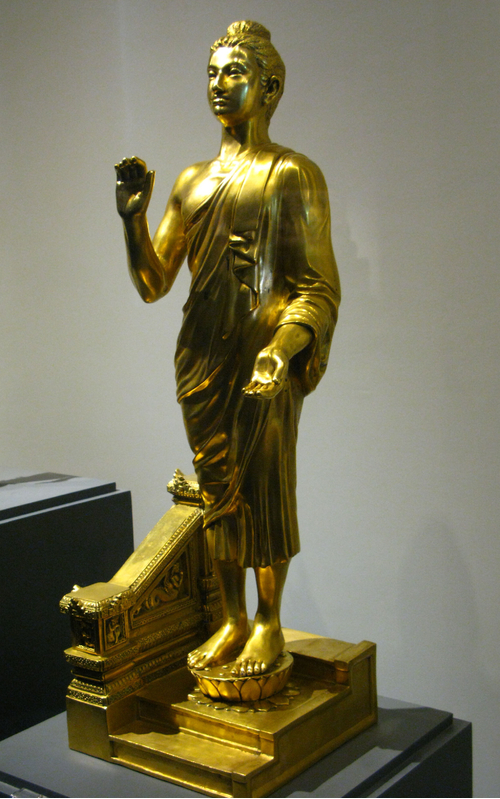
SculptureKhantharrath Buddha image
Imitated Khantharrath art Buddha image, standing in Rainfull gestures, look up, the right hand is in the signal for the rain gestures, left hand placed on the leg to receive rain. The face has a Greek-Roman gods style. Tie hair, no halo. The body shows human muscles. Wear the oblique thick streaks robe. Stand on the lotus above the top of staircase of BokKoranee Pool. There is a railing nearby decorate with Goddess of Land squeeze the hair and Naga man which means water and abundance.
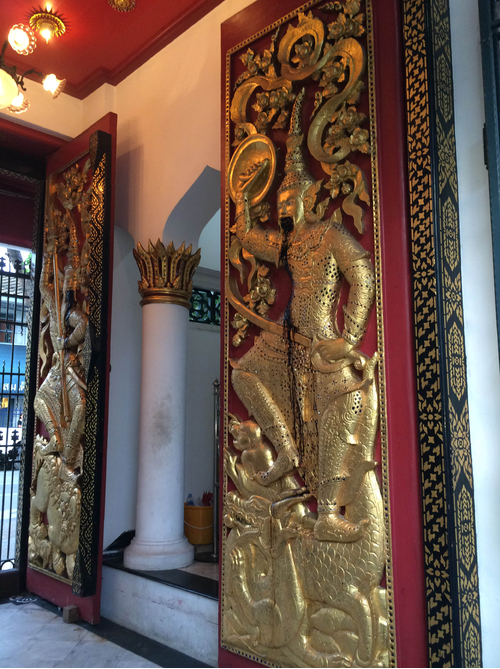
SculptureSiewkang Gate
The arch consists of two doors. Each set consists of two red rectangular doors, each one gold-plated carved Chinese Thawarabal dress up like Thai Thawarabal and hold the weapons : halberd, sword, dagger and shield on Chinese mixed animals. There are totally four. At first, the black opium was stuck in the mouths of the Thawarabal because people do it for consecrate them. Later, the stain was removed. But it was painted black to show the origin of history. This is a unique feature of the Thawarabal or the Siewkang at Wat Bowonniwet Vihara.
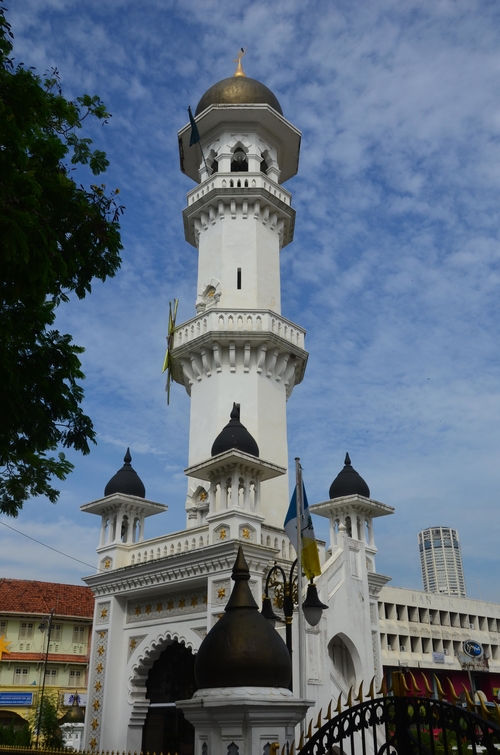

SculptureMinaret: Masjid Kepitan Keling
Masjid Kepitan Keling got the main inspiration from Mughal art of India. There is a possibility that the mosque’s architect try to make the mosque look Indian as much as possible to response with the profile of the first founder who came from India. Thus, the mosque’s minaret shows the influence from Mughal art for example the octagonal shape with terraces. On top is Chhatri, the octagonal pavilion with 8 pillars that support small dome.


SculptureBrahma in Nanpaya
Chedis in the beginning of Pukam art usuallu have four columns supoprt “Sikara”. There are Bhraman cravings around , which is unigue to this chedi only. The iconography of Bhraman is similar to that in Pala art. This archaeological site can be dated in the early Pukam period.

SculptureWindow at Nanpaya
Windows of Nanpaya are the windows of the early Chetiyavihara in Pukam. The windows are covered by stones, making the building very dark inside. This was the asthetic of the early Pukam. Clec arch is small and short and gravitates to the center. The columns have the top arch tiles, but not the bottom arch tiles and the flower patten, which is the characteristics in the beginning of Pukam art.

SculptureBuddha Image in Manuha
Although its story is dated back to King Anothara, this Buddha image has been restored several times that the original patterns have been lost.