ค้นหางานศิลปกรรม
ฐานข้อมูลศิลปกรรมในเอเชียตะวันออกเฉียงใต้
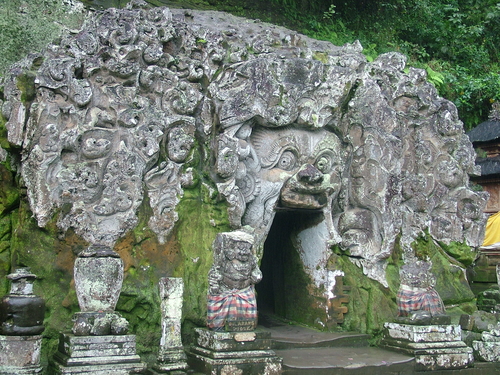

สถาปัตยกรรมถ้ำที่กัวคชะ
ที่กัวคชะปรากฏถ้ำที่ขุดขึ้นจากฝีมือมนุษย์ที่มีชื่อเสียงที่สุดแห่งหนึ่งในศิลปะอินโดนีเซีย ด้านหน้าถ้ำสลักเป็นรูปหน้ากาลหน้าตาดุร้ายที่มีตาถลนตามแบบศิลปะชวาภาคตะวันออก-บาหลี หน้ากาลนี้คงมีความหมายในการขับไล่สิ่งชั่วร้าย โดยรอบมีภาพสลักเป็นฉากโขดหินธรรมชาติที่มีสัตว์ป่าอยู่เต็ม ภายในถ้ำดังกล่าวเป็นทางแคบๆในผังรูปตัวที มีแท่นที่นั่งซึ่งคงเป็นที่อยู่ของนักบวชมากกว่า
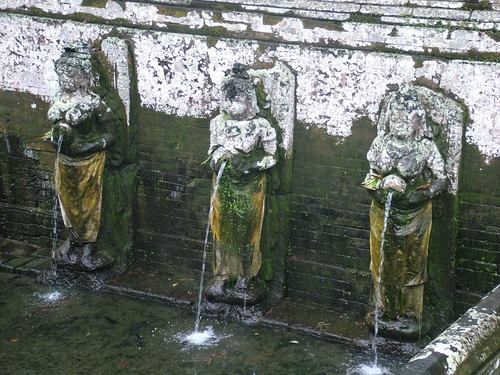
สถาปัตยกรรมน้ำพุที่กัวคชะ
น้ำพุปรากฏมาแล้วตั้งแต่ศิลปะชวาตะวันออก โดยเริ่มจากความคิดเรื่องน้ำจากภูเขาศักดิ์สิทธิ์ซึ่งย่อมประทานความอุดมสมบูรณ์และการล้างบาปให้แก่ผู้ศรัทธา สำหรับที่กัวคชะนี้เป็นน้ำพุที่ปรากฏคู่กันสองบ่อ ซึ่งอาจใช้ในการแยกผู้อาบน้ำชาย-หญิง (?) แต่ละบ่อปรากฏรูปเทพีถือหม้อน้ำและมีน้ำพุไหลออกมา ซึ่งทั้งหม้อน้ำและเทพีก็ล้วนแต่หมายถึงความอุดมสมบูรณ์
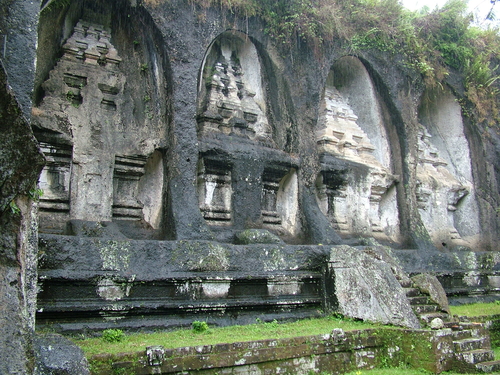
สถาปัตยกรรมกุหนุงกาวี
จันทิกุหนุงกาวี มีลักษณะเป็นหน้าผาริมแม่น้ำ โดยมีการสลักจันทิติดผนังจำนวน 9 หลัง ถือเป็นตัวอย่างจันทิสลักหินติดกับเพิงผาธรรมชาติที่ใหญ่ที่สุดในเกาะบาหลี นอกจากนี้ยังถือเป็นตัวอย่างจันทิในศิลปะชวาภาคตะวันออกที่ปรากฏในเกาะบาหลีอีกด้วย เนื่องจากชั้นหลังคาประดับไปด้วยสถูปิกะ/อาคารจำลองซึ่งไม่ปรากฏแล้วในศิลปะบาหลี อนึ่ง ที่ตั้งของกลุ่มจันทิดังกล่าว ย่อมทำให้แม่น้ำที่ไหลผ่านศักดิ์สิทธิ์ไปด้วย
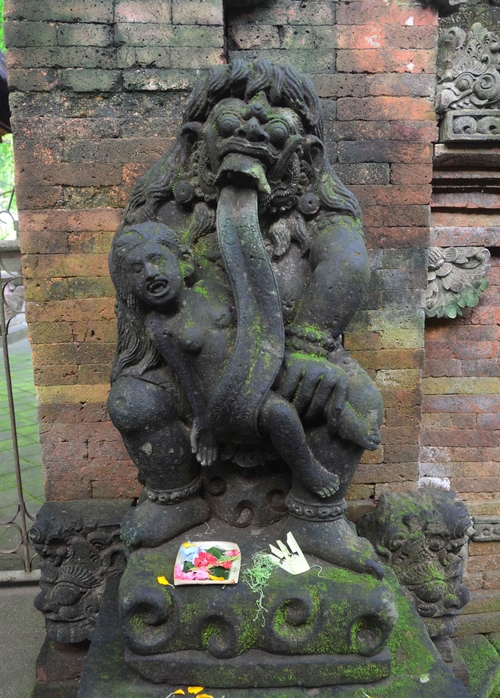
ประติมากรรมแม่มดรังดา
ปุระดาเล็ม (Pura Dalem) คือวัดที่สร้างขึ้นอุทิศให้กับคนตาย เป็นหนึ่งในสามปุระของหมู่บ้าน โดยปุระอื่นๆได้แก่ ปุระเทศะ(Pura Desa) หรือวัดประจำหมู่บ้าน และ “ปุระปูเซห์” (Pura Puseh) หรือวัดที่อุทิศให้กับบรรพบุรุษผู้ดูแลหมู่บ้านปุระดาเล็มมักตั้งอยู่ทางทิศใต้ของหมู่บ้าน เป็นทิศที่ไปทางทะเลอันเป็นอัปมงคล แตกต่างไปจากปุระเทศะซึ่งมักตั้งอยู่กลางหมู่บ้าน และปุระปูเซห์ อันตั้งอยู่ทางทิศเหนือของหมู่บ้านซึ่งเป็นทิศมงคลนอกจากนี้ ปุระดาเล็มมักตั้งอยู่ภายในป่าชุมชน อันเป็นป่าที่อุทิศให้กับคนตาย ป่านี้เป็นที่อยู่ของลิงซึ่งมักเรียกกันในสมัยปัจจุบันว่า ป่าลิง (Monkey Forest) ตัวอย่างที่มีชื่อเสียงที่สุดได้แก่ปุระดาเล็มแห่งเมืองอุบุด (Ubud)
ประติมากรรมชาวบาหลีขี่จักรยาน
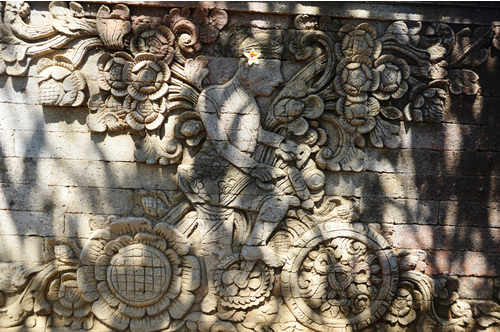
ศิลปะบาหลีสกุลช่างสิงคราชา นิยมสร้างด้วยหินสีเทาทั้งหมด ซึ่งแตกต่างไปจากศิลปะบาหลีปกติที่มักสร้างผนังด้วยอิฐสีส้มแทรกแทรกด้วยหินทรายสีเทาเพื่อสลักลวดลาย ลวดลายในสกุลช่างนี้มักเป็นลวดลายพันธุ์พฤกษาที่ได้รับอิทธิพลตะวันตกแล้ว เช่น ลายใบอะแคนธัสและลายดอกทานตะวัน แสดงให้เห็นว่าอายุของปุระในสกุลช่างนี้คงไม่เก่านัก น่าจะสร้างขึ้นในช่วงที่ดัชต์เข้ายึดครองเกาะบาหลีแล้ว ลวดลายมักมีขนาดใหญ่เทอะทะแบบพื้นบ้านมากกว่าศิลปะบาหลีโดยปกติ