Artwork Search
Arts in Southeast Asia Database
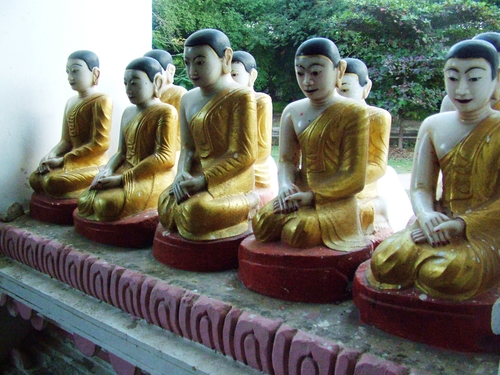

Sculpture80 disciples at Kyauktawgyi
At the cloister, there are 80 disciples called “the great Asiti disciples”. These disciples are made from marble-alabaster similar to the principle image. They sit with legs folded back on one side and the hands are rested politely on the lap. The robes have stips, which shows the tendency towards Mandalay art.
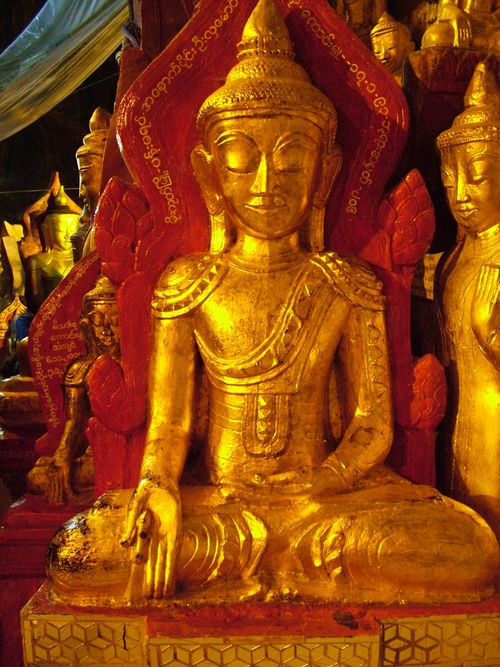
SculptureBuddha Iamge at Pindaya Cave
Buddha images in Pindava cave are tge finest example of the Buddha images in this school of art. They usually have large heads, small body and narrow shoulder. There is a gourd on top of the head following the Chinese style of art. The robe is highly made having two layers of robes similar to those in Angwa-Amarapura. The righ shoulder is also covered with the robe following the Chinese influence.
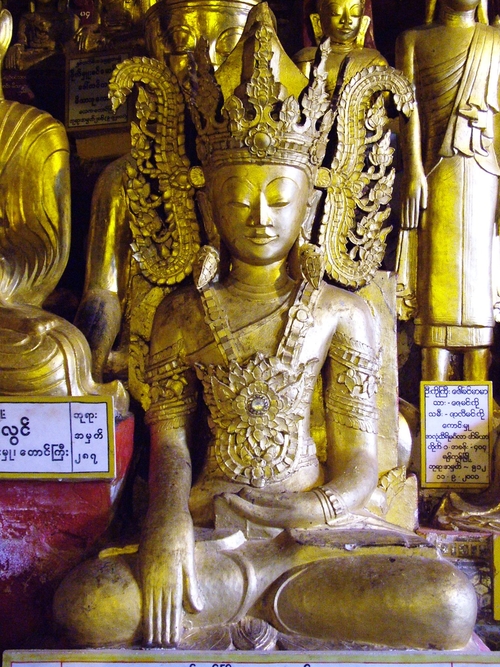
SculptureBuddha Iamge at Pindaya Cave
Buddha images in Pindava cave are tge finest example of the Buddha images in this school of art. They usually have large heads, small body and narrow shoulder. This particular image is an ornamented one, having triangular neckpieces similar to Pala art, but the earings are very big and spreading, which is the influence from Tibetan art. The Buddha image wears the U-shape breast chain and has the flower breast pieces showing the mixture of Tibet and Ayutthaya arts.
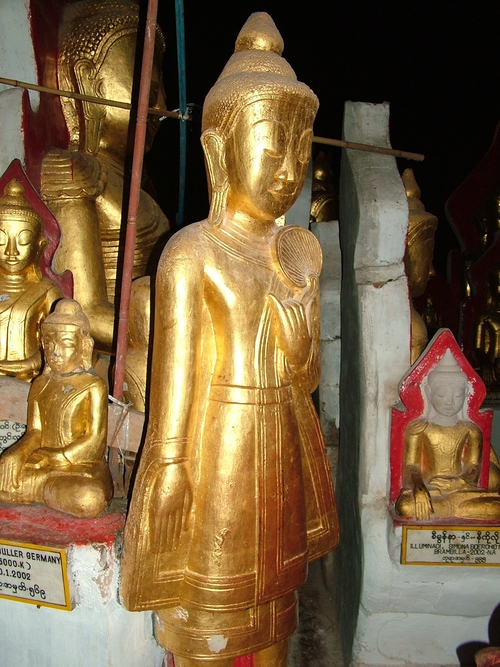
SculptureBuddha Iamge at Pindaya Cave
Buddha images in Pindava cave are tge finest example of the Buddha images in this school of art. They usually have large heads, small body and narrow shoulder. This particular image has talipot fan at the chest. This talipot fan originated in Lanka and was usullay held by monks when they gave sermons. This had influence on the arts in Southeast Asia as well. It usually appears with Buddha images, monks or Bhothisavara when they are sitting and giving sermon. However, this image is very special in that it is in the standing posture, but holds talipot fan

SculptureThe Copy of Shwesettaw Buddha’s Footprint
The Buddha’s footprints in the after Pukam period is usually decorated with 108 blessing patterns. Some are in the tables spreading all over the foot and some are in the circle in the middle of the footprint. The edges are surrounded by Naga and are thick to store water. This is according to the concept of the footprint at Chavesedtong that is located on the riverside.

SculptureWooden sculpture of four Devaduttas
In Mandalay art, each temple is normally decorated with wooden dolls telling the Buddha life and stories such as the four stages of life : the elderly, the sick, the dead and the monk. These sculptures usually appear in the set and they are realistic showing the wrinkles of the body and distended body. This relaistic aspect is another developmental step of Myanmese sculpture as well as showing the western influence.

SculptureBuddha’s Pavilion on the form of Phyathat
Small Buddha images in Mandalay art are usually enshrined at the Buddha’s pavilion on the form of Phyathat, which was very popular at Inlay lake, Chan state. Phyathat has four finials, which are very complex.

SculptureDoor with motif decoration at Shwenandawkyaung
In the reign of king Mindong, western influence featured hugely in Myanmese art and Acanthas was adapted to use in Myanmaese architecture. This is the picture of the door frame that Acanthas is used at the top of the frame as well as on Clec niches and columns. The wall of the building is decorated with smalls humans and covered with gold. This is why this building is called “Shwenandaw” or the golden throne.