Artwork Search
Arts in Southeast Asia Database
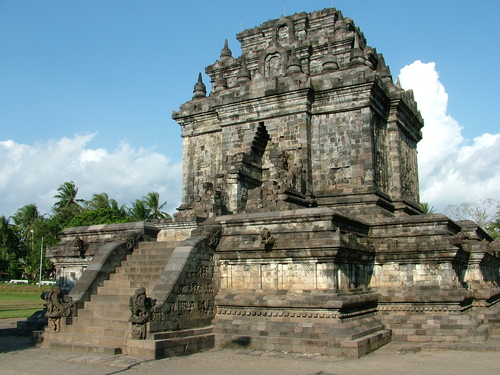

ArchitectureCandi Mendut
The temple rests on the huge platform providing the space for circumambulation. The wall of the body is divided into three portions. The central portion depicts the sitting figure of Bodhisattva while the corner portions depict the standing statues of the Eight Great Bodhisattvas (Aṣṭamahābodhisattva). This allows Candi Mendut to be comparable to the Mahayanist Iconographic diagram. The superstructure of this temple follows the South Indian fashion, the stepped multi-tiered roof. However, the roof of this temple is ornamented with miniature Stupas (Stūpika), typical to the Central Javanese art. The decoration of miniature stupas on the top of the roof is associated with Buddhism.
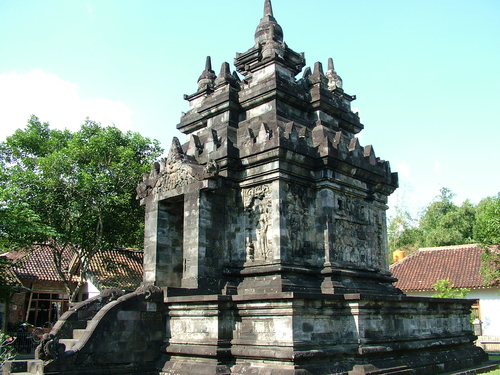
ArchitectureCandi Pawon
Despite being small, Candi Pawon is one of the most beautiful temple of the Mid Central Javanese period. The temple rests on the high circumambulatory platform, which is similar to Candi Mendut. The body is divided into three parts. The central projection is beautified by the Kalpavriksha or the wish-fulfilling mythical tree symbolizing the fertility. The side parts of the body are decorated with the standing figures of Bodhisattvas. The superstructure is decorated with the series of Stupikas (miniature stupas which is the identity of the period. Stupikas suggest that the temple belongs to Buddhism. The staircase’s balustrades are also decorated by the the wish-fulfilling mythical tree blessing the fertility to the devotees.
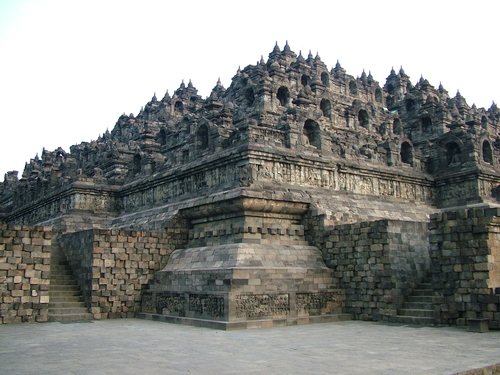
ArchitectureLowest base at Borobudur
Borobudur is conceived as Maṇḍala or the Mahayanist iconographic diagram. Therefore, the lowest base is conceived as Kāmabhūmi or the lowest realm of the universe in which the common people occupy. The story of defilements of common people in Kāmabhūmi has been narrated in the scripture named “Karmavibhanga” and these stories have been depicted in the narratives at the lowest base of Borobudur. The narratives, however, were hidden by the stone later added for strengthening the structure.

SculptureAkashagarbha
Candi Mendut was built in Centra Java by Sai Lane dynasty in 14th century BE. It was built in Mahayana around the same period as Borobudur. Candi Mendut is in the same area as Candi Pawon and Borobudur.

SculptureNarrative derived from Panchatantra: Crane and Crab
Candi Mendut was built in Centra Java by Sai Lane dynasty in 14th century BE. It was built in Mahayana around the same period as Borobudur. Candi Mendut is in the same area as Candi Pawon and Borobudur.
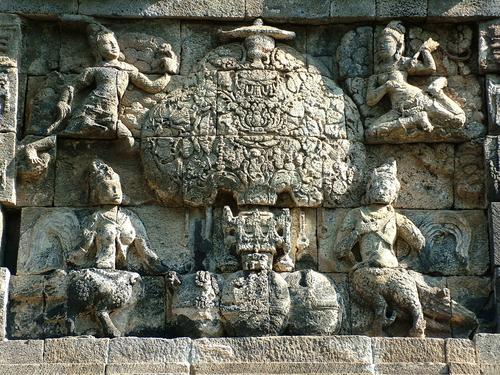
SculptureKalpavrksha at Candi Pawon
Adjacent to Bodobudur, Candi Pawon was constructed by Shailendra dynasty which followed Mahayana Buddhism.