ค้นหางานศิลปกรรม
ฐานข้อมูลศิลปกรรมในเอเชียตะวันออกเฉียงใต้
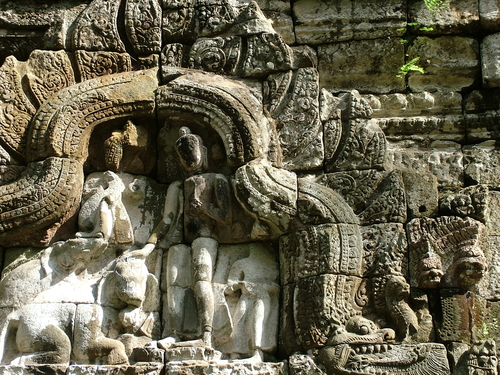

ประติมากรรมหน้าบัน สลักภาพพุทธประวัติตอนทรมานช้างนาราคีรี
หน้าบันมีลักษณะยืดสูงเป็นทรงสามเหลี่ยม มีกรอบซุ้มเป็นซุ้มคดโค้ง กล่าวคือมีการทำกรอบโค้งเข้าโค้งออกอย่างสวยงาม ปลายกรอบซุ้มเป็นรูปนาคหลายเศียรตามแบบหน้าบันในสมัยพระนครตอนปลาย ตรงกลางหน้าบันปรากฏภาพสลักเล่าเรื่องพุทธประวัติตอนทรมานช้างนาราคีรี
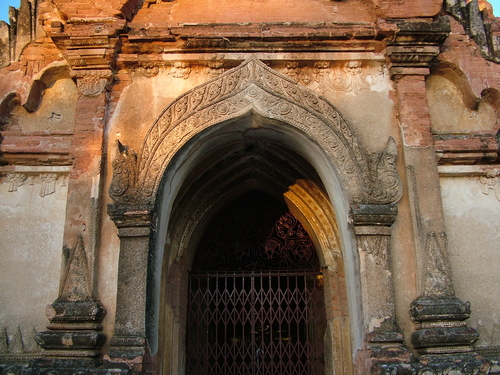

ประติมากรรมซุ้มหน้านางแบบลังกา
ซุ้มหน้านาง คือซุ้มที่เป็นวงโค้ง ไม่มีเคล็กอยู่ด้านบน ซุ้มแบบนี้แสดงให้เห็นอิทธิพลของซุ้มมกรโตรณะตามแบบลังกาที่ข้ามามีบทบาทอย่างมากในศิลปะพุกามตอนปลาย ตอบรับกับประวัติศาสตร์ที่พระภิกษุชาวพุกามที่ไปเรียนลังกาได้กลับมายังพุกามจำนวนมากและนำเอาพุทธศาสนาลังกาวงศ์กลับมาด้วย
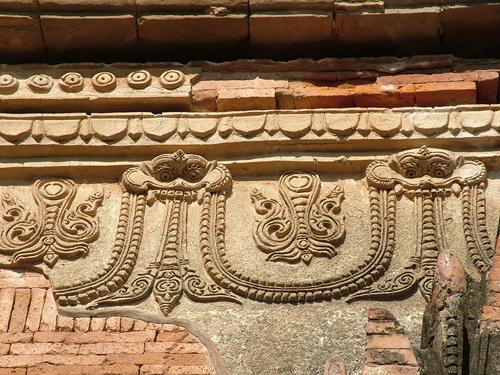
ประติมากรรมลายหน้ากาลคายพวงมาลัย-พวงอุบะ
ที่ด้านบนของเรือนธาตุเจตียวิหารในศิลปะพุกาม ย่อมประดับด้วยลายหน้ากาลคายพวงมาลัย-พวงอุบะเสมอ ลวดลายดังกล่าวปรากฏมาก่อนในศิลปะปาละก่อนที่จะได้รับความนิยมอย่างมากในศิลปะพุกาม ลวดลายดังกล่าวยังแสดงให้เห็นความปรารถนาที่จะให้เรือนธาตุได้รับการตกแต่งด้วยดอกไม้สดเสมอ
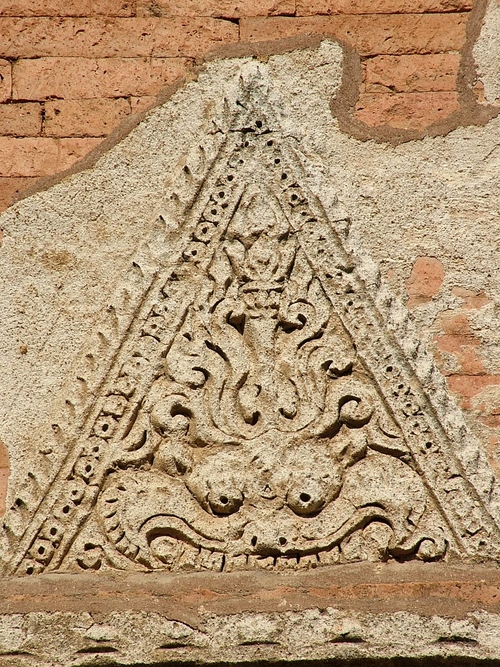
ประติมากรรมลายกาบล่างประดับหน้ากาล
ที่ด้านล่างของเสาติดผนังที่ประดับเรือนธาตุเจตียวิหารในศิลปะพุกามตอนปลาย ย่อมประดับลาย “กาบล่าง” เสมอ อันเป็นส่วนหนึ่งของลายประดับเสาติดผนังจำนวนสามจุด คือ “กาบบน-ประจำยามอก-กาบล่าง” โดยลายทั้งหมดอยู่ในกรอบรูปสามเหลี่ยมและมีลายพันธุ์พฤกษาหรือลายกนกบรรจุอยู่เต็ม บางครั้งก็มีลายหน้ากาลคายพันธุ์พฤกษาด้วย
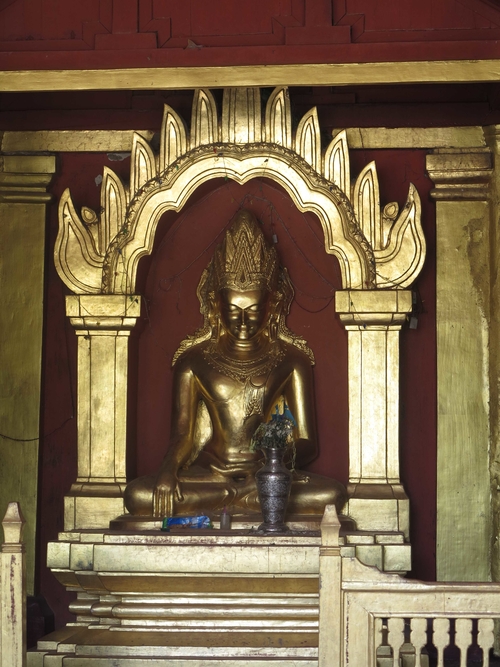
ประติมากรรมพระพุทธรูปทรงเครื่องที่อานันทเจดีย์
พระพุทธรูปองค์นี้เป็นตัวอย่างของพระพุทะรูปทรงเครื่องที่ดีที่สุดในศิลปะพุกาม แสดงการทรงเทริดขนนกตามแบบอิทธิพลปาละ เทริดประแอบด้วยตาบสามเหลี่ยมจำนวนมากเรียงกัน มีกระบังหน้าที่ประดับด้วยตาบสามเหลี่ยมสามจุด มีกรรเจียกและสร้อยคอโดยทรงทับลงไปบนจีวร จึวรที่ปรากฏจีวรสั้นบนพระอังสาซ้ายเองก็แสดงอิทธิพลปาละ
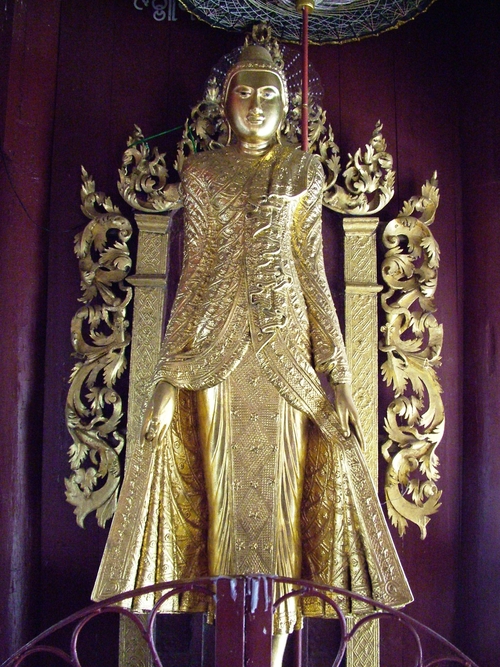
ประติมากรรมพระพุทธรูปสมัยมัณฑเลที่เจดีย์ชเวซิกอง
พระพุทธรูปประทับยืนสมัยมัณฑเล มีลักษณะสำคัญคือพระพักตร์มีกระบังหน้า ห่มคลุมเสมอตามแบบพุกาม แต่จีวรเป็นริ้วธรรมชาติทั้งหมดตามอิทธิพลจีน บางครั้งการประดับลวดลายและกระจกลงไปบนจีวรด้วย พระหัตถ์ทั้งสองแสดงปางประทานพรและจับชายจีวรลง และบางครั้งมีการถือผลสมอในพระหัตถ์ขวาด้วยซึ่งไม่ปรากฏมาก่อนในศิลปะพุกาม
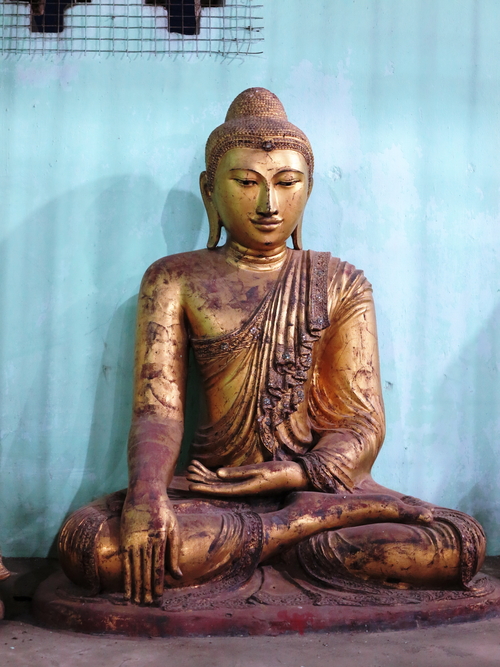
ประติมากรรมพระพุทธรูปสมัยมัณฑเลที่เจดีย์เอ็นดอยา
พระพุทธรูปประทับนั่งสมัยมัณฑเล มีลักษณะสำคัญคือพระพักตร์มีกระบังหน้า ห่มเฉียงเสมอตามแบบพระนั่งพุกามซึ่งแตกต่างไปจากพระยืนที่นิยมห่มคลุม จีวรเป็นริ้วธรรมชาติทั้งหมดตามอิทธิพลจีน บางครั้งการประดับลวดลายและกระจกลงไปบนจีวรด้วย ที่พระอังสาซ้ายปรากฏชายจีวรตกลงมายาวจนถึงพระนาภี ที่ปลายจีวรมีการเล่นลวดลายอย่างมาก เช่นการสลักผ้าให้ทบไปมาจนดูผิดธรรมชาติ พระหัตถ์แสดงปางมารวิชัยตามแบบพระนั่งในศิลปะพุกาม
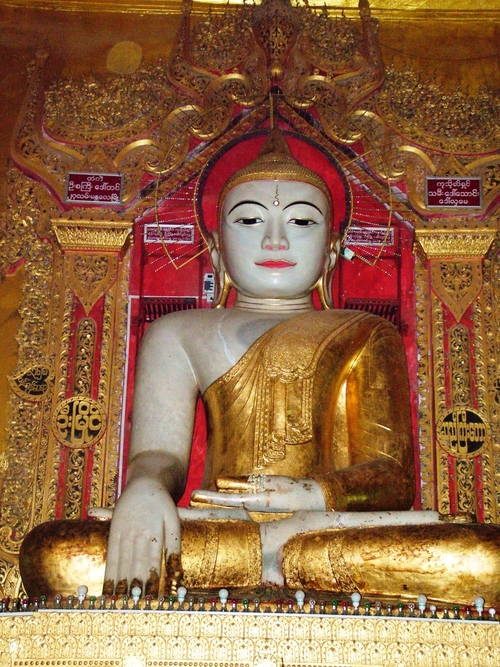
ประติมากรรมพระพุทธรูปประธานที่เจดีย์จอกตอจี
พระพุทธรูปประธานของเจดีย์จอดตอจี เป็นพระที่เป็นหัวเลี้ยวหัวต่อระหว่างแบบ “อังวะ” กับแบบ “มัณฑเล” ด้วยการที่ยังคงครองจีวรเรียบอยู่และมีชายจีวรสองชันห้อยลงมาจากพระอังสาซ้ายตามแบบอังวะ อย่างไรก็ตาม จีวรชายล่างกลับหยักทบกันไปมาตามแบบมัณฑเลแล้ว อนึ่ง พระพุทธรูปองค์นี้สร้างด้วยหินอ่อน-อลาบาสเตอร์ขนาดใหญ่ ซึ่งเป็นที่มาของชื่อ “จอกตอจี” ซึ่งแปลว่าหินใหญ่