Artwork Search
Arts in Southeast Asia Database
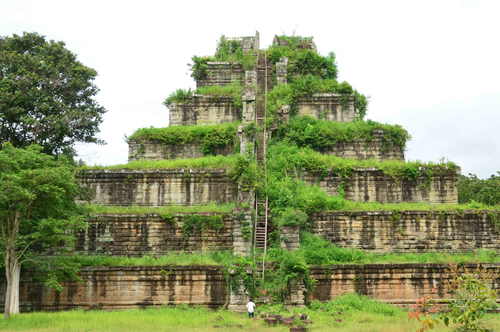

ArchitectureStep pyramidal base: Koh Ker
This temple is consider to be the most majestic stepped pyramidal temple in Khmer art as the pyramidal base is of seven steps. The top of the base, there was a tower, now lost. The stepped pyramidal temple in Koh Ker period ism in some aspects, similar to Prasat Paksi Chamkrong at Angkor.
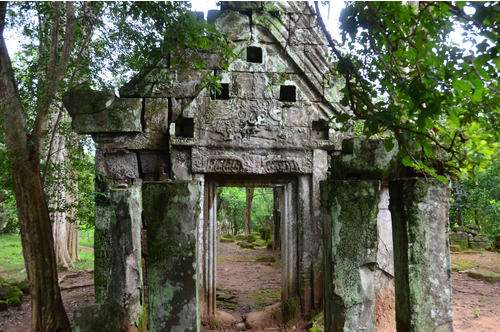
ArchitectureElongate Salle with triangular Pediment: Koh Ker
The elongate hall at Koh Ker is made of stone topped by the already-lost timber-and-tiled roof. The front triangular pediment is the imitation of the wooden structure whereas the end of the gable is decorated with the scrollwork inspired from the trunk of Makara. This kind of pediment has been popular not only in Koh Ker period but also in Banteay Srei and Baphoun periods. Banteay Srei and Preah Vihear temples are the prime example for this kind of pediment. Interestingly, the holes visible at the edge of the gable were meant for supporting the already-lost wooden beams of the roof structure.
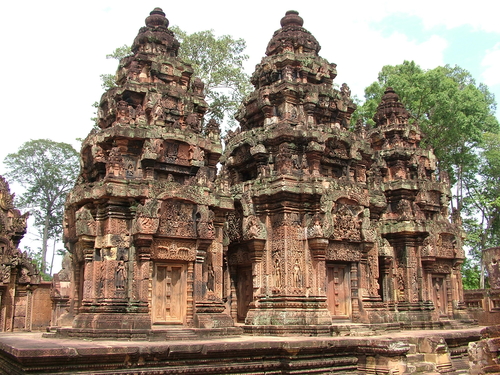
SculptureMain Tower: Prasat Banteay Srei
Banteay Srei is the triple temples rested on the flat platform. The central tower is dedicated to Shiva. Although there is no inscription mentioning to whom the subsidiary ones were dedicated, they are possible to be dedicated to Uma and Ganga, two consorts of Shiva, as the attendants carving on these temple are only female. These towers are made of sandstone, typical to the Late Angkorian period. However the older fashion is still visible, such as the three-sided false doors and the miniature temples that are decorated at the corner of the superstructure.
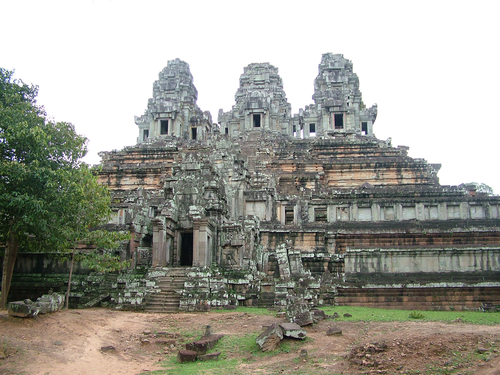
ArchitecturePrasat Takeo
The temple composes of the lofty triple platforms supporting five towers, continuing the former pattern as we see before at Pre Rup. It is the first time, however, that the whole temple is made of stone and the doors at the cardinal points are the enterable ones. The connected surrounding gallery is also introduced in the first time here. However, the temple is lack of decoration as the temple is left unfinished.
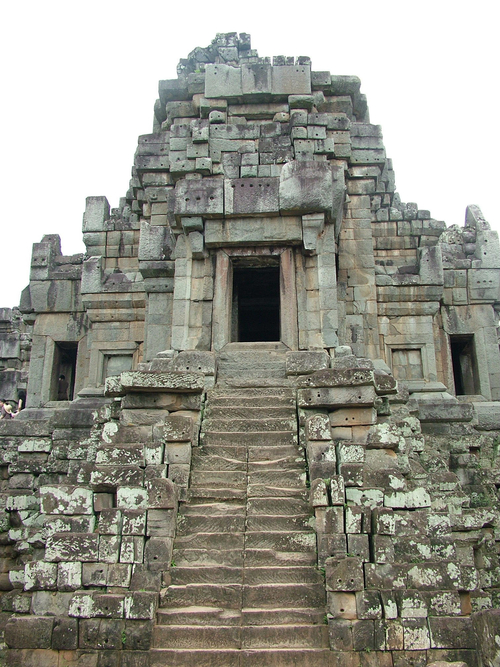
ArchitectureMain Tower: Prasat Takeo
This is one of the five towers of Prasat Takeo. It is the first time that the whole temple is made of stone and the doors at the cardinal points are the enterable ones. The connected surrounding gallery is also introduced in the first time here. However, the temple is lack of decoration as the temple is left unfinished.
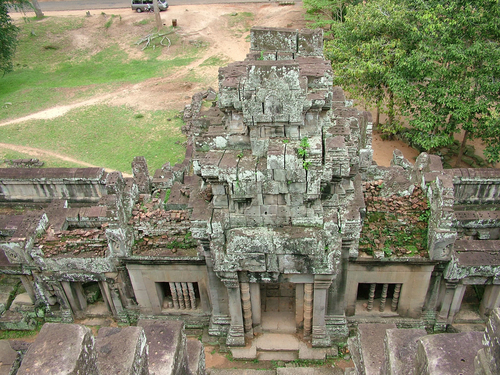
ArchitectureGallery: Prasat Takeo
The surrounding connected gallery is the innovation for Khmer art, firstly introduced at Prasat Takeo. The architect cleverly connected the separated elongate halls at Prasat Pre Rup and designed the new innovation of architecture, the gallery, The four cardinal points of the gallery are punctuated by the gateways. This is also the first attempt of Khmer architects to tile the roof with bricks. This is the first attempt to tile the heavy materials to the roof. The gallery at Takeo is still on the lowest platform whereas, for the later developed one, the gallery would be on the top platform.
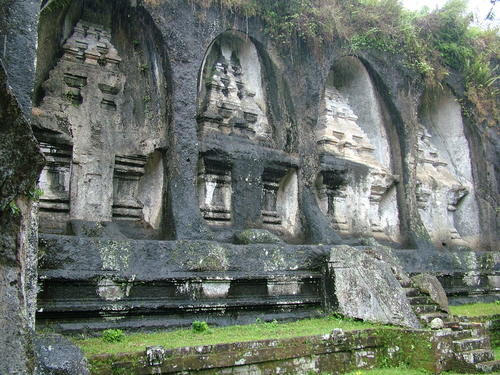

ArchitectureKunung Kawi
Candi Gunung Kawi is the series of nine rock-cut temples on the cliff adjacent to the river, considered to be the best example of the rock-cut temple in Bali. Furthermore, these temples are the good examples of the traces of Eastern Javanese Art in Bali. As the roofs are decorated with series of miniature temples which are normally absent in Balinese towers, the towers at Gunung Kawi are datable to Eastern Javanese Art. The location of these temples, by the river, also sanctifies the river.

SculptureLakshmi at Belahan
The wife wears curvy pattern costume and a lot of ornaments. Also, there is kanok pattern at the back. All of these represent the essense of being “Eastern Java”.