Artwork Search
Arts in Southeast Asia Database
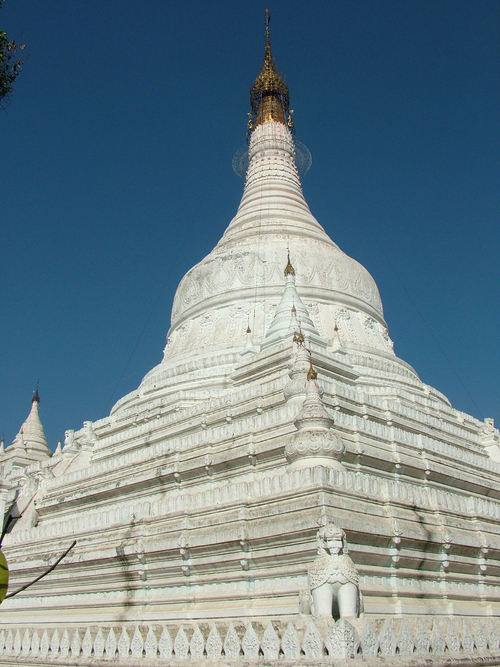

ArchitecturePathodawgyi
The composition of Pathodawgyi is closely similar to Pagan art, especially the triple base decorating the Jātaka panels and the double torus moldings. In the middle of each base, there are staircases providing the access to the circumambulatory path on the top of each base. The bell-shaped element is decorated with Kāla faces disgorging the garland. These above-mentioned characters are under the inspiration of Pagan influences while the elongate banana-bud-liked pinnacle is different from the shorter one in Pagan art.

ArchitectureKyauk Taw Gyi
Kyauktawgyi is the most beautiful Ananda copy in Amarapura period. The main spire is Shikhara as that of Ananda in Pagan. Furthermore, the architectural details of this temple are very similar to those of Pagan art, including the offset division of the main Shikhara, the four projecting porches and the pediments which are decorated with Makaras and the elongated leafs. However, some differences are also noticeable. Pagan architecture became the favourite prototype for Amarapura-and-Mandalay architects to copy, as the later-period architects considered Pagan architecture as the culmination of Burmese art.
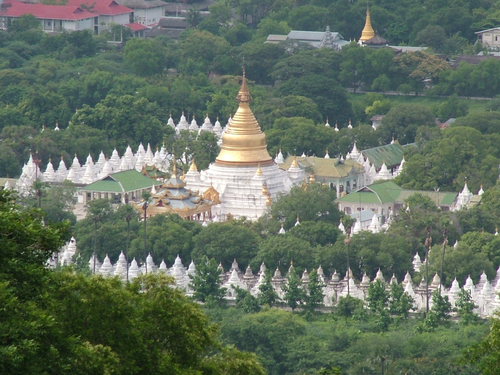
ArchitectureKuthodaw
Kuthodaw premise composes of the main stupa modelled after Shwezigon and the subsidiary smaller temples enshrining the inscriptions of Buddhist canons. These temples have been arranged into three groups, namely Vinaya Sutta and Abhidhamma.
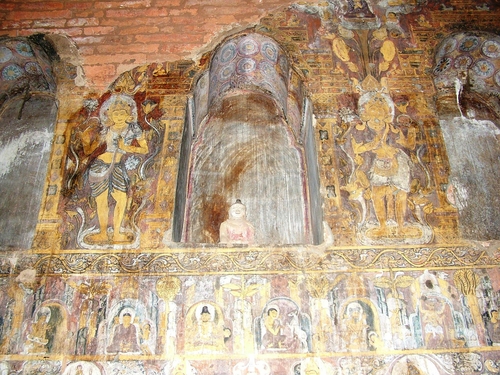
PaintingMural in Abeyadana
Pala artistic influence can be noticed from the red tone that occupies the painting. The niches for enshrining Buddha images that cloister at the wall of the temple are flanked by Mahayana Bodhisattvas. The dress and regalia of these figure are very similar to those of Pala sculpture, including the diadem with three pointed leafs, the S-shaped Yajnopavita and the folded lower garment.

PaintingManjusri : Mural in Abeyadana
The visible influence of Pala Art is the use of hot tone colors such as red, yellow, black, and gold while the cool tone colors such as green is rarely seen. The clockwise walkway inside leaves some traces of Buddha Images that used to be installed there. The frames that used to be the Buddha Image spots are flanked by the painting of Mahayana’s Bodhisattva dressed similar to the Pala Style of Art such as wearing high crown (Jada headgear), wearing the ‘S’ shape sashes, and wearing striated brocades.

PaintingBuddha and Hermit in Caves : Mural in Abeyadana
Abeyadana Pagoda was built by King Kyanzittha's queen Abeyadana in 17th Buddhist Century. Inside appears painting, which is similar to Pala art and it’s likely to go to Mahayana Buddhism.
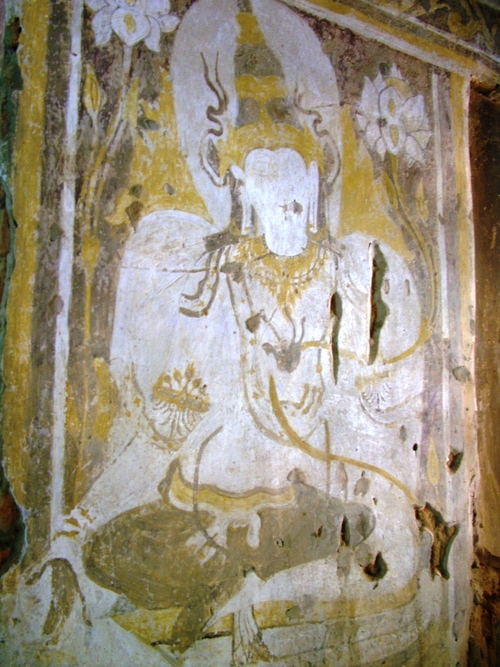
PaintingBodhisattva : Mural in Alopye
These bodhisattvas dressed very similarly to the Pala art like a crown with three faces, S shaped breast chain and streak panung. Including the appearance of two flowers fluttering both sides symmetrically, it indicates the influence of Pala art a lot. The painting itself is a hot tone color likes Pala. All this shows that the age of painting is in the early of Pagan era. The most important aspect for this Bodhisattva is sitting back and the normal Pala Iconography. This shows that the painting is written by a Pakan craftsman.

PaintingBuddha’s Life: Mural in Pahtothamya
The paintings use the hot tone colors such as red and yellow as well as black, similar to Pala Art of India. The dressing of human figures in the paintinfs are similar with Pala Art Style as well. For example, wearing the crown decorated with features. However, the traits of local Pagan Art are visible in the paintings as well. For examples, the dresses with royal Pagan patterns and the building that looks like Payatas or Prasart (Castle) which is the known trait of Pagan Art.