ค้นหางานศิลปกรรม
ฐานข้อมูลศิลปกรรมในเอเชียตะวันออกเฉียงใต้
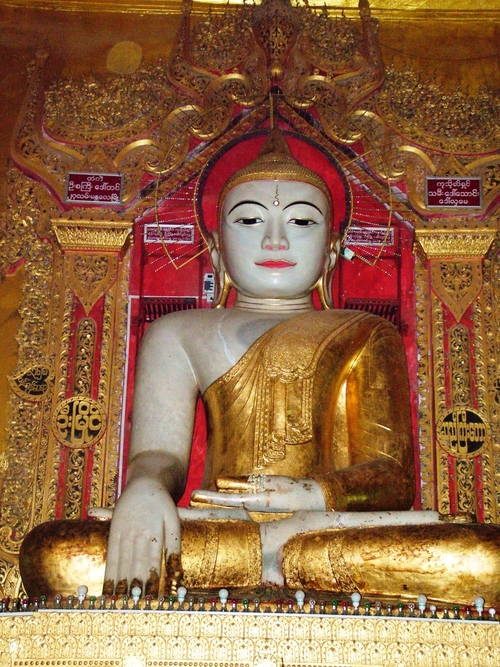

ประติมากรรมพระพุทธรูปประธานที่เจดีย์จอกตอจี
พระพุทธรูปประธานของเจดีย์จอดตอจี เป็นพระที่เป็นหัวเลี้ยวหัวต่อระหว่างแบบ “อังวะ” กับแบบ “มัณฑเล” ด้วยการที่ยังคงครองจีวรเรียบอยู่และมีชายจีวรสองชันห้อยลงมาจากพระอังสาซ้ายตามแบบอังวะ อย่างไรก็ตาม จีวรชายล่างกลับหยักทบกันไปมาตามแบบมัณฑเลแล้ว อนึ่ง พระพุทธรูปองค์นี้สร้างด้วยหินอ่อน-อลาบาสเตอร์ขนาดใหญ่ ซึ่งเป็นที่มาของชื่อ “จอกตอจี” ซึ่งแปลว่าหินใหญ่
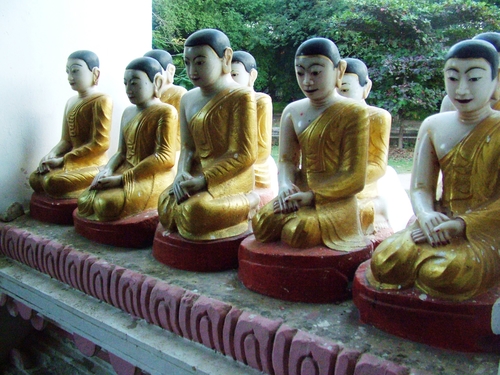
ประติมากรรมพระสาวก 80 องค์ที่เจดีย์จอกตอจี
ที่ระเบียงโดยรอบเจดีย์จอกตอจีเป็นทีประดิษฐานพระสาวกจำนวน 80 องค์ซึ่งเรียกว่าพระอสีติมหาสาวก พระสาวกเหล่านี้สร้างขึ้นจากหินอ่อน-อลาบาสเตอร์เช่นเดียวกับพระประธาน นั่งพับเพียบและประสานมือในท่าเรียบร้อย จีวรของพระเหล่านี้เป็นริ้วแล้วซึ่งแสดงแนวโน้มไปสู่ศิลปะมัณฑเล
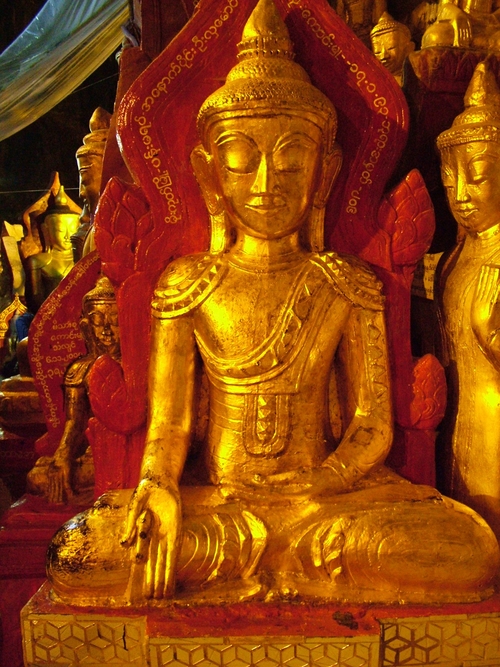
ประติมากรรมพระพุทธรูปที่ถ้ำปินดายา
พระพุทธรูปภายในถ้ำปินดายา ถือเป็นตัวอย่างของพระพุทธรูปในสกลุช่างไทยใหญ่ที่ดีที่สุด พระพุทธรูปในสกุลช่างนี้ มักมีพระเศียรใหญ่แต่พระวรกายเล็ก พระอังสาแคบ ด้านบนพระเศียรมีรัศมีรูปน้ำเต้าตามอิทธิพลจีน จีวรมีลักษณะประดิษฐ์มาก โดยประดิษฐ์มาจากชายจีวรสองชั้นของพระพุทธรูปในศิลปะอังวะ-อมรปุระ ที่พระอังสาขวามีการชักชายจีวรมาครอบตามแบบอิทธิพลจีน
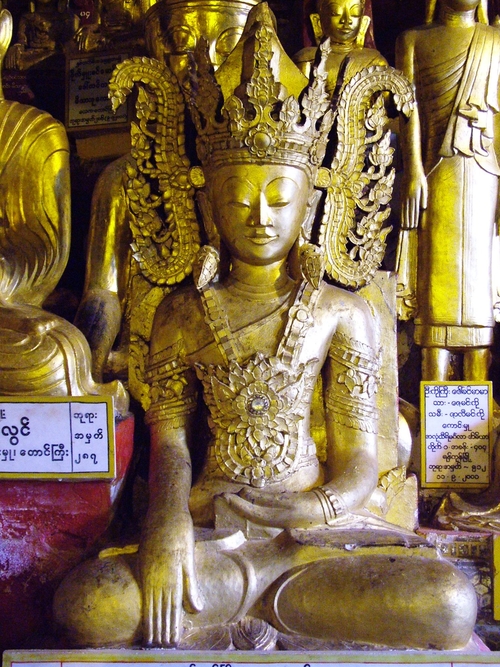
ประติมากรรมพระพุทธรูปที่ถ้ำปินดายา
พระพุทธรูปภายในถ้ำปินดายา ถือเป็นตัวอย่างของพระพุทธรูปในสกลุช่างไทยใหญ่ที่ดีที่สุด พระพุทธรูปในสกุลช่างนี้ มักมีพระเศียรใหญ่แต่พระวรกายเล็ก พระอังสาแคบ พระพุทธรูปองค์นี้เป็นพระทรงเครื่อง มีกระบังหน้าประดับตาบสามเหลี่ยมที่มีพื้นฐานมาจากศิลปะปาละ แต่กรรเจียกกลับแผ่ออก มีขนาดใหญ่มากอันเป็นพัฒนาการมาจากศิลปะทิเบต พระพุทธรูปทรงสังวาลรูปตัว U และมีตาบอกรูปประจำยามซึ่งแสดงการผสมผสานกันระหว่างศิลปะทิเบตกับศิลปะอยุธยา
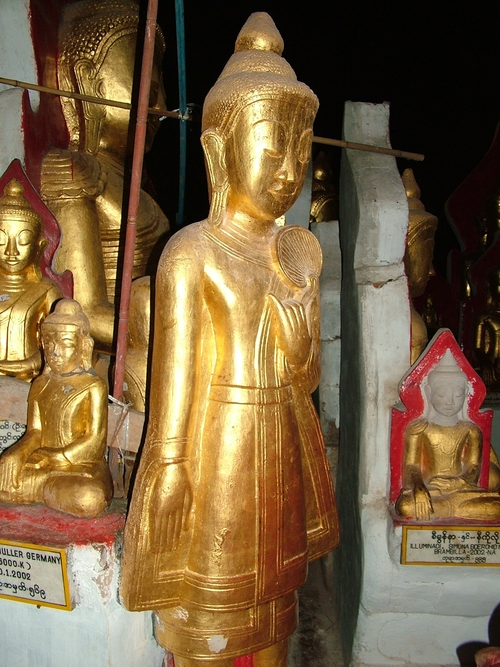
ประติมากรรมพระพุทธรูปที่ถ้ำปินดายา
พระพุทธรูปภายในถ้ำปินดายา ถือเป็นตัวอย่างของพระพุทธรูปในสกลุช่างไทยใหญ่ที่ดีที่สุด พระพุทธรูปในสกุลช่างนี้ มักมีพระเศียรใหญ่แต่พระวรกายเล็ก พระอังสาแคบ พระพุทธรูปองค์นี้มีลักษณะพิเศษ คือทรงถือ “ตาลปัตร” หรือพัดที่ทำจากใบตาลอยู่ที่พระอุระ ตาลปัตรนี้กำเนิดในลังกา โดยมักถือโดยพระภิกษุที่ขึ้นเทศนาธรรม ต่อมาได้สงอิทธิพลให้กับเอเชียอาคเนย์ด้วย โดยมักปรากฏกับพระพุทธรูป พระภิกษุหรือพระโพธิสัตว์ที่กำลังประทับนั่งเทศนาธรรม อนึ่ง พระพุทธรูปองค์นี้ถือเป็นลักษณะพิเศษที่ประทับยืนขณะที่ถือตาลปัตร