Artwork Search
Arts in Southeast Asia Database
Brikuti
Keywords : Avalokitesvara , Candi, Candi Jago
| Site common name | Candi Jago |
|---|---|
| Type of artwork | Sculpture |
| Village | National Museum |
| Province/City | Jakarta |
| State | Western Java |
| Country | Indonesia |
| Geographic Coordinates Decimal degree | Lat : -6.176944 Long : 110.821944 |
| History of production | - |
|---|---|
| Art | In the early period of Eastern Java art, sculpture is still similar to Central Java. However, the back started to feature “Bua leaf” which is a unique feature of this period. The sculpture is also decorated with more ornamental chains and pearl nosegay. |
| Period | Historical Period |
| Art period | Eastern Javanese Art |
| Age | 16-20 centuries BE. |
| Religion | Buddhism |
| Sect | Mahayana |
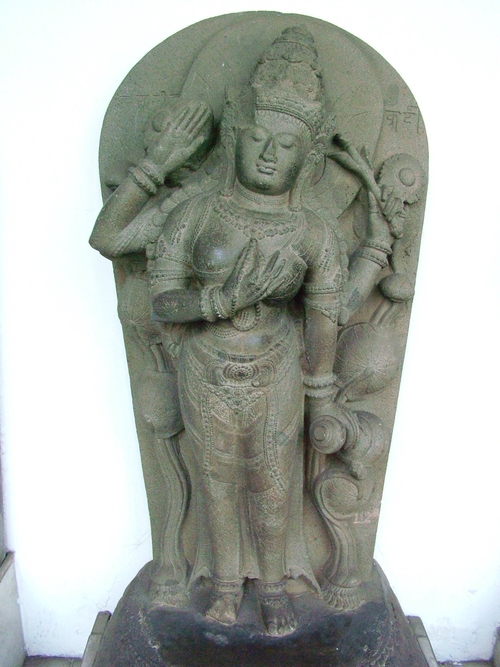
| Religion and belief | Brikuti is Tara of yellow caste in Mahayan Buddhism and is one of the fopur disciples of Avalokiteshavara including Syamtara, Suthonkumara, Haiyakri and Brikuti. This schulpture might have been a surrounding sculpture of a large sculpture of Avalokiteshavara before. |
| Related artwork | A distinctive feature of Brikuti iconography is having four arms. One arm shows Wattana Mudra (the attitude of showing respect by lifting the hand up). The other three arms hold beads, a pot and a trident. |
| Type of License | Attribution-NonCommercial-NoDerivs (CC BY-NC-ND) |
|---|---|
| Rights | Princess Maha Chakri Sirindhorn Anthropology Centre |
| Date of record creation | 2015-07-00 |
| Record creator | Chedha Tingsanchali |