ค้นหางานศิลปกรรม
ฐานข้อมูลศิลปกรรมในเอเชียตะวันออกเฉียงใต้


สถาปัตยกรรมเจดีย์ชเวซิกอง
เจดีย์ประกอบด้วยฐานในผังสี่เหลี่ยมเพิ่มมุมจำนวนสามชั้น แต่ละชั้นประดับภาพชาดกและมีทางประทักษิณพร้อมบันไดขึ้นทุกด้าน ที่มุมประดับด้วยสถูปิกะ องค์ระฆังประดับด้วยรัดอกและบัวคอเสื้อตามแบบเจดีย์พม่าโดยทั่วไป ไม่มีบัลลังก์ ถัดขึ้นไปได้แก่ปล้องไฉนทรงกรวยเตี้ย ปัทมบาทและปลีสั้นซึ่งถือเป็นลักษณะสำคัญของเจดีย์แบบพม่าในศิลปะพุกาม เจดีย์แบบพม่าแท้องค์นี้ เป็นต้นค้าให้กับเจดีย์แบบพม่าแท้องค์อื่นๆในศิลปะพุกามและศิลปะพม่าในสมัยหลัง จากรูปแบบศิลปกรรมนั้นสอดรับกับประวัติศาสตร์ที่ว่าเจดีย์องค์นี้ควรสร้างขึ้นในสมัยพุกามตอนต้น ราวพุทธศตวรรษที่ 16

สถาปัตยกรรมเจดีย์อเพยาทนะ
เจดียวิหารสมัยพุกามตอนต้น ซึ่งนิยมเรือนธาตุทรงเตี้ยและมืดทึบ ด้วยเหตุนี้ หน้าต่างโดยรอบของเจดีย์จึงปิดทึบไปด้วยแผง รูปแบบหน้าต่างเองก็ประดับไปด้วยเคล็กสั้นๆ ตามแบบพุกามตอนต้น ด้านบนปรากฏหลังคาลาดซึ่งเป็นลักษณะสำคัญของเจดีย์ในสมัยพุกามตอนต้น ด้านบนสุดปรากฏเจดีย์ยอดแบบปาละ ซึ่งประกอบด้วยบัลลังก์ในผังสี่เหลี่ยมเพิ่มมุม และปล้องไฉนที่ประดับไปด้วยเกล็ด เจดีย์อเพยทนะถือเป็นตัวอย่างสำคัญของเจตีวิหารหรือกู่ในศิลปะพุกามตอนต้น รัชกาลพระเจ้าจันสิตถาที่ดีที่สุดแห่งหนึ่ง
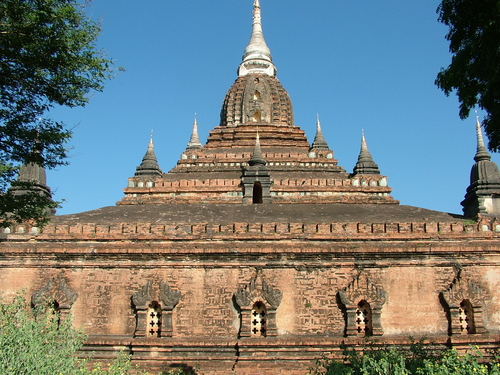
สถาปัตยกรรมเจดีย์นาคยน
เจดียวิหารสมัยพุกามตอนต้น ซึ่งนิยมเรือนธาตุทรงเตี้ยและมืดทึบ ด้วยเหตุนี้ หน้าต่างโดยรอบของเจดีย์จึงปิดทึบไปด้วยแผง ด้านบนปรากฏหลังคาลาดซึ่งเป็นลักษณะสำคัญของเจดีย์ในสมัยพุกามตอนต้น อย่างไรก็ตาม เจดีย์องค์นี้มีแนวโน้มไปสู่พุกามตอนปลายแล้ว เนื่องด้วยเคล็กที่ซุ้มมีขนาดค่อนข้างยืดสูง ด้านบนสุดเป็นศิขระแบบที่ปรากฏซุ้มเรียงกันที่เก็จประธาน ศิขระแบบนี้ปรากฏเสมอๆในรัชกาลพระเจ้าจันสิตถา ดังปรากฏเช่นกันที่อานันทเจดีย์

สถาปัตยกรรมอานันทเจดีย์
อานันทเจดีย์ถือเป็นตัวอย่างสำคัญของเจตียวิหารหรือกู่ในศิลปะพุกามตอนต้น รัชกาลพระเจ้าจันสิตถาที่ดีที่สุดแห่งหนึ่ง เป็นเจดีย์ที่อยู่ในผังครรภคฤหะสี่ทิศ มณฑปสี่ทิศ ซึ่งทำให้แผนผังกายเป็นกากบาท ตรงกลางปรากฏแกนกลางทึบขนาดใหญ่รับน้ำหนักของยอดศิขระ แผนผังแบบนี้ปรากฏมาก่อนแล้วตั้งแต่ในศิลปะปาละ เช่นปหรรปุระและวิกรมศิลา ภายนอกปรากฏหลังคาลาดขนาดใหญ่ที่ประดับสถูปิกะขนาดเล็กทั้งสี่ทิศ หลังคาลาดนี้รองรับศิขระซึ่งประดับซุ้มที่เก็จประธาน โดยทั้งหมดนี้คล้ายคลึงกับหลังคาลาดและศิขระของเจดีย์นาคยน อย่างไรก็ตาม หน้าต่างที่ไม่มีแผงกั้นของอานันทเจดีย์ ย่อมทำให้แสงสามารถเข้าไปภายในอาคารได้มากกว่าเจดีย์ในระยะก่อนหน้า

สถาปัตยกรรมทางประทักษิณภายในอานันทเจดีย์
ภายในอานันทเจดีย์ ปรากฏทางประทักษิณภายในซ้อนกันถึง 2 ชั้น ทางประทักษิณเหล่านี้วนล้อมรอบแกนกลางและครรภคฤหะ ที่ผนังของทางประทักษิณประดับภาพสลักพุทธประวัติจำนวนมาก เพื่อให้ผู้เดินประทักษิณได้เรียนรู้พุทธประวัติไปในตัว ด้านบนปรากฏหลังคาครึ่งวงโค้ง ซึ่งได้แก่หลังคาลาดเมื่อมองจากภายนอกนั่นเอง ทางประทักษิณภายในปรากฏมาก่อนแล้วตั้งแต่ศิลปะปาละ เช่นปหรรปุระและวิกรมศิลา
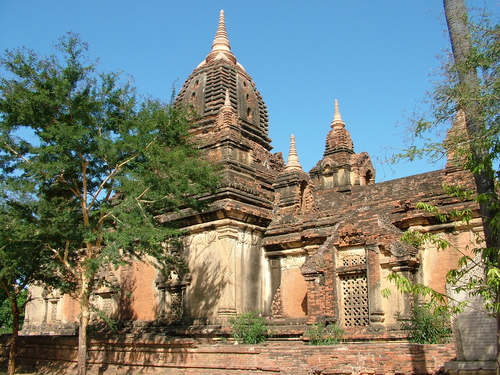
สถาปัตยกรรมเจดีย์กุพโยคจีที่มยิงกบา
เจดียวิหารสมัยพุกามตอนต้น ซึ่งนิยมเรือนธาตุทรงเตี้ยและมืดทึบ ด้วยเหตุนี้ หน้าต่างโดยรอบของเจดีย์จึงปิดทึบไปด้วยแผง รูปแบบหน้าต่างเองก็ประดับไปด้วยเคล็กสั้นๆตามแบบพุกามตอนต้น ด้านบนปรากฏหลังคาลาดซึ่งเป็นลักษณะสำคัญของเจดีย์ในสมัยพุกามตอนต้น ด้านบนสุดปรากฏศิขระในลักษณะเดียวกับเจดีย์นาคยนและอานันทเจดีย์ คือศิขระที่มีซุ้มประดับที่เก็จประธาน อันเป็นรูปแบศิขระที่นิยมในรัชกาลนี้

สถาปัตยกรรมเจดีย์ชเวกูจี
เจดีย์ชเวกูจี ถือเป็นหัวเลี้ยวหัวต่อระหว่างศิลปะพุกามตอนต้นที่นิยมความมืดทึบและศิลปะพุกามตอนปลายที่นิยมความสูงโปร่งและสว่าง โดยในระยะนี้ เจดีย์มีการเจาะประตูที่กึ่งกลางด้านของเรือนธาตุ และยังเจาะหน้าต่างโดยไม่มีแผงมากั้นแล้ว ทั้งหมดนี้ทำให้ภายในสว่างกว่าเจดีย์ในรัชกาลพระจันสิตถา ยิ่งกว่านั้น ชั้นหลังคาก็มิได้อยู่ในรูปของหลังคาลาดอีกต่อไปแล้ว แต่กลายเป็นชั้นหลังคาบานบัวซ้อนกันหลายชั้นในรูปของปีระมิดขั้นบันได ซึ่งแสดงแนวโน้มไปสู่รูปแบบชั้นหลังคาในศิลปะพุกามตอนปลายอย่างชัดเจน
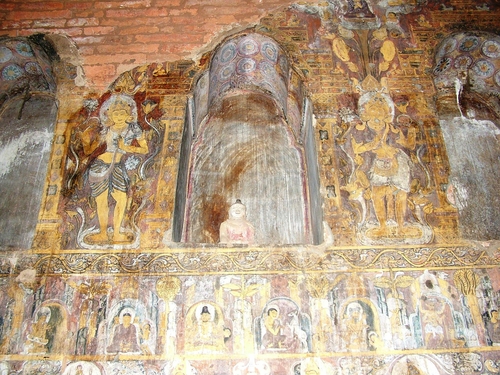
จิตรกรรมจิตรกรรมในเจดีย์อเพยทนะ
อิทธิพลของศิลปะปาละที่สังเกตได้ก็คือ การใช้สีโทนร้อนเป็นหลัก เช่น สีแดง สีเหลือง สีดำและสีขาว ส่วนสีโทนเย็น เช่น สีเขียวแทบไม่ปรากฏ ภายในทางประทักษิณภายในปรากฏซุ้มจระนำซึ่งเคยประดิษฐานพระพุทธรูปมาก่อน ซุ้มจระนำเหล่านี้ขนาบข้างโดยพระโพธิสัตว์ในลัทธิมหายาน โดยพระโพธิสัตว์เหล่านี้แต่งตัวคล้ายคลึงกับศิลปะปาละอย่างมาก เช่น การทรงมงกุฎที่มีกระบังหน้าสามตาบ การทรงยัชโญปวีตตวัดเป็นรูปตัว S และการนุ่งผ้านุ่งเป็นริ้ว