Artwork Search
Arts in Southeast Asia Database

ArchitecturePreah Aram Rong Chen
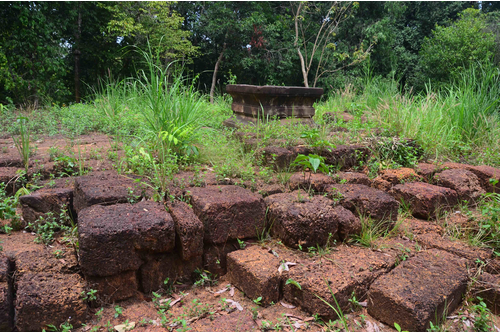
Preah Aram Rong Chen is the temple constructed during the reign of King Jayavarman II for enshrining the royal Śivalinga in accordance to the Devarājā Cult. The temple, not lost, was erected on the top of the laterite pyramidal bases, connectible to Mount Kailaśa, Śiva’s abode. Thereafter, the temple on the temple on the stepped pyramidal bases would become the normal tradition for the royal temple in accordance with Devarājā cult.
ArchitectureSubsidiary Towers of Prasat Bakong
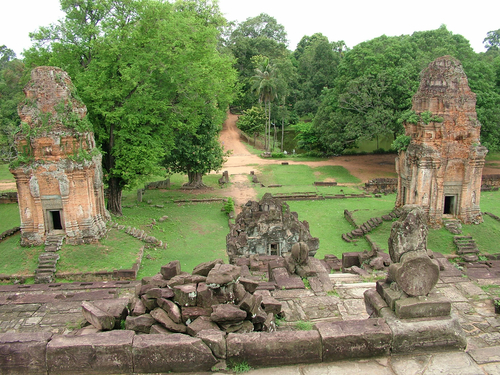
The subsidiary temples of Prasat Bakong are made of brick and decorated with stucco. These temples scatter in every directions of Prasat Bakong. There are eight in number. ( 2 temples in each direction as being seen in the photo)
ArchitectureMain Tower; Prasat Bakong
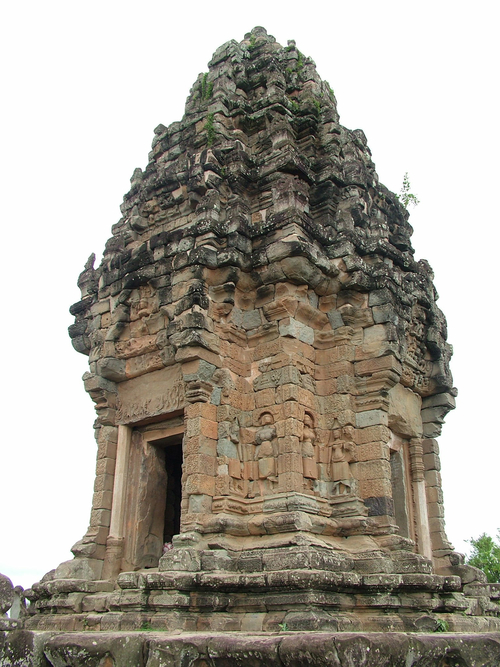
While the subsidiary temples are made of brick, the main tower is surprisingly constructed of sandstone and decorated with the later-period Angkor Wat-styled motif. This differs from the normal date of Prasat Bakong which is assigned to Prah Ko style. Possibly, the main tower was constructed later during the period of Angkor Wat for replacing the original brick temple which is possible to be dilapidated during that period. The characters of Angkor Wat style of temple are the redent body and the decoration of Apsara (female deities) at the corner of the temple as well as the decoration of the antefixes at the superstructure.
ArchitecturePrasat Takeo
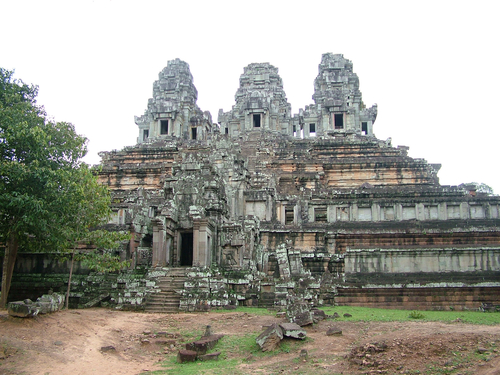
The temple composes of the lofty triple platforms supporting five towers, continuing the former pattern as we see before at Pre Rup. It is the first time, however, that the whole temple is made of stone and the doors at the cardinal points are the enterable ones. The connected surrounding gallery is also introduced in the first time here. However, the temple is lack of decoration as the temple is left unfinished.
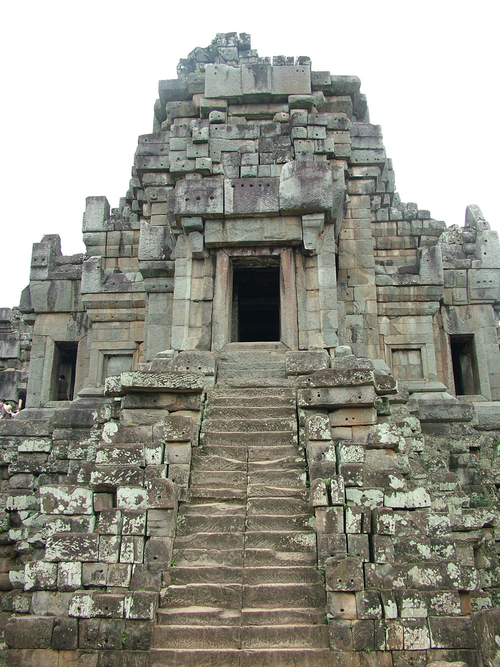
ArchitectureMain Tower: Prasat Takeo
This is one of the five towers of Prasat Takeo. It is the first time that the whole temple is made of stone and the doors at the cardinal points are the enterable ones. The connected surrounding gallery is also introduced in the first time here. However, the temple is lack of decoration as the temple is left unfinished.