Artwork Search
Arts in Southeast Asia Database
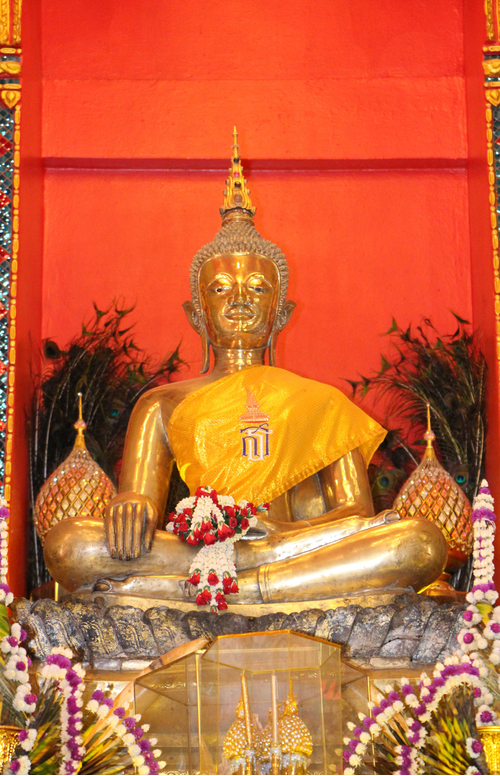

SculpturePhra Sai
This Buddha image is in seating posture and a subduing Mara attitude on a lotus base. It has small hair buds, flame-like halo, round face, sharp shin, clear hair lines, curved out eyebrows, straight-looking eyes, smiling mouth of Lanchang style and thick lips. The monastic cloth splits and extends to the abdomen. The fingers are small and of the same length.
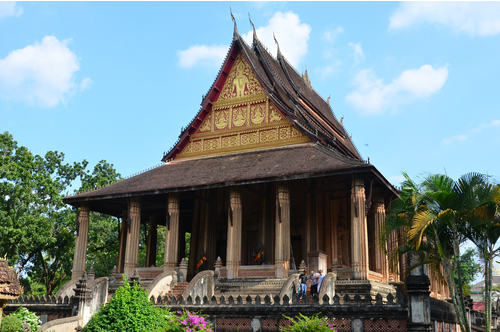

ArchitectureHor Pra Kaew
Hor Pra Kaew might have been built in the reign of king Anuwong or before as the plan is very similar to Ubosot of Wat Phra Sri Rattan Sasadaram consisting of the circumambulatory inside Palai. However, it was abandoned when king Anuwong died and was restored again. The pediment that has two panels at the bottom can be compared with the pediment of Oung Teu. This shows that it belongs to Vientiane school of art that was carved much later. The three-headed elephant was the royal synbol of the Laos kingdom before the revolution.
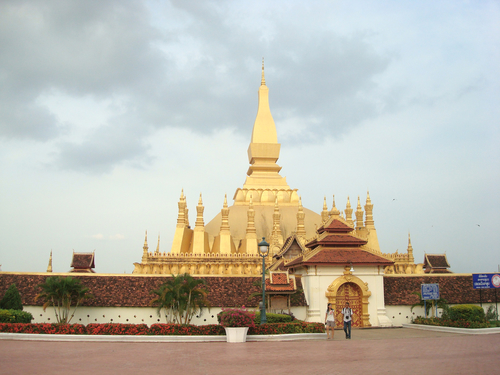
ArchitectureThat Luang
The huge mound in the center seems to be the most ancient element of the Stupa. After some renovations, the top element and the subsidiary Stupas were added. These subsidiary Stupas seem to be connected with either the perfections of the Buddha (Paramita or Baramee) or the Tamavimsa paradise. This Stupa was entitled as Lokachulamani, imitating the name of the stupa in the paradise inside which the hairy relics was enshrined, suggests that the city is comparable to the heaven and the king himself is comparable to Indra, the lord of deities.
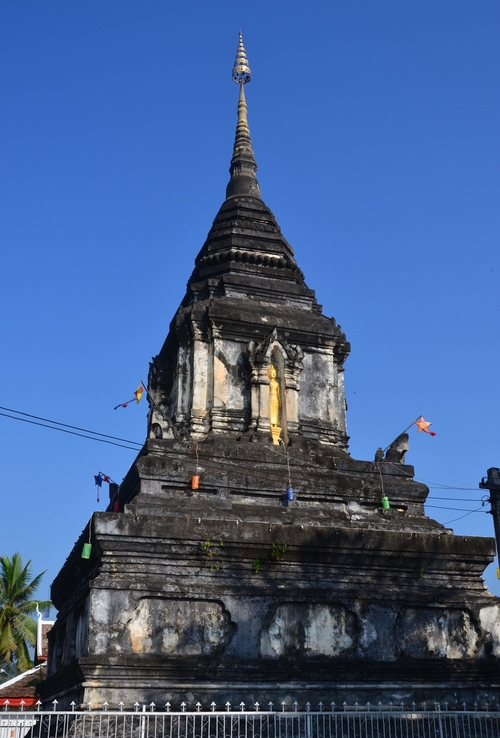
ArchitectureMaha That
This stupa comprises the square Lanna-fashioned broad bases supporting the multi-angled body, the series of sloping roofs in octagonal plan and the small bell-shaped spire. The style of this stupa is closely similar to that of Lanna Stupa in 15th-16th century, such as the Stupa at Wat Lokmoli which was built for containing the mortal remain of King Muang Ketklao. However, the architectural details of Wat Mahathat Stupa is slightly different from those of Lanna Stupa. These differences suggest the later renovations.
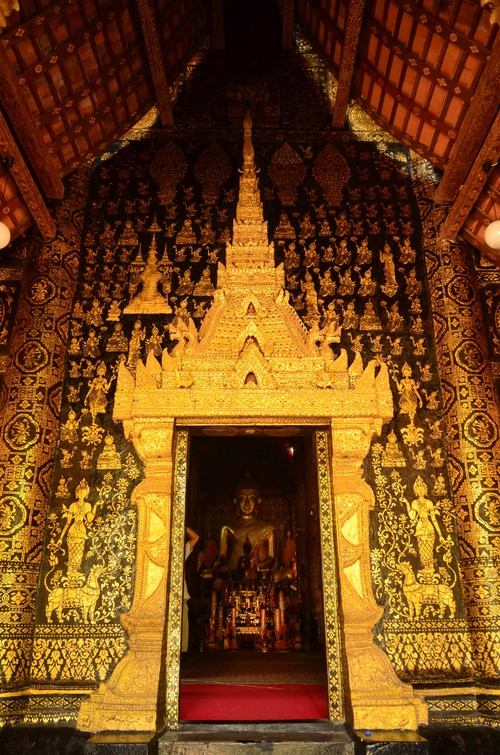
ArchitectureSim’s Gateway : Wat Xiang Thong
Sim at Wat Xian Thong is the most complete sim in Lan Chang art of Luang Phra Bang school of art. The interior decoration is very beautiful, being decorated with Kham pattern. At the front wall, there is a picture of gods paying respect to a chedi, which may be Chulamanee on the heaven. The sim’s gateway has the characteristics of Lan Chang that share many characteristics with Lanna art including the gate pole is decorated in three parts: high arch tiles, low arch tiles and the flower. The top of the Prasat is a tier of a large sloping roof topped with many tiers of lotus flower shape elements.

SculptureMirrored Tree at the backside of Sim Wat Xiang Thong
The mirrored mosaic decoration on the outer wall seems to be very popular during in the Luang Prabang school of art during the 20th century A.D. Lots of pavilions at Wat Xiang Thong bear this kind of decoration. The mirrored mosaic is more durable than the mural and also gives the effect of glittering than the mural. So, this technique becomes very popular during this period.

PaintingGolden Painting at the outer wall of Sim Wat Xiang Thong
In Laotian art, nineteenth-century Luang Prabang school, the golden mural was very popular especially for the inner wall of several pavilions. However, the golden mural outer wall at Wat Xiang Thing is a rare case.

SculptureJulamanee: Golden Painting at the inner wall of Sim Wat Xiang Thong
In Lan Chang Art of Luang Phra Bang school around 25 century BE., the golden painting was very popular. It was mostly decorated inside the building. At the front of Chiang Khong temple, there is a picture of gods honouring the very beautiful Chedi Julamanee.