Artwork Search
Arts in Southeast Asia Database
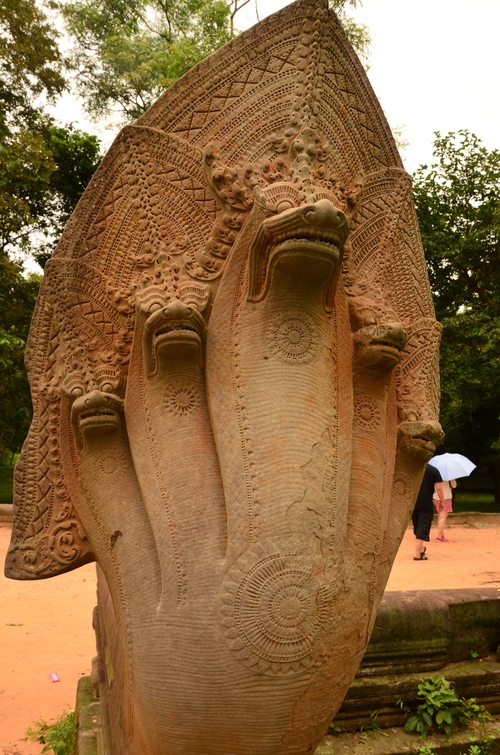

SculptureHead of Naga
Naga is generally found in Khmer art. It is usually used as a component of a balustrade or walkway. The Naga has 5 heads. All of the heads wear cap and share the same halo, which is the characteristic of Angkor Wat art.

SculptureRoyal Palace Base: Garuda Sculpture
The Garuda has a bird head and is in a standing position on top of the Naga head. The arms also hold the Naga. Such portrayal of Garuda is the characteristic of Garuda in Bayon art.

SculptureRoyal Palace Base: The Underworld
Under the base is a set of sandstone sculpture including gods, Apsara, demons, Nagas and the Pluro. It is divided into layers and in the middle of the baseline, there is always a multi-headed Naga. The female schulpture would wear the cap. On top of this, there is a crown decorated with three rows of flowers. The earrings are large tufts. The face is of Bayon style having the closed eyes and a gentle smile.
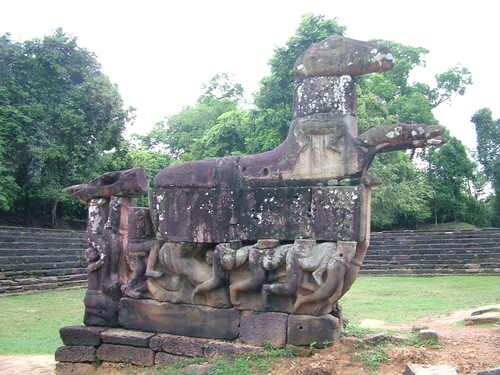
SculptureBalaha Horse
Balaha horse is a large horse sculpture facing the principle prasat. There are human sculptures surrounding the Balaha horse.
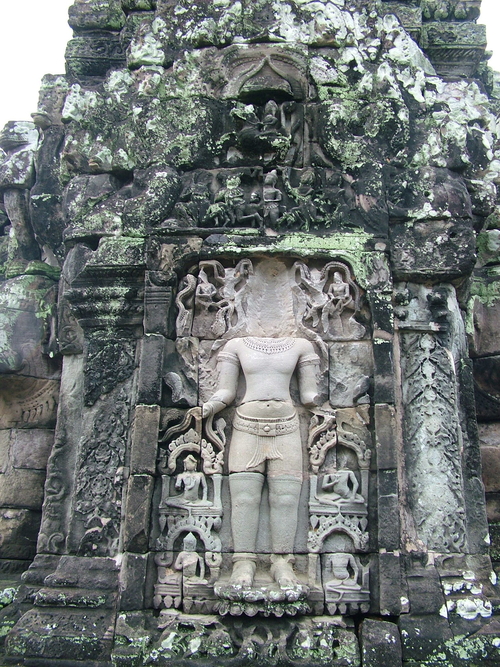
SculptureAvalokitesvara
The sculpture of Avalokitesavara has no head and is topless. It has thick body and wear ornament. including a necklect with Uba tufts. The cloth is short and the fish tail falls down in the middle. This is the characteristic of Bayon art. It is surrounded by gods and Bhothisavara.
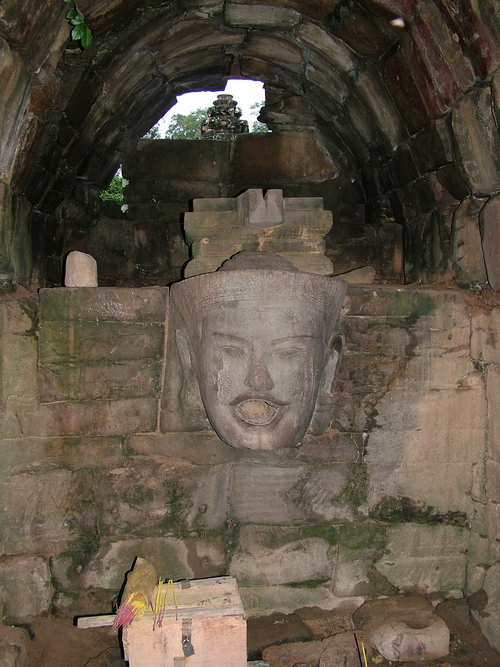
SculptureWater pipes carved Human head
The human head sculpture is in the east niche of Prasat Naek Paen. It is a human head wearing a crown cap with a funnel-shpaed at the top. The mouth is open, which is a part of the tube.


ArchitectureStupa: Wat Nak Yai
Stupa at Wat Nak Yai is the most beautiful Prasat-type in Vientiane area. It is very similar to Lanna art. The chamber is redented with 20 corners. The niches on the four sides enshrine the standing Buddha images. Above the chamber is a base supoorting the redented bell-shaped element with 12 corners. and the top part is the angled lotus. This stupa might have been built from the reign of king Chai Chetthathirat to the reign of king Suriyawongsathammikaraj. This was the period when Lan Chang art was still closely related to Lanna and Ayutthaya arts.