Artwork Search
Arts in Southeast Asia Database

ArchitectureHoa Lai
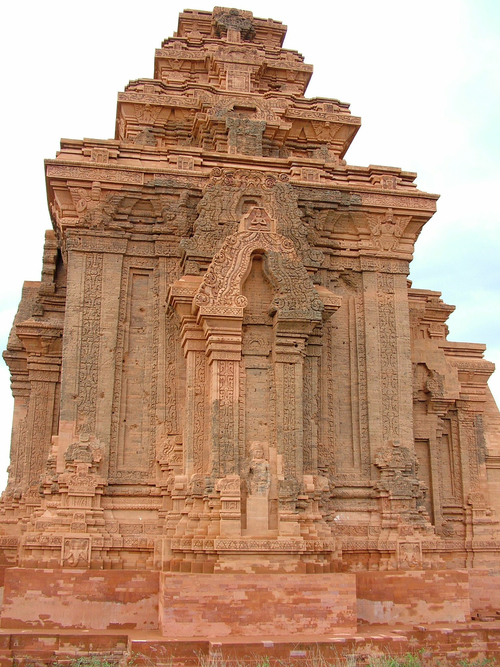
There are four pilasters on each wall of the body denoting the early Cham art. The motif band in the middle of the pilaster is typical to Hoa Lai art while the miniature temples decorated at the base are identical to those in Indian and Pre-Angkorian Khmer art. The superstructure comprises the superimposing miniature tiers indicating the south Indian influence.
ArchitecturePilaster at Hoa Lai
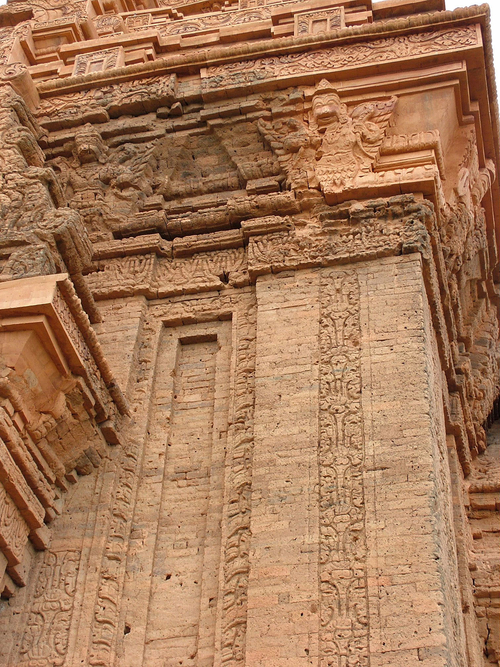
Hoa Lai is assigned to the early phase of Cham architecture as there are merely four pilasters on each side of the body. The pilaster is decorated with the motif band, typical to Hoa Lai period. This kind of decoration is also similar to Indian art. The capital is strikingly ornamented with the statue of Garuḍa holding Nāga. The bird-faced Garuḍa with beak is important as it is different form the human-faced one in Indian art.

ArchitectureNorthern Tower of Hoa Lai
Despite being unfinished, the northern tower of Hoa Lai is so significant as it is one of the most complicate towers in Cham art. The striking feature is the decoration of several types of miniature tower at the bases of the pilasters. Each of this miniature tower is so complicate and exquisite with the architectural articulation. Considering form the style of these miniature towers, becasue these towers are connectible to the Indian and Pre-Angkorian art, the north tower of Hoa Lai is assignable to the early phase of Cham art.

ArchitectureLocation of Po Kluang Karai
The whole temple complex located on the top of the hill, including the main temple, the so-called library, the front hall and the gateway. The location of this temple reminds us the location of Banh It in Binh Dinh.
ArchitectureMain Tower of Po Kluang Karai
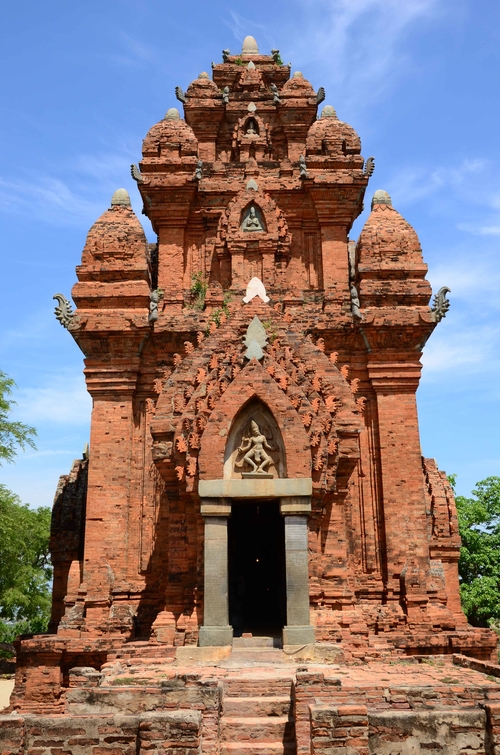
Mukhalinga and Nandi are enshrined inside the sanctum and the Mandapa respectively. The front tympanum depicts the dancing Shiva. These sculptures indicate that this temple belongs to Shaivite Hinduism.
ArchitectureMiniature Tower of Po Kluang Karai
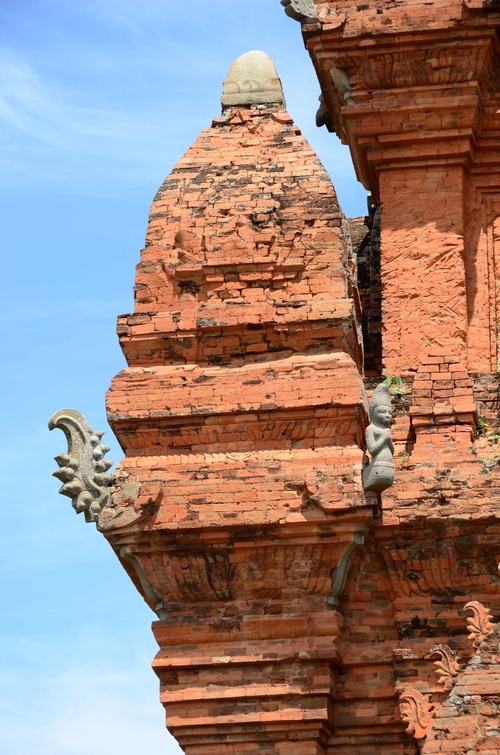
The cornered miniature tower in the shape of lotus-bud is very popular during this period. This is the simplified form of the Chines-pagoda-liked cornered miniature tower, as exemplifiable at Canh Tien, in late Binh Dinh style. The lotus-bud-shaped cornered miniature tower indicates that the temple should be dated in the 13th century.

SculptureDancing Shiva from the pediment of Po Kluang Karai
Although the temple is dated to the 13th century, the tympanum depicting the dancing Shiva is dated earlier as belonging to Binh Dinh style. This tympanum was re-used. The crown of Shiva, decorated with the series of tiny triangle elements forming the whole crown in triangular shape, is comparable to the normal style of Binh Dinh crown. The triangular cloth in the front of the lower garment is also the characteristic of the period.